

Blog / Jacksonville BMW Service

BMW Brake Wear Sensors Explained and Service Timing

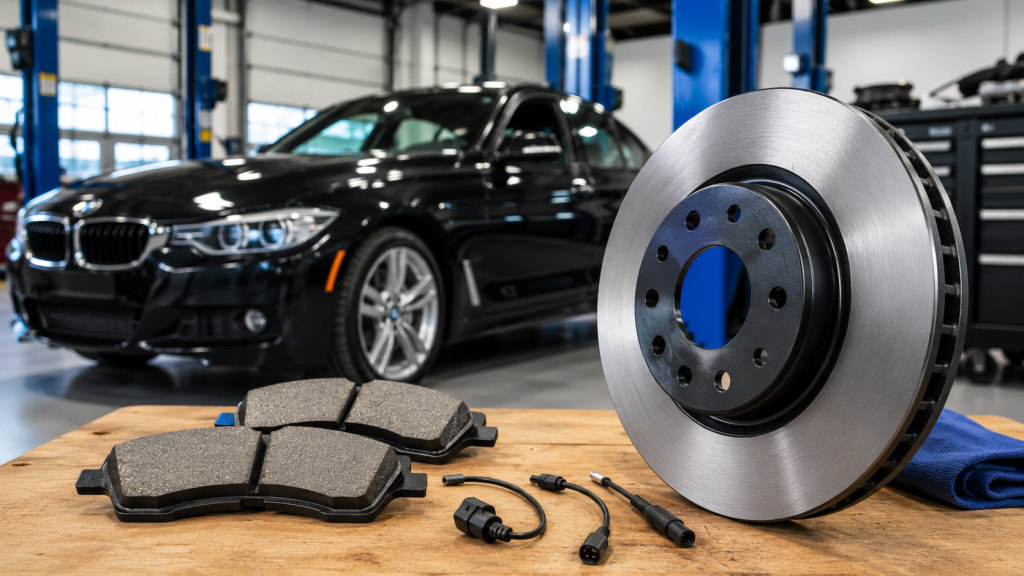
A BMW brake wear sensor monitors brake pad thickness electronically and helps determine when brake service should be scheduled before braking performance begins to decline. Modern BMW brake systems do far more than rely on visual inspection intervals alone. Electronic monitoring, brake force distribution, rotor heat management, and predictive service calculations all work together to track braking wear across different driving patterns. That is why two BMW vehicles with similar mileage can reach brake service timing at completely different intervals. Understanding how BMW brake wear sensors operate helps owners interpret warning lights more accurately and evaluate brake service timing with greater confidence.

How BMW Brake Wear Sensors Trigger Service Warnings

A BMW brake wear sensor is a physical electronic sensor mounted directly into the brake pad material. As the brake pad gradually wears down, the sensor moves closer to the rotor surface. Once the pad reaches a calibrated wear threshold, the rotor contacts the sensor and breaks the electrical circuit inside it. That interruption signals the BMW monitoring system to activate a brake service warning through the dashboard and iDrive service system.

This process explains why BMW brake warnings can sometimes appear suddenly. The sensor does not slowly dim or gradually activate over weeks. Once the circuit breaks, the system recognizes that the brake pad has crossed the designed wear threshold.

BMW uses this setup because brake pads do not always wear evenly across all driving situations. Urban traffic, repeated stop and go driving, downhill braking, and aggressive braking force generate very different heat and friction levels than steady highway travel. Electronic monitoring allows the system to track wear more precisely than mileage alone.

Important brake sensor characteristics include:

• Sensors physically contact the rotor at wear threshold
• Front and rear brake systems use separate monitoring logic
• Sensor activation triggers dashboard service notifications
• Most BMW sensors require replacement during brake service
• iDrive service calculations adjust based on wear progression

A brake warning does not automatically indicate immediate brake failure. In most situations, the warning indicates that the pad material has reached a planned service threshold designed to preserve braking stability and rotor condition before severe wear develops.

Why BMW Brake Service Timing Varies Between Vehicles

BMW brake service intervals vary because braking load changes dramatically based on vehicle weight, traffic exposure, driving speed, and braking frequency. A BMW X5 driven daily through dense urban traffic will place far more thermal stress on the brake system than a BMW 530i driven primarily on open highways.

Every braking event converts vehicle motion into heat through friction between the brake pads and rotors. Heavier vehicles generate larger braking loads because more mass must be slowed during deceleration. SUVs therefore place different stress levels on brake materials than lighter sedan platforms.

Driving style also changes brake wear timing substantially. Smooth braking distributes heat more gradually across the rotor surface. Aggressive braking creates sharper heat spikes that accelerate friction material breakdown and rotor surface wear.

Several variables shape BMW brake service timing:

• Vehicle curb weight
• Wheel and tire size
• Traffic density
• Driving speed distribution
• Brake force frequency
• Rotor heat cycling
• Pad compound composition

This explains why identical BMW models can still produce different brake service intervals. The electronic monitoring system tracks actual wear progression instead of relying entirely on fixed mileage estimates.

Why Rear Brakes Sometimes Wear Faster on BMW Models

Many drivers assume front brakes always wear faster because front axle braking handles most stopping force during deceleration. While the front brakes still manage the majority of braking load, modern BMW stability systems now distribute braking force more dynamically across all four wheels.

Electronic stability control, traction management, brake vectoring, and adaptive braking calculations can increase rear brake usage during cornering correction, slippery surface stabilization, and vehicle balance adjustments. This added rear axle engagement changes wear distribution patterns compared to older braking systems.

BMW sedans and SUVs also manage brake bias differently based on vehicle configuration. A BMW 5 Series maintains different weight transfer characteristics than a taller SUV platform like the BMW X3 or BMW X5. That difference changes how braking pressure distributes during deceleration.

Rear brake wear can accelerate due to:

• Electronic stability correction activity
• Urban traffic braking frequency
• Hill descent braking assistance
• Adaptive cruise braking inputs
• Weight transfer management
• Stop and go commuting exposure

This is why rear brake warnings appearing first on some BMW vehicles does not automatically indicate a malfunction. The wear pattern may simply reflect how the braking system distributes load across the vehicle during normal operation.

Rotor Wear and Heat Cycles Change Brake Replacement Timing

Brake pads are only one part of the BMW brake service equation. Rotors also absorb massive thermal stress during braking. Every stop creates friction heat that expands and contracts the rotor surface repeatedly over time. Those repeated heat cycles gradually wear down rotor thickness and can alter rotor surface smoothness.

Rotor condition directly impacts braking consistency because uneven rotor surfaces reduce how evenly the brake pads contact the rotor face. Scoring, heat spotting, and thickness variation can create vibration, noise, or unstable braking feel during deceleration.

BMW brake systems are engineered with specific pad and rotor material pairings. Once brake pads wear close to their service threshold, the rotor may already contain enough thermal wear to justify replacement during the same service visit.

Several factors accelerate rotor wear:

• Repeated high heat braking
• Heavy vehicle mass
• Aggressive deceleration
• Mountain driving exposure
• Uneven pad wear
• Delayed brake service timing

Rotor replacement recommendations are not simply upsell driven maintenance suggestions. In many situations, the rotor thickness or surface condition no longer supports proper braking stability with a fresh pad set installed against it.

What Owners Should Evaluate When a BMW Brake Warning Appears

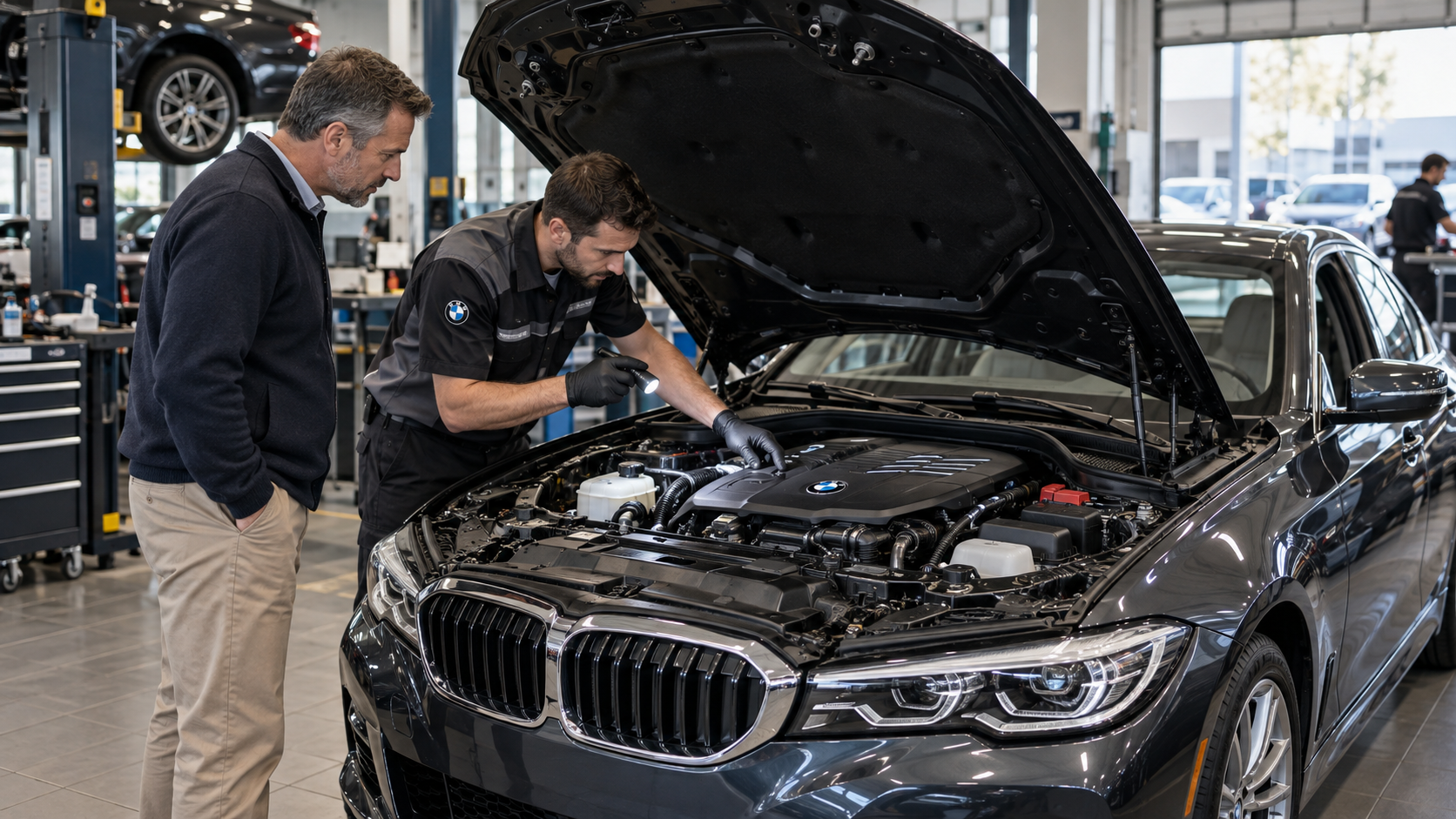
A BMW brake warning should trigger an inspection decision, not immediate panic or complete dismissal. The warning exists to identify that the brake pad material has crossed a monitored wear threshold and that the braking system should be evaluated before rotor wear or braking consistency begins to decline further.

Drivers should first consider how the vehicle has been used leading up to the warning. Heavy traffic exposure, steep terrain, repeated short trip driving, and aggressive braking patterns all accelerate wear progression.

Owners evaluating BMW brake service timing should review:

• Brake pad thickness remaining
• Rotor surface condition
• Brake vibration during stopping
• Noise during braking
• Brake fluid service history
• Front versus rear wear distribution
• Driving pattern exposure

BMW brake wear sensors exist to provide earlier visibility into braking wear progression before braking quality deteriorates substantially. Understanding how those sensors function helps owners evaluate service timing more accurately and interpret brake warnings with greater clarity.

Posted in:

Related Posts

BMW ServiceMobile Guide for Jacksonville BMW Owners

BMW ServiceMobile brings selected maintenance and repair work to an approved home, workplace, or nearby location. Therefore, owners can request certain services without driving to the dealership. Tom Bush BMW Jacksonville reviews the vehicle, requested work, location, and appointment details before confirming a visit. However, mobile care does not replace every dealership appointment. Some repairs need lifts, wheel geometry equipment, controlled testing, or extensive disassembly. For this reason, the service team first checks whether the requested work fits a mobile visit. How BMW ServiceMobile Works How does BMW ServiceMobile work? The program sends a BMW technician to an approved location for selected work. First, the owner submits vehicle details and describes the requested service. Then, Tom Bush BMW reviews the request and confirms whether mobile care fits the job. The review starts with the vehicle identification number, current mileage, warning messages, and service history. In addition, the team checks the requested location and available appointment times. These details show whether the technician can arrive with the proper tools and parts. more Once approved, the technician travels to the confirmed address. Additionally, the vehicle must sit in a safe, accessible space with enough room for the planned work. Furthermore, the owner must provide keys or approved access at the scheduled time. After completion, the technician records the work and shares any next steps. However, a newly discovered repair may require a dealership visit. The technician can explain that need before closing the appointment. Which BMW Services May Qualify Which BMW services can receive mobile care? Selected maintenance, inspections, batteries, software work, recalls, and light repairs may qualify. Tom Bush BMW must confirm each request because every procedure needs different tools, space, and parts. Battery replacement offers a useful example. A modern BMW battery may need registration after installation. Therefore, the technician needs compatible diagnostic equipment and the correct replacement battery. A simple parts swap without registration may leave charging data incorrect. Certain recall repairs may also fit a mobile appointment. However, every recall carries its own repair procedure. The service team must confirm the campaign number, required parts, labor steps, and site needs before dispatch. Software work may qualify when the technician can provide stable power and approved diagnostic access. Still, some faults need longer testing inside the dealership. Warning messages linked to several control units may also need deeper diagnosis. Tom Bush BMW may review requests involving these service areas: Battery testing or replacement may qualify after model and parts confirmation. Selected recall work may qualify after campaign review and parts verification. Certain inspections or light maintenance may fit an approved mobile visit. Limited software work may qualify when the location supports safe completion. This list does not promise mobile access for every BMW or every repair. Therefore, owners should submit the exact service concern before planning around an onsite visit. What Happens From Booking Through Completion A clear appointment request gives the service team the details needed for review. Owners should explain the concern, share dashboard messages, and note recent repair history. Photos may also clarify tire damage, fluid leaks, or visible parts concerns. BMW supports service scheduling through the My BMW App at participating centers. Owners can open the Vehicle tab, select Dealer Services, and choose Schedule Service. However, some BMW Centers redirect owners to a dealership scheduling page. Tom Bush BMW Jacksonville also maintains its ServiceMobile page as the direct local path. Therefore, the blog should send informed owners there after explaining the program. The scheduling page remains the place to request an appointment and confirm local availability. Before the scheduled visit, owners should prepare the location carefully: Park the BMW on firm, level ground with space around the work area. Remove locked gate restrictions and share building access instructions before arrival. Keep the keys available through the agreed handoff method. Move nearby vehicles, equipment, pets, or loose items away from the work area. Share any weather shelter details when rain may interrupt the planned work. Furthermore, the owner should keep a phone nearby during the appointment. The technician may need approval for added work or may find a concern requiring dealership equipment. When ServiceMobile Makes Sense BMW ServiceMobile may suit owners with limited travel time or difficult work schedules. It may also suit those who live farther from Tom Bush BMW Jacksonville. Still, the location must fall within the current service area. A workplace appointment may reduce time away from work. However, the parking area must permit repair activity and technician access. Property managers may require permission before any service begins. Home appointments may fit owners with a driveway or private parking area. By contrast, crowded garages or sloped parking spaces may not support safe work. Apartment parking may also require advance approval from property staff. Mobile care fits best when the requested job has a clear scope. A known recall, battery concern, or selected light service gives the team a defined task. However, complex noises or several warning messages may require dealership diagnosis. The owner should also consider vehicle safety. A BMW with severe tire damage, overheating, heavy fluid loss, or braking trouble may need roadside transport. In that case, call Tom Bush BMW or BMW Roadside Assistance before driving. When Your BMW Needs the Dealership Some BMW repairs require the service center from the beginning. Lifts give technicians access beneath the vehicle. Wheel geometry racks measure tire angles with controlled precision. Shop equipment also supports fluid handling, long diagnostic sessions, and road testing. Major brake work, suspension repairs, transmission concerns, and heavy engine repairs usually need dealership equipment. In addition, water leaks or electrical faults may need extended testing. These jobs can involve trim removal, controlled drying, or several diagnostic steps. A dealership visit also makes sense when several concerns appear together. One warning message may connect with another through shared electrical networks. Therefore, the technician may need full scan data, battery support, and repeated testing. BMW ServiceMobile gives Jacksonville owners another path for selected care. However, Tom Bush BMW must confirm the repair, location, and appointment before dispatch. Review the ServiceMobile page to request local details and start the scheduling process. When mobile care fits, the technician brings approved service to the confirmed location. When shop equipment is necessary, the dealership provides the space and tools. That clear division keeps each appointment matched with the work your BMW needs.

BMW Wiper Blades: When to Replace and Why OEM Fit Matters

BMW wiper blades rank among the most overlooked maintenance items on the vehicle. They are directly tied to visibility and driver confidence in wet weather. Most drivers wait for a visible failure before scheduling a replacement. By that point, the blade has been leaving partial wipe paths and depositing a film across the glass on every pass. Knowing the signs of a blade past its service window, and understanding why fit and construction matter on a BMW, makes replacement timing a clear decision. Signs BMW Wiper Blades Need Replacing Wiper blade rubber does not fail all at once. The compound hardens gradually through UV contact, temperature cycling, and interaction with windshield washer fluid chemistry. That hardening is the mechanism behind the most common replacement signs. A blade that looks physically intact may already be too rigid to make consistent contact across the glass. Streaking is the earliest and most reliable indicator. When rubber loses its pliability, it cannot conform to slight surface irregularities on the glass. The result is a series of streaks left behind after each wipe cycle, not a clean dry path. Skipping follows a similar pattern. A hardened blade bounces across the glass. The motion creates a chattering sound and leaves alternating wet and dry bands across the windshield. Smearing is a later-stage sign. When the blade begins to break down at the edges, it pushes water across the glass. A smear pattern that persists through multiple passes indicates the wipe edge has deteriorated and replacement is overdue. The following signs indicate BMW wiper blades have reached the end of their service window: more Streaking across the windshield after each wipe pass, even with fresh washer fluid. Skipping or chattering sound during the wipe cycle, indicating rubber stiffness. Smearing that does not clear after several passes, indicating edge deterioration. Visible cracking, splitting, or separation along the rubber wipe edge. Lifting at highway speed, where the blade loses contact with the glass above 60 mph. How BMW Windshield Curvature Changes Blade Requirements BMW windshields are not flat. The glass curves both laterally and vertically to match the vehicle's aerodynamic profile. That curvature creates a fit challenge that conventional framed wiper blades cannot fully address. A framed blade uses a rigid metal or plastic superstructure with a series of fixed pressure points along its length. On a curved windshield, those fixed pressure points leave gaps between contact zones. Uneven wiping and the streaking drivers notice in heavy rain follow from that gap. Beam blades address this through a spoiler-integrated spring steel frame with no external structure. The tension across the blade length allows it to flex and follow the windshield's curve continuously. Pressure is distributed evenly from tip to tip. On a BMW windshield, that continuous contact produces a clean wipe path across the full arc of each blade's travel. The low-profile beam design also reduces lift at higher speeds. A conventional framed blade acts as a sail above 60 mph. It reduces contact pressure and allows wind to pull the blade away from the glass. The beam profile minimizes that effect, keeping the blade seated against the windshield during highway driving. OEM vs Aftermarket BMW Wiper Blades The question that comes up most is whether OEM wiper blades are worth it or whether an aftermarket option at a lower price will produce the same result on a BMW. The answer connects to two factors: rubber compound specification and blade curvature matching. BMW OEM blades are manufactured to the curvature specification of each model's windshield. The arc built into the blade at rest matches the glass it contacts. An aftermarket blade built to a universal profile may not match that arc, leaving pressure inconsistencies across the wipe path. Those inconsistencies produce the same streaking and skipping patterns that worn blades create, even when the aftermarket blade is new. Rubber compound specification is the second factor. BMW OEM blades use a natural rubber compound treated to remain pliable across the temperature range the vehicle operates in. Some aftermarket blades use synthetic compounds that harden faster in cold climates or lose consistency in high heat. The following factors separate OEM BMW wiper blades from generic aftermarket options: Windshield arc matching: OEM blades are curved to the exact profile of the BMW model's glass, not a universal approximation. Rubber compound grade: OEM formulations retain pliability across a wider temperature range, extending wipe quality throughout the blade's service life. Attachment precision: OEM blades are built to BMW's specific attachment hardware dimensions, eliminating the adapter incompatibility common with universal blades. Aerodynamic integration: OEM beam blades are profiled to the vehicle's speed range, reducing lift without requiring aftermarket spoiler additions. How BMW Wiper Blade Attachment Hardware Works BMW uses attachment hardware that differs from the standard J-hook found on most non-European vehicles. Depending on the model and production year, the attachment may be a pinch-tab connection, a side-pin connection, or a top-lock connection. Each links the blade to the wiper arm differently. Each also requires a blade built to that specific interface. A universal aftermarket blade packaged with adapters may appear to solve the compatibility issue. In practice, adapter connections add play between the blade and the arm. That play allows the blade to shift laterally during the wipe cycle, reducing contact consistency. On a BMW, the wiper arm applies load at a specific angle matched to the windshield curvature. An offset blade connection changes the pressure geometry of the whole setup. OEM blades connect directly to BMW's attachment hardware without adapters. The connection is rigid, the blade seats at the correct angle, and the load is applied as the arm was built to deliver it. When drivers replace blades at a dealership service center, the service team selects the correct blade for the model and attachment type. No compatibility chart is required. When to Schedule BMW Wiper Blade Service Most BMW wiper blades reach the end of their service window between 12 and 18 months, though that range shifts based on climate and use. Drivers in climates with extended summer heat or heavy winter road salt contact will see degradation closer to the 12-month mark. Drivers in moderate climates with lighter seasonal variation may reach 18 months before noticeable wipe quality decline. The CBS system does not monitor wiper blade condition directly. Blade replacement is a calendar and condition-based decision, not a system-triggered alert. A sound approach is to inspect the blades at each oil service visit. Assessing wipe quality at the first sign of seasonal rain after a dry summer period is also useful. That window, where blades have gone through a full heat cycle and are asked to clear water again, is when early degradation becomes visible. Tom Bush BMW's service team includes a visual inspection of wiper blades as part of the multi-point check completed during oil service appointments. Drivers who are unsure of blade condition can request a wipe quality check during that visit. Installing blades at the service center ensures the correct OEM blade is matched to the specific model's windshield profile and attachment hardware. No adapter concerns, no guesswork on sizing.

OEM vs Aftermarket BMW Brake Pads Explained

BMW brake pads are engineered around specific braking characteristics, rotor materials, and heat management targets that directly shape braking feel and long term wear patterns. That calibration process is one reason BMW braking systems feel different from many other vehicles on the road. When drivers replace worn pads, the decision between OEM and aftermarket options changes more than replacement cost alone. Brake dust levels, rotor wear progression, braking consistency, pedal response, and heat management can all shift depending on the friction material installed. Understanding how those components interact helps Jacksonville drivers evaluate brake replacement choices with greater clarity before scheduling service. How OEM BMW Brake Pads Are Tuned Around Factory Braking Calibration OEM BMW brake pads are developed alongside the braking system itself. BMW engineers calibrate pad compounds, rotor materials, brake booster response, ABS programming, and stability control behavior together as a matched system. The brake pad is not treated as an isolated replacement component. It functions as one layer inside a larger braking calibration strategy. Brake pad compounds rely on friction material formulas that determine how aggressively the pads grip the rotor surface during braking. That friction coefficient changes pedal feel, stopping smoothness, braking modulation, and thermal stability. BMW tunes those characteristics around expected driving dynamics for each vehicle platform. A BMW 330i sedan and BMW X5 SUV do not use braking systems with identical operating demands. Vehicle weight, wheel size, brake rotor diameter, suspension geometry, and weight transfer all alter braking load distribution during deceleration. OEM brake compounds are selected to match those platform specific requirements. OEM BMW brake pads are engineered around: more • Rotor metallurgy • Brake heat distribution • ABS calibration • Stability control response • Vehicle curb weight • Expected braking temperature range This integration helps explain why some drivers notice immediate differences after installing aftermarket pads. The replacement material may operate with a different friction profile than the factory calibration originally designed around. Why Aftermarket Brake Pads Produce Different Dust, Noise, and Pedal Feel Aftermarket brake pads vary dramatically in friction material composition. Some prioritize lower brake dust. Others target aggressive stopping response or higher temperature tolerance. Those differences directly alter how the braking system behaves during daily driving. BMW factory brake pads are known for producing noticeable brake dust. That dust forms because softer friction compounds generate strong cold braking response and smooth braking modulation. The tradeoff is increased material transfer between the brake pad and rotor surface. Many aftermarket ceramic brake pads reduce visible dust substantially. Ceramic compounds operate differently than softer semi metallic formulations and usually create cleaner wheel surfaces during normal driving. The reduction in dust, however, can alter braking feel during colder temperature operation or early brake application. Drivers sometimes notice: • Firmer pedal response • Reduced initial bite • Different stopping smoothness • Increased brake noise • Sharper rotor contact feel • Longer cold braking engagement That does not automatically mean the aftermarket brake pad is defective. It means the braking characteristics have shifted away from the original BMW calibration profile. Brake noise differences also stem from compound variation. Pad hardness, vibration dampening layers, rotor condition, and thermal cycling all shape how sound transfers through the braking system. A quieter brake pad compound in one BMW platform may produce more vibration or squeal in another depending on rotor wear and operating temperature. Florida Heat Changes Brake Pad Operating Demands Jacksonville traffic patterns and Florida heat exposure create additional thermal stress across BMW braking systems. Brake pads operate by converting vehicle motion into heat through friction. As temperatures rise during repeated braking cycles, the friction compound must remain stable enough to maintain consistent braking response. SUV platforms like the BMW X5 and BMW X7 place even greater thermal demand on brake materials because larger vehicle mass generates higher braking load during deceleration. Stop and go traffic further compounds heat buildup because airflow across the braking system decreases during slower movement. Brake compounds respond differently as temperature rises. Softer compounds may maintain smooth braking feel but wear more rapidly under prolonged heat exposure. Some aftermarket ceramic compounds tolerate elevated temperatures well but can produce harder cold braking characteristics during initial application. Florida driving exposure increases attention toward: • Heat resistance stability • Rotor cooling efficiency • Traffic braking frequency • Brake fade resistance • Thermal expansion management • Pad material consistency This becomes important because brake pads that perform well during cooler climates may behave differently during extended high heat driving cycles common across Florida roadways. Rotor Compatibility Matters During Brake Pad Replacement Brake rotors and brake pads wear together as matched friction surfaces. When brake compounds change substantially, rotor wear patterns can change as well. That interaction is one reason BMW brake service recommendations frequently include rotor inspection during pad replacement. OEM BMW brake pads are engineered around specific rotor hardness and thermal expansion characteristics. Some aftermarket compounds generate more aggressive rotor contact, while others operate with smoother friction transfer. Improper compound pairing can accelerate scoring, vibration, or uneven rotor wear over time. Rotor surface condition also shapes braking consistency. Uneven heat transfer across worn rotors can create steering wheel vibration, pulsation during braking, or inconsistent pedal feel. Installing fresh brake pads against heavily worn rotors may leave the new pads unable to seat evenly across the rotor face. Several rotor related concerns should be evaluated during BMW brake service: • Rotor thickness variation • Surface scoring • Heat spotting • Pad transfer buildup • Rotor cooling vane condition • Uneven wear patterns Brake pad replacement decisions work best when the entire braking system is evaluated together rather than focusing only on friction material cost alone. What Jacksonville BMW Drivers Should Evaluate Before Choosing Brake Pads The strongest brake pad choice depends on how the vehicle is driven, how much braking heat it experiences, and what braking characteristics the driver prioritizes most. Some Jacksonville drivers prioritize low dust operation for easier wheel maintenance. Others prioritize preserving original BMW braking feel and factory calibrated pedal response. Drivers comparing OEM and aftermarket BMW brake pads should evaluate: • Braking consistency during traffic driving • Dust production expectations • Rotor wear compatibility • Brake noise sensitivity • Heat exposure patterns • Vehicle weight and braking load • Cold braking response • Long term maintenance planning OEM BMW brake pads remain closely tied to the original braking calibration engineered for the vehicle platform. Aftermarket compounds can alter braking feel, wear progression, and thermal response depending on the material selected. Understanding how those variables interact helps drivers evaluate brake replacement choices with greater confidence before scheduling BMW brake service.