

Choosing between the BMW i5 and BMW 5 Series changes more than the energy source under the floor. Both sedans share the same core 5 Series format, yet they handle energy in very different ways. For Jacksonville drivers, that difference can reshape commuting, highway travel, and weekly planning. The BMW i5 stores electricity in a high voltage battery beneath the cabin. By contrast, the gasoline 5 Series stores fuel in a tank and sends power through an automatic transmission. Therefore, the decision begins with how you drive, where you recharge or refuel, and how far you travel.
What Changes When You Choose an i5 Instead of a 5 Series?
What changes when you choose the BMW i5 instead of a gasoline 5 Series? The central change is how the car stores energy, sends power to the wheels, and restores that energy. BMW places the i5 battery low beneath the passenger compartment. As a result, the cabin keeps the familiar space expected from the current 5 Series family.
The gasoline 530i takes a different mechanical path. Its turbocharged four cylinder engine sends power through an eight speed automatic transmission. Therefore, acceleration involves engine speed, gear selection, and combustion. The i5 uses electric drive motors, so power reaches the wheels through a much simpler drive path.
That distinction changes the feel of common driving moments. Leaving a traffic light requires no gear buildup from the electric motor. However, the 530i delivers power through familiar engine and transmission responses. Additionally, a test drive should include city starts, highway merging, and steady cruising. Those situations reveal more than a single horsepower figure.
Daily Jacksonville Commuting Changes the Charging Question
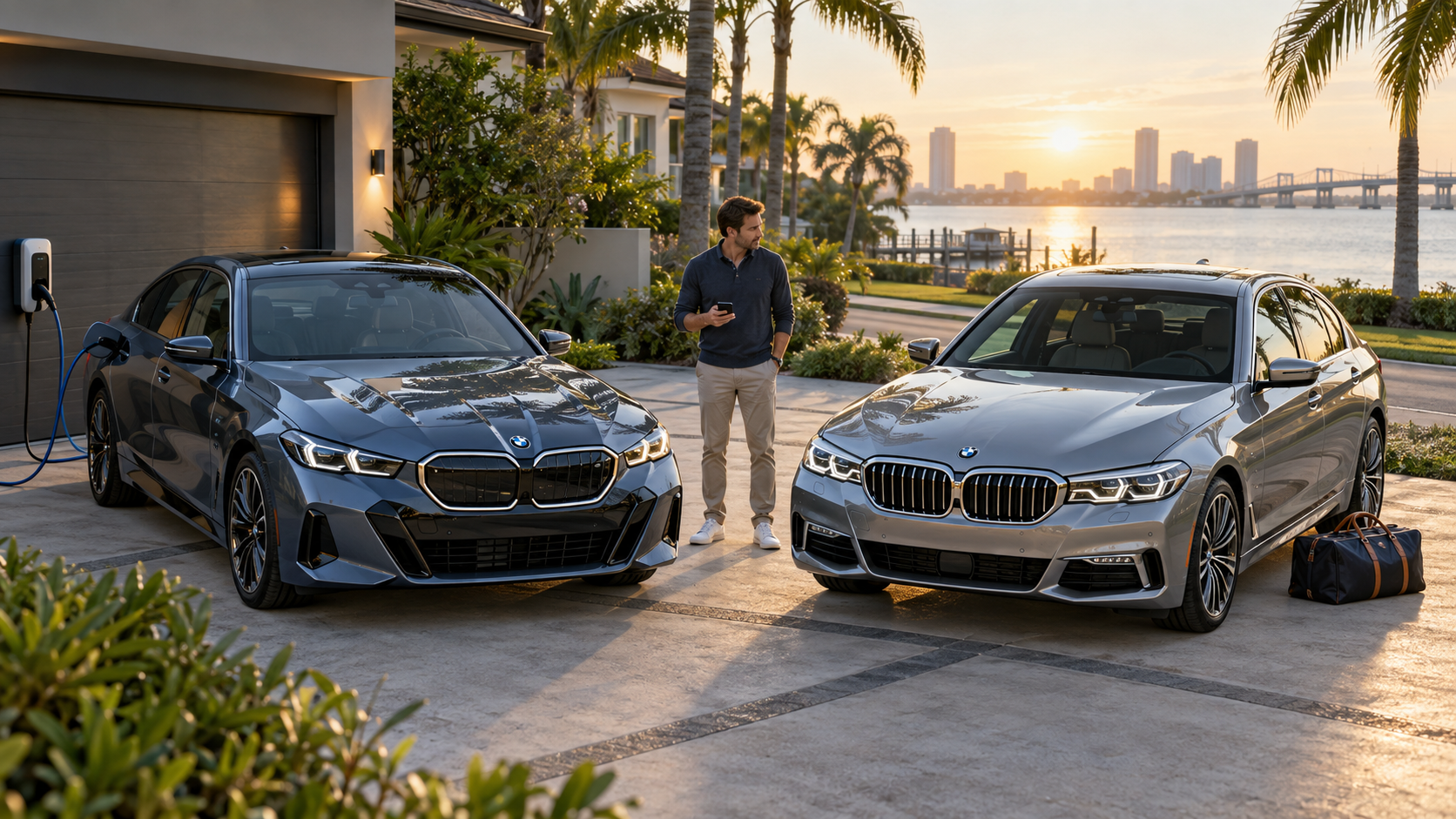
Do you need public charging for a normal Jacksonville commute? Home charging can cover routine replenishment when suitable charging access is available. BMW supports Level 2 AC charging on the i5, which suits overnight charging at home. Therefore, a driver can plug in after returning home and begin the next day with restored battery energy.
Public DC charging serves a different role. BMW supports DC fast charging at rates up to 205 kW on current i5 models. Under suitable charging circumstances, BMW cites about 30 minutes from 10 to 80 percent. However, charging speed changes as the battery fills. The car also manages battery temperature and charging power throughout the session.
The gasoline 5 Series keeps a familiar weekly rhythm. You drive until fuel runs low, stop at a station, refill, and continue. By contrast, an i5 owner with home charging may handle most energy replenishment while parked overnight. Therefore, the key question is not how many public chargers exist near home. It is whether your normal parking location supports regular charging.
Longer Florida Trips Require Different Planning
Can the BMW i5 handle longer Florida trips? Yes, but electric travel asks you to plan energy stops differently from gasoline travel. BMW lists current i5 range estimates that vary by configuration. Therefore, shoppers should review the exact i5 version, wheel setup, and published range before planning a route.
A long trip also depends on where fast chargers sit along the route. Starting with a high charge reduces the first charging need. Furthermore, route planning can place charging near meals, rest stops, or other planned breaks. This approach changes the travel schedule without turning every stop into a separate task.
Gasoline travel requires less advance energy planning. Moreover, fuel stations remain common along major Florida highways, and a fuel stop usually takes only a few minutes. However, frequent long distance travel does not automatically rule out the i5. A driver who knows regular routes can check charging locations before leaving. For this reason, compare your actual trip frequency before choosing either power source. A monthly highway trip creates a different routine from several long journeys each week.
Electric Response and Gasoline Power Feel Different
Why does the i5 respond differently from the 530i? Electric motors deliver torque without waiting for combustion, engine speed, or a transmission downshift. That direct response can make the i5 feel immediate when leaving a stop. In addition, the low battery placement gives the electric sedan substantial mass close to the road.
The gasoline 530i uses a turbocharged four cylinder engine with an eight speed automatic transmission. BMW lists 255 horsepower for the current 530i. By contrast, current i5 variants use electric motors with output that varies by configuration. Therefore, horsepower alone does not explain the driving difference.
Regenerative braking adds another distinction. The i5 can recover electrical energy while slowing and return some of that energy to the battery. BMW also provides selectable recuperation settings through iDrive. As a result, lifting off the accelerator can produce a different slowing response based on the selected setting.
A proper comparison should include low speed traffic, highway merging, braking, and steady cruising. Those moments show how each drivetrain communicates with the driver.
Which BMW Fits Your Driving Routine?
Which BMW fits your driving routine? The stronger match comes from charging access, travel frequency, annual mileage, and your preferred power delivery. Start with your parking location. If you can charge at home, the i5 can move much of your weekly energy routine to overnight parking. Without dependable home charging, public charging deserves closer review.
Next, compare how far you travel during a normal week. A Jacksonville commute with local errands places different demands on energy planning than frequent interstate travel. Additionally, calculate what you pay for home electricity, public charging, and gasoline. Those numbers give you a personal cost comparison instead of a universal claim.
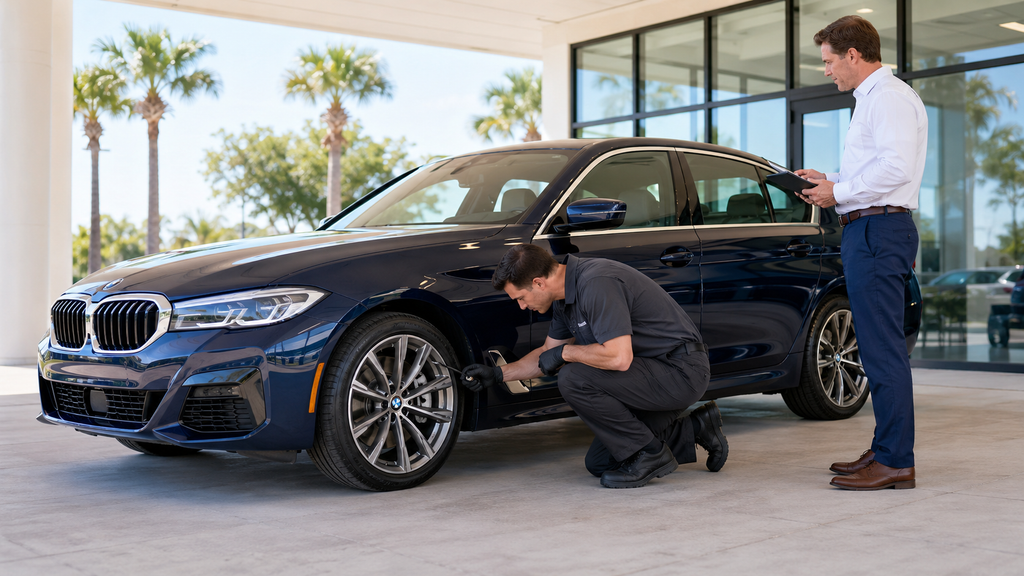
Service categories differ as well. The i5 does not use engine oil, spark plugs, or gasoline engine filters. However, both cars still need tires, brakes, cabin filters, and other scheduled care. Tire wear also deserves attention because vehicle weight, driving style, and tire choice can change replacement timing.
Finally, drive both cars on roads that resemble your normal routes. Compare acceleration, braking, cabin quietness, charging access, and trip planning. The BMW i5 and gasoline 5 Series share a familiar sedan foundation, but their energy routines are distinct. Your schedule will show which one fits more naturally.