
Blog / Jacksonville BMW Dealer

Blog

All Jacksonville BMW Dealer Tom Bush BMW Things To Do In Jacksonville Jacksonville Amenities Tom Bush BMW Jacksonville Service Jacksonville BMW Service Jacksonville Luxury Cars Jacksonville Entertainment Jacksonville Used Cars Tom Bush Family of Dealerships Jacksonville Parks Jacksonville Eateries Jacksonville Restaurants Family Fun in Jacksonville Jacksonville Landmarks Jacksonville Beaches Tom Bush BMW Collision Repair Holidays in Jacksonville Jacksonville Vegetarian Eating Things To Do Near Jacksonville Vegan Foodies BMW Lease Jacksonville Jacksonville Collision Small Town Fun
BMW military discount

BMW Military Discount Guide for Jacksonville Families

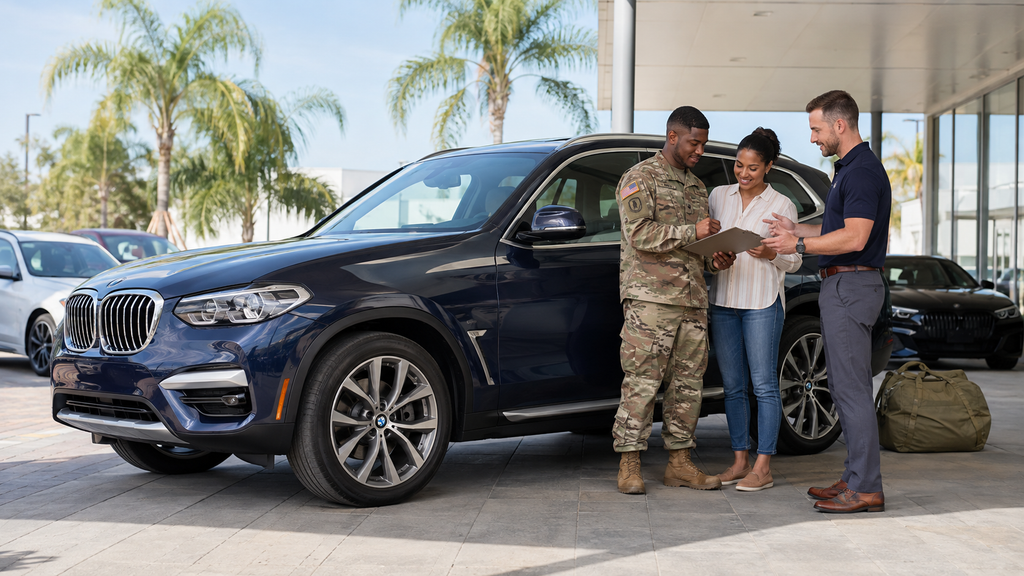
BMW military discount eligibility can matter for Jacksonville families managing vehicle timing around service, relocation, and household plans. The program can reduce the purchase or lease cost on qualifying new BMW models. However, the amount can change by model and transaction. Therefore, military families should verify current terms before signing paperwork. Jacksonville adds another layer because PCS timing and Florida registration can shape the process. In addition, families may need documents for military status, residency, insurance, and registration. A clear plan can keep those pieces from colliding at delivery. Who Qualifies for the BMW Military Discount Who can qualify for the BMW military discount? BMW currently includes several military groups and family categories within its incentive program. Eligible groups include Active Duty members, National Guard members, Reservists, Veterans, Retirees, Military Spouses, and Surviving Spouses. Immediate Military Family Members can also qualify after verification. Therefore, eligibility reaches beyond active duty personnel alone. more BMW uses ID.me to verify status online. Once verification is complete, the customer submits the required lead form. BMW then sends a confirmation email with a Customer ID and Offer Code. The BMW Center uses those identifiers when applying the incentive. Before starting the process, gather the details tied to your military status. This preparation can make the verification step easier. Confirm which qualifying military category applies to you before submitting the ID.me verification. Complete the BMW lead form after verification so the Customer ID and Offer Code can be issued. Keep the confirmation email available when discussing the transaction with the BMW Center. Because eligibility rules can change, check the current BMW program page near your purchase or lease date. That final check matters even if you qualified under an earlier promotion. How ID.me Verification Connects to the BMW Offer ID.me handles the identity and military status check for BMW. However, verification alone does not finish the incentive process. After ID.me confirms status, BMW requires the customer to submit its lead form. Then BMW sends the Customer ID and Offer Code by email. Those two identifiers connect the verified customer with the offer at the BMW Center. This sequence matters because the dealership cannot rely on a verbal military status claim. The transaction needs the current program identifiers. Therefore, completing verification before your visit can reduce paperwork at the store. A spouse or immediate family member should also verify under the proper category. BMW lists those groups separately within the current program. For this reason, the person using the incentive should complete the correct verification path. The process is straightforward when each step happens in order. Verify status first, complete the lead form, save the email, then review the current offer. Why the Offer Amount Needs Current Verification How much should a military family expect from the BMW program? The amount can vary by model, transaction structure, and current promotion. BMW currently advertises military and first responder incentives from $500 to $5,000 on eligible new leases or purchases. However, each BMW series can carry its own range. Some models also have separate purchase or lease structures. Tom Bush BMW may also list local military program offers for specific models. Those listings can carry their own dates and amounts. Therefore, one number should never be treated as universal across the entire lineup. The payment method can matter too. A lease, cash purchase, or financed purchase may follow different program rules. In addition, promotional financing can have separate restrictions. Before comparing numbers, match the current incentive to the exact BMW under consideration. Then confirm whether the offer fits the planned lease or purchase path. This keeps an outdated promotion from shaping the budget. PCS Timing Can Change the Lease Versus Finance Decision A military household may have a clear plan today and receive new orders later. Therefore, contract timing deserves careful review before choosing a lease. A lease usually carries a fixed term and mileage allowance. If PCS orders arrive during that term, the household may need to reassess the contract. Federal protections can apply in certain qualifying military situations. Military Consumer guidance explains that some service members can terminate qualifying vehicle leases after certain PCS orders. The rule can apply to qualifying overseas moves lasting at least 180 days. However, wear, damage, mileage, and other charges can still remain. Financing follows a different structure. The household owns the vehicle subject to the loan and can later sell or trade it. That route may suit families who expect more uncertainty around assignment length. Before choosing either path, compare the contract timeline with likely duty changes. Review mileage needs, relocation plans, possible overseas assignments, and expected time in Jacksonville. No single contract works for every military household. The right review starts with the service timeline and written contract terms. Florida Registration Can Look Different for Military Households Military residency and duty station location are not always the same. Therefore, Jacksonville families should check Florida registration rules before assuming standard treatment applies. Florida provides certain registration provisions for qualifying military members. Some nonresident service members may qualify for an exemption from the state's $225 initial registration fee. Supporting military documents are required for that exemption. Jacksonville's Tax Collector also lists military paperwork for title and registration processing. The required records can include military orders, insurance records, title documents, and exemption forms. Before visiting the registration office, review these items carefully. Confirm whether you are a Florida resident or a qualifying nonresident service member for registration purposes. Gather military orders and the required Florida forms before submitting title or registration paperwork. Confirm that the insurance policy meets Florida requirements for a vehicle kept in the state. A service member stationed in Jacksonville may still maintain legal residence elsewhere. That distinction can change which forms apply. Therefore, verify residency status before completing the registration packet. Prepare the Paperwork Before Choosing the BMW The final step is bringing the military program and relocation details into one purchase plan. Start with current BMW eligibility and the correct ID.me verification path. Next, compare the selected BMW with the current military offer. Confirm the exact model, transaction type, incentive amount, and expiration date. Then review lease or finance timing against upcoming orders or known relocation plans. Registration deserves the same preparation. Gather military orders, insurance records, identification, and any Florida forms tied to your residency status. In addition, keep the BMW Customer ID and Offer Code accessible for the dealership. A Jacksonville military family may need to manage several timelines at once. Service obligations, lease terms, registration deadlines, and move dates can all overlap. Therefore, a little preparation before delivery can prevent avoidable delays. Tom Bush BMW Jacksonville can review current BMW program details for the model you choose. Still, official BMW and Florida sources should guide eligibility and registration questions. That approach keeps the transaction tied to current rules and current paperwork.

BMW X5 xDrive50e Guide for Daily Jacksonville Driving

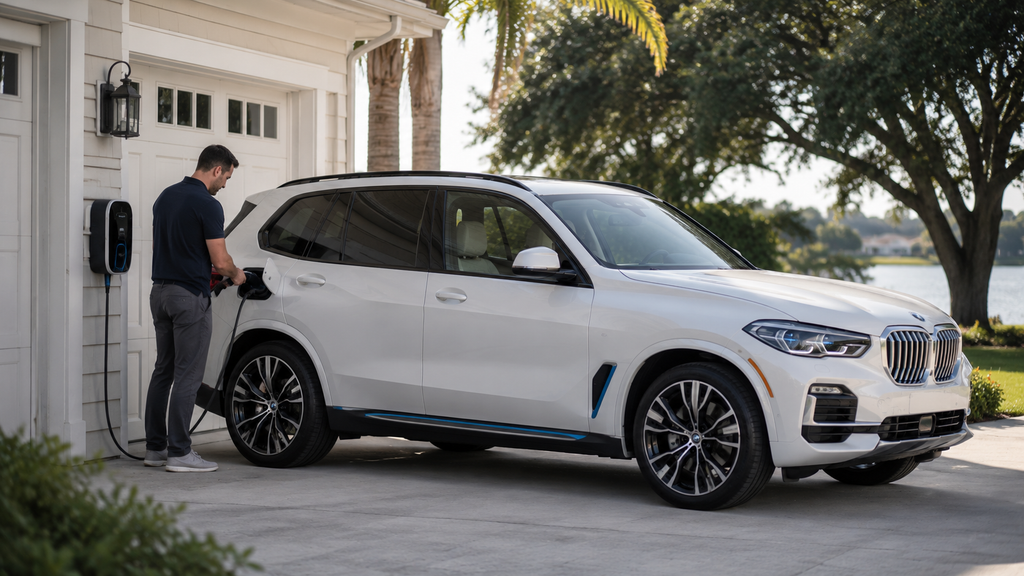
BMW X5 xDrive50e drivers in Jacksonville can use electric power for shorter trips while keeping gasoline available for longer travel. However, the value of that setup depends on charging frequency and driving distance. The vehicle combines a high voltage battery, an electric motor, and a turbocharged gasoline engine. Therefore, each trip can use electricity, gasoline, or both. For local travel, the electric portion may cover errands, school runs, or a short commute. Longer routes can bring the gasoline engine into greater use. In addition, drive modes let you decide when you want to use or save battery energy. Home charging also changes how much gasoline you may need during a normal week. How the BMW X5 xDrive50e Uses Gasoline and Electricity How does the BMW X5 xDrive50e move between electric and gasoline power? The drivetrain combines battery energy with a turbocharged inline six engine. The battery sends electricity to an electric motor. Because electric torque arrives quickly, the motor can move the vehicle without waiting for engine speed to rise. However, the gasoline engine remains ready when you need more power or more driving distance. In HYBRID mode, the vehicle can blend both power sources. Therefore, the engine may start when speed, acceleration demand, or battery level calls for it. ELECTRIC mode gives priority to battery power while enough charge remains. more By contrast, SPORT mode gives the gasoline engine a larger role. That can change throttle response and how quickly the vehicle reacts to stronger accelerator input. The transmission also works with the engine to manage road speed and power delivery. Regenerative braking adds another layer. When the vehicle slows, the electric motor can recover part of that motion as electrical energy. As a result, some energy returns to the battery instead of leaving only as brake heat. A test drive should include neighborhood roads, highway merging, and repeated stops. Those situations show how the two power sources share the work. Electric Range in Jacksonville Heat Can a Jacksonville commute fit inside the electric portion of the drive? The current X5 xDrive50e carries an estimated electric range near 40 miles. However, that figure can move with temperature, traffic, wheel choice, and speed. Air conditioning also uses battery energy. Therefore, a hot afternoon trip may draw more electricity than a mild morning route. Highway travel can also use energy faster than slower city travel. Aerodynamic drag rises as speed increases. For this reason, a longer interstate commute may use the battery faster than a shorter urban route. A useful comparison starts with your usual round trip mileage. If your daily route stays well below the estimated range, electric travel may cover most of that distance. If your route sits closer to the limit, cooling demand and highway speed deserve more attention. In addition, you should think about how much charge you want left at home. Some drivers prefer a reserve for an unexpected errand. Others return home and connect the vehicle soon after parking. Jacksonville heat does not change the basic purpose of the plug in hybrid layout. Instead, it changes how carefully you should compare your route with the available electric distance. Home Charging and Overnight Replenishment Home charging can decide how much electric travel you get from the BMW X5 xDrive50e. A 120 volt outlet can add energy, while 240 volt charging works faster. BMW also offers charging equipment for residential use. However, the electrical service at the house matters just as much as the charger. A qualified electrician should review the panel, circuit, parking location, and cable path. Before relying on overnight charging, review these points: Confirm that the parking space can reach the planned outlet or Wallbox without stretching the cable across a walkway. Ask an electrician whether the panel can support the planned circuit and charging equipment under local electrical code. Compare the expected charging time with the hours the vehicle usually remains parked at home each night. The X5 xDrive50e carries a smaller battery than a full electric vehicle. Therefore, overnight replenishment may fit easily into many routines. Still, the exact timing depends on the charging source and remaining battery level. In addition, charging frequency changes gasoline use. A driver who plugs in most nights may complete more local miles on electricity. Someone who rarely charges will ask the gasoline engine to do more of the work. Driving Modes Control When Electric Energy Gets Used Why would a driver save battery charge instead of using it first? Battery Hold can preserve charge for a later portion of the trip. A driver might begin on the highway and finish in slower city traffic. Battery Hold can keep electric energy available until that later segment. However, using the feature well requires some route planning. HYBRID mode takes a more automatic approach. The vehicle decides when to use the engine, electric motor, or both. Therefore, it can react to speed, accelerator input, battery level, and route demands. ELECTRIC mode gives battery power priority while charge remains. That can suit shorter Jacksonville errands or a commute that fits comfortably within electric distance. By contrast, SPORT mode keeps the gasoline engine more involved. HYBRID ECO PRO aims to reduce energy use through more conservative power delivery. However, a shopper should try the available modes instead of judging them only from a menu description. The goal is to learn which setting matches your routes. Furthermore, the useful mode may change between a weekday commute and a longer weekend drive. Longer Trips Shift More Work to the Gasoline Engine What happens after you use the electric portion? The gasoline engine keeps the X5 xDrive50e moving without requiring an immediate charging stop. That distinction separates a plug in hybrid from a full electric vehicle. You can leave Jacksonville with a full battery and continue after the stored electric energy drops. Therefore, longer travel does not require a charging stop solely to keep the trip moving. The gasoline engine takes a larger share of the work once battery energy falls. As a result, fuel use rises when more miles occur after the electric portion. Highway speed can increase that gasoline share further. This makes charging frequency central to the ownership calculation. If you charge before most local trips, the battery can cover a larger share of short distance travel. If you skip charging, the vehicle still drives, but gasoline use rises. In addition, a long trip can include both approaches. You might begin with battery power, use more gasoline on the highway, then preserve charge for later city streets. That range of options suits drivers whose schedules change. However, the plug in hybrid setup makes the most sense when charging becomes a regular habit. Monthly Energy Cost Depends on Electric Miles How should a Jacksonville driver estimate monthly energy spending? Start by separating electric miles from gasoline miles. A simple calculation works better than looking at one MPG figure. First, estimate your monthly mileage. Then estimate how much of that distance could occur before the gasoline engine takes over. Review these inputs before comparing totals: Multiply expected home charging energy by your household electricity rate, then include any public charging you expect to use. Estimate gasoline miles separately, then use local fuel prices and expected fuel economy for the gasoline portion. Include any home electrical work needed for charging, since installation cost changes the first year total. Because charging habits can differ from one household to another, two drivers can spend very different amounts on gasoline. A short commuter who charges nightly may use little fuel during the week. A longer highway commuter may lean on gasoline more heavily. In addition, local electricity pricing gives the electric portion its own cost structure. Gasoline prices can move from week to week. Therefore, compare both energy sources using current local rates when you review a lease. The BMW X5 xDrive50e makes the strongest case when its two energy sources fit your schedule. Your commute length, home charging access, and travel pattern should guide that decision. If electric miles cover much of your local travel, the battery can handle more routine trips. However, the gasoline engine remains ready when your plans extend farther.

BMW i4

BMW i4 Versus BMW 3 Series for Jacksonville Driving

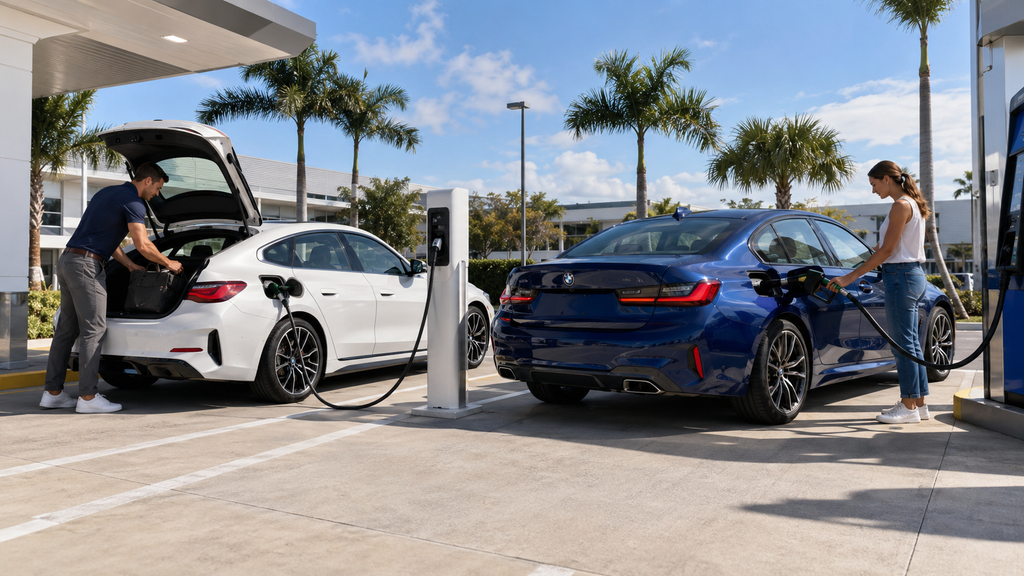
BMW i4 shoppers in Jacksonville may find the 3 Series familiar at first. However, charging, fueling, and power delivery shape the daily routine. In addition, both models serve drivers who want a compact BMW with four doors and strong road manners. However, their drivetrains ask for different habits. The i4 stores energy in a high voltage battery and sends it to an electric motor. The 330i uses gasoline, a turbocharged four cylinder engine, and an eight speed automatic transmission. Therefore, choosing between them means looking past size and styling. Your commute, parking setup, travel plans, and energy costs deserve equal attention. BMW i4 and BMW 3 Series Start With Two Different Powertrains What changes when you choose a BMW i4 instead of a BMW 3 Series? The largest change is how each car stores energy and delivers power. Therefore, the i4 uses battery electricity to turn an electric motor. Because an electric motor can deliver torque without waiting for engine speed to rise, response starts quickly. There are no conventional gear changes during acceleration. Therefore, the sensation can feel direct and smooth from a stop. more By contrast, the 330i takes another route. Its turbocharged four cylinder engine burns gasoline and works through an eight speed automatic. As speed rises, the transmission changes ratios to keep the engine within a useful operating range. You feel those shifts as part of the car's acceleration pattern. In addition, regenerative braking separates the two cars. When the i4 slows, its electric motor can recover some motion and return energy to the battery. The 330i relies on its braking hardware while the engine and transmission continue their normal roles. Therefore, pedal response and deceleration can feel different during the same Jacksonville commute. A shopper should evaluate more than acceleration figures. Pay attention to throttle response, braking feel, noise, and the rhythm of stop and go traffic. Those details reveal which drivetrain feels more natural to you. What Jacksonville Heat Means for BMW i4 Range How should summer heat factor into BMW i4 range planning? Heat can raise the energy needed for cabin cooling, while speed and wheel choice also shape driving range. Because both functions need energy, the i4 must power propulsion and climate control from the battery. Therefore, strong air conditioning demand can reduce the energy left for driving. Highway speeds can also raise energy use because aerodynamic drag increases as speed rises. Larger wheels and certain tire choices can change efficiency as well. Therefore, BMW lists estimated range by i4 configuration, with no single number covering every version. The current i4 eDrive40 carries an estimated range above 300 miles in certain configurations. Other i4 variants carry different estimates. Therefore, shoppers should compare the exact model, wheel package, and drive layout they are considering. In addition, Jacksonville commuting makes charging reserve worth planning. A normal weekday route may use only part of the battery. Still, an airport run, beach trip, or longer interstate drive can change the day's mileage quickly. Keeping a comfortable reserve can make those schedule changes easier to handle. The useful question is not whether Florida heat makes an i4 unsuitable. Instead, ask how your normal mileage compares with the selected i4's estimated range. Then account for cooling, highway travel, and the charge level you prefer to keep available. Home Charging Changes the Daily Routine For a Jacksonville homeowner, home charging can shape the entire BMW i4 routine. Level 2 charging uses a 240 volt connection and replenishes the battery while the car is parked. Furthermore, BMW supports home charging through options such as the Flexible Fast Charger and BMW Wallbox. A qualified electrician should review the electrical panel, circuit capacity, parking location, and cable path. Therefore, the home itself becomes part of the EV decision. Before choosing the i4, review these items: Confirm whether your parking space can reach a dedicated 240 volt charging connection. The cable should reach the charge port without crossing a risky walkway. Ask an electrician to review panel capacity and the planned circuit. The electrical setup must match the charging equipment and local code requirements. Estimate how much mileage you need to replace overnight. A driver covering modest daily mileage may replenish that energy well before morning. Home charging changes the timing of refueling. Instead of making a separate stop, you can replenish the battery while the car remains parked overnight. That routine may suit drivers with predictable weekday mileage and dedicated parking. Public Charging Matters More on Longer Trips Public charging becomes more relevant when a trip extends beyond your normal home charging routine. DC fast charging sends power to the battery much faster than residential Level 2 equipment. Therefore, longer drives require a different planning process. You need to consider charger location, battery level, charging speed, and the remaining distance. BMW guidance commonly focuses on charging from about 10 percent to 80 percent during a fast charging stop. That range matters because charging speed changes as the battery fills. The car may accept higher power earlier in the session, then reduce charging speed later. Therefore, filling from a low state of charge to 80 percent can be more time efficient than waiting for a full battery. In addition, Jacksonville drivers may use public charging differently from home charging. Local errands may rely almost entirely on overnight charging. However, trips toward Orlando, Savannah, or other distant destinations may place greater importance on DC charger access. Drivers comparing the i4 and 3 Series should consider stop length as well as stop frequency. The 330i can refill quickly at a gas station. The i4 may require more planning, but home charging can reduce routine fuel stops during the week. Driving Feel and Cabin Layout Separate the Two BMWs The i4 and 3 Series share a familiar BMW size class, but their road manners are not identical. Electric propulsion changes acceleration, sound, and deceleration. Because electric motors respond quickly, the i4 can feel immediate when leaving a traffic light. Regenerative braking also changes how the car slows after you lift the accelerator. By contrast, the 330i delivers power through engine speed, turbo response, and transmission shifts. That difference becomes easier to judge during a test drive. Pay attention to how each car reacts in slow traffic, highway merging, and parking lot speeds. In addition, notice whether regenerative braking feels natural during repeated stops. Cargo access also separates the two body styles. The i4 uses a rear hatch that opens with the rear glass. The 3 Series uses a conventional sedan trunk. Therefore, the i4 can make larger objects easier to load through the wider opening. However, the sloping roofline can shape rear headroom and cargo height. The 3 Series offers a more traditional sedan layout with a separate trunk area. A shopper carrying luggage, sports gear, groceries, or child equipment should inspect both spaces in person. Cubic foot measurements cannot show every loading difference. Opening shape and interior height can matter just as much. Lease Term Costs Put Charging and Fuel Into Context Which costs should you compare across a normal lease term? Start with payment, energy, mileage, charging habits, and routine service. The i4 may begin with a higher vehicle price than a comparable 3 Series configuration. However, the energy calculation follows a different path. Home electricity, public charging rates, and annual mileage shape the i4 side. Gas prices and fuel economy shape the 330i side. Before comparing totals, review these categories: Estimate your yearly mileage and expected home charging share. More home charging can change the electricity calculation compared with frequent public charging. Compare expected gasoline spending for the 330i using your normal commute. Use a realistic local fuel price instead of a national average. Review scheduled service and lease terms for each car. Tires, mileage limits, insurance, and lease structure can alter the total on either side. Furthermore, your parking setup may carry an upfront electrical cost. A homeowner who needs a new circuit or Wallbox installation should include that expense. A home with suitable electrical service may require less work. Neither drivetrain produces one universal cost answer. Therefore, the better comparison uses your mileage, parking, travel schedule, and local energy prices. Those inputs show which choice fits your Jacksonville routine more closely. The BMW i4 and BMW 3 Series approach the same size class through two very different drivetrains. One centers the routine around charging. The other keeps gasoline fueling and a familiar engine layout. Your commute, home setup, travel plans, and preferred road feel should guide the decision.

Jacksonville BMW Post Sale Support at Tom Bush BMW

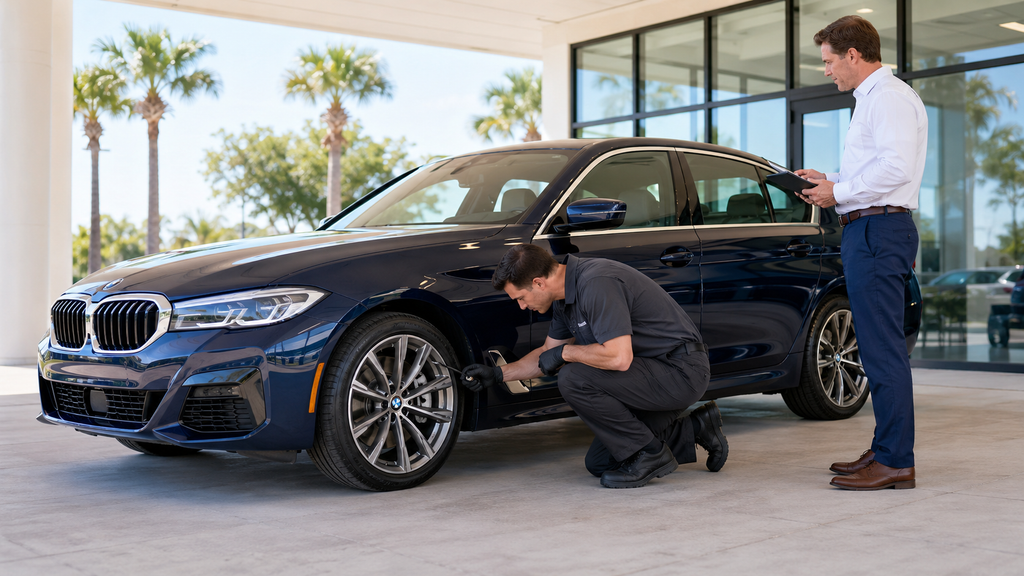
Jacksonville BMW post sale support should make BMW ownership easier after you drive home. You may have questions about features, service, warranty coverage, or your next lease. Tom Bush BMW Jacksonville remains a resource during each of those moments. Customer reviews mention clear communication, familiar advisors, and continued support after delivery. As a BMW owner, you deserve timely answers tied to your vehicle and current needs. What Continues After BMW Delivery What should continue after BMW delivery? Owners should retain access to product guidance, service scheduling, warranty information, and future planning resources. A new BMW includes controls that may take time to learn. Therefore, a second explanation can be useful after several days of driving. BMW Genius staff can explain vehicle features before, during, and after purchase. That continued access matters when a driver has questions about menus, driver assistance settings, phone pairing, charging, or connected services. In addition, owners may need help finding service information inside the My BMW App. more The dealership relationship also moves into service. Routine maintenance, tire concerns, warning messages, and warranty questions create new conversations. For this reason, clear contact information should remain easy to find after delivery. Lease customers enter another planning stage near the end of the term. BMW lists three main paths at lease end. A customer may choose another BMW, purchase the current vehicle, or return it. Therefore, post sale care includes more than repair visits. It also includes answers, records, scheduling, and guidance for the next vehicle decision. Communication During Service and Follow Up What does clear service communication include? It should cover appointment timing, inspection findings, proposed work, costs, authorization, and completion updates. A service advisor begins by documenting the customer’s concern. Clear details matter because a noise, warning message, or intermittent issue may require several checks. Therefore, the owner should describe when the concern started and when it appears. After inspection, the advisor should explain what the technician found. The explanation should separate urgent work from work that can wait. In addition, the customer should know the price before approving added repairs. Useful updates may include: The advisor explains whether the appointment remains on schedule. The customer receives clear details before approving added work. The advisor identifies parts delays or further testing needs. The final review connects completed work with future service steps. Tom Bush BMW reviews mention service advisors by name and describe helpful updates. Some reviewers also discuss clear cost information and continued dealership use. Therefore, shoppers can look beyond a star rating and read how communication worked. A warranty repair still needs clear explanation. Coverage may change who pays, but it does not remove questions about timing, parts, or repair steps. The customer should understand what the warranty covers and what remains outside it. Why Familiar Advisor Relationships Matter Customers may mention specific advisors because continuity can simplify later visits. A familiar contact may remember prior discussions, review earlier records, and recognize recurring concerns. Vehicle history also gives the advisor useful context. Service records show completed maintenance, earlier repairs, and prior recommendations. Therefore, the next conversation can start with documented information instead of a blank page. Continuity does not require one advisor for every visit. Schedules change, and another team member may assist. Still, organized records and clear notes should preserve the earlier discussion. A familiar sales contact can also assist after delivery. Questions may arise about another household vehicle, lease timing, trade information, or a future order. In addition, the advisor may connect the customer with BMW Genius or the service team. Review comments naming the same dealership across several visits suggest that relationships grow through repeated contact. Each call, appointment, and explanation adds another point of reference. For shoppers, the useful question is not whether an advisor remembers every detail. The useful question is whether the dealership keeps clear records and follows through on prior conversations. What Repeat Purchases and Leases May Show Repeat purchases may show that a dealership earned another chance to serve the same customer. They do not prove that every visit went perfectly. However, returning across several years can reflect trust in the broader relationship. Tom Bush BMW reviews include customers who describe several BMW purchases. Other comments mention plans to return or continued service for more than one vehicle. These patterns connect sales, service, and future planning. A repeat lease follows a similar path. The customer first completes the current term. Then, the dealership may discuss returning the vehicle, purchasing it, or choosing another BMW. Several factors can shape a return decision: The dealership remained available after delivery. Service communication stayed clear during later visits. Advisors followed through on promised next steps. The customer received useful guidance near lease end. Price and inventory still matter. However, the relationship can shape where a customer begins the next search. A familiar team may reduce the need to rebuild every conversation. Review patterns deserve careful reading. One comment describes one moment. Several comments using similar themes provide a clearer view of what customers notice across different visits. What Jacksonville BMW Shoppers Should Evaluate Jacksonville BMW shoppers should evaluate the dealership before and after signing. The purchase meeting shows only one part of the relationship. Before delivery, ask who handles later product questions. Also ask how service updates arrive and who can explain warranty concerns. A clear answer should name the contact path without making vague promises. After delivery, watch how the team responds when a question appears. Response speed matters, but answer quality matters too. The reply should address the question and explain the next step. During service, evaluate these points: The advisor records the concern in clear language. The customer receives updates before added work begins. Repair findings come with understandable explanations. The final discussion includes completed work and next steps. Tom Bush BMW reviews highlight communication, named advisors, and repeat visits. Those themes give future customers a framework for reading local feedback. They also show why post sale care deserves attention before the purchase closes. Jacksonville BMW post sale support should feel organized, clear, and accessible. Contact Tom Bush BMW Jacksonville with product, service, warranty, or lease planning questions. A strong dealership relationship continues through answers, appointments, records, and future decisions.

BMW M Certified Dealer Support at Tom Bush BMW Jacksonville

BMW M Certified dealer status gives Jacksonville drivers a focused starting point for M vehicle research. The designation applies to the dealership, not to one individual car. Therefore, it points to dedicated M knowledge across sales guidance, delivery education, and authorized BMW care. In addition, Tom Bush BMW Jacksonville identifies itself as an M Certified Dealer. However, the badge deserves more explanation than a logo beside the dealership name. M vehicles use distinct chassis hardware, drive settings, braking components, tires, and cooling equipment. For this reason, informed guidance matters before purchase and after delivery. What BMW M Certified Means What does BMW M Certified mean at a dealership? It signals focused preparation for BMW M products and the people who own them. Therefore, the designation should lead to informed conversations about M models, equipment, operation, and care. Furthermore, the designation is separate from BMW Certified Pre Owned status. BMW Certified Pre Owned applies to qualifying used BMW vehicles after inspections and program approval. By contrast, M Certified describes a dealership credential tied to BMW M support. more However, BMW does not publish its complete internal approval checklist on its public consumer site. Therefore, this page will not invent staffing counts, facility thresholds, or private program rules. Publicly visible information supports a narrower conclusion. Tom Bush BMW Jacksonville holds the designation and presents M focused sales and service resources. Still, the credential has value only when the dealership can explain the car clearly. Drivers should receive direct answers about model category, equipment, settings, and future care. They should also know who can answer technical questions after delivery. Why M Knowledge Matters Before Purchase BMW M vehicles place greater emphasis on steering response, braking control, chassis tuning, cooling, and drivetrain calibration. Therefore, choosing one involves more than selecting exterior paint and interior trim. A driver may compare rear wheel drive with M xDrive. Another may compare a manual transmission with an automatic transmission. In addition, brake options, wheel sizes, tires, seats, suspension settings, and driver controls can change the car’s character. An informed consultation should connect each choice with the driver’s plans. A daily commute creates one set of priorities. Road trips, autocross events, or occasional track sessions create another. Consequently, staff knowledge can make the configuration discussion clearer. Before ordering or purchasing, ask the dealership to explain: How the selected drivetrain sends power during different drive settings. How wheel and tire choices change ride quality, grip, and replacement planning. How brake choices change pedal feel, heat management, and service costs. How suspension settings change body control on local roads. Which controls deserve a full demonstration during delivery. Furthermore, BMW Genius support can continue after the sale. BMW describes Genius staff as specially trained product experts who explain vehicle features before, during, and after purchase. That resource can be useful when an M cockpit contains several configurable controls. Models Such as the M340i and Full M Models Is an M340i the same type of M car as an M3? No. Both carry M engineering cues, yet BMW places them in different product groups. The M340i starts with the BMW 3 Series sedan foundation. It adds a stronger inline six engine, M tuned hardware, sport focused controls, and distinctive trim. Therefore, it can suit drivers seeking quick road response with familiar 3 Series comfort. The M3 comes from BMW M’s full model range. It receives M developed components across the engine, transmission, differential, suspension, steering, brakes, cooling, structure, and aerodynamics. Consequently, its engineering reaches deeper into the entire car. The same distinction appears between an M440i and an M4. One adds M tuning to a core BMW model line. The other receives broader development from BMW M. Horsepower alone cannot explain this difference. Instead, drivers should examine how the complete vehicle responds to steering, braking, heat, grip, and repeated hard driving. With that in mind, an M Certified dealer should explain both categories without treating either choice as incomplete. The right category connects with the driver’s roads, comfort preferences, transmission choice, and planned driving. Therefore, a clear comparison should begin with those questions. What M Focused Service Support Should Address M ownership brings service questions that deserve model specific answers. Brake materials, tire construction, wheel geometry, cooling needs, differential fluids, and software updates may vary by model and equipment. BMW states that trained technicians use BMW tools, diagnostic equipment, and Original BMW Parts. Therefore, authorized care provides access to BMW procedures and current technical information. An M focused service conversation may cover: Tire wear across the inner and outer tread areas. Brake pad and rotor measurements during routine inspections. Wheel geometry readings after tire replacement or suspension work. Fluid schedules for the engine, transmission, differential, and brakes. Software updates tied to drivetrain or cockpit controls. In addition, driving plans also matter. Track sessions can place added heat into tires, brakes, fluids, and cooling components. Therefore, owners should discuss preparation and inspection needs before and after those events. However, M focused knowledge also serves drivers who never visit a track. Jacksonville heat, heavy rain, rough pavement, and highway travel can shape tire and brake questions. In addition, low profile tires deserve careful pressure checks and wheel inspections. A useful service advisor should connect the repair order with the exact model and installed equipment. That approach supports clearer estimates and better maintenance planning. Questions to Ask Tom Bush BMW Jacksonville A dealership credential becomes useful through the answers it produces. Therefore, arrive with questions connected to your chosen BMW and driving plans. Ask whether the model belongs to the M340i style category or BMW M’s full model range. Then ask which chassis, brake, steering, cooling, and drivetrain components separate it from nearby choices. Furthermore, request an explanation of every configurable M control before delivery. Drivers comparing inventory should also ask these questions: Which wheel, tire, brake, and seating options are installed on this car? Which settings can I adjust through the steering wheel or central display? What should I know before using M xDrive or rear wheel drive settings? Which maintenance items deserve closer attention for this exact model? Who should I contact with product or service questions after delivery? Tom Bush BMW Jacksonville’s M Certified dealer status gives those conversations a clear home. The designation is not a substitute for asking detailed questions. Instead, it signals where M focused research can continue with dealership support. BMW M vehicles reward drivers who understand their hardware and controls. Therefore, careful guidance should continue from model selection through later service visits. Contact Tom Bush BMW Jacksonville to discuss current M inventory, vehicle settings, delivery education, and authorized BMW care.

BMW Extended Warranty Coverage Before Factory Coverage Ends

BMW extended warranty coverage deserves review before factory protection reaches its time or mileage limit. Therefore, BMW calls this option a Vehicle Service Contract. In addition, it can cover listed repairs after the New Vehicle Limited Warranty ends. Therefore, early review gives owners time to compare terms, covered parts, exclusions, and price factors. However, a BMW contract is not the same as routine maintenance coverage. It also does not add more time to the original factory warranty. Instead, it creates a separate repair agreement for listed components. With that in mind, owners should review current BMW terms before choosing a plan. When BMW Factory Warranty Coverage Ends BMW new vehicles receive limited warranty protection for four years or 50,000 miles, whichever comes first. The clock starts from the vehicle’s first retail sale date or first service date. Therefore, mileage can end protection before the fourth anniversary arrives. Suppose a BMW reaches 50,000 miles during its third year. The mileage limit ends New Vehicle Limited Warranty protection at that point. By contrast, a lightly driven BMW may reach four years with fewer than 50,000 miles. Time ends coverage in that case. How can an owner confirm the remaining term? BMW provides coverage details through the My BMW App and My BMW portal. Tom Bush BMW Jacksonville can also review the vehicle record. Owners should gather the vehicle identification number, current mileage, and original delivery information. more Furthermore, separate BMW warranties may follow different terms. Corrosion protection, emissions coverage, and high voltage battery protection may continue beyond the main warranty. Therefore, owners of electric or plug in hybrid models should review each remaining warranty separately. As a result, BMW extended warranty coverage becomes relevant when factory protection nears expiration. Factory expiration changes who pays for covered mechanical repairs. Before expiration, BMW handles eligible defects under the limited warranty. After expiration, the owner pays unless another contract applies. A Vehicle Service Contract can address listed repairs during its stated term. How a BMW Vehicle Service Contract Works Does BMW extend the original factory warranty? BMW does not lengthen the New Vehicle Limited Warranty. Instead, BMW offers Vehicle Service Contracts for eligible new, preowned, and BMW Certified vehicles. Additionally, the contract lists covered parts, term limits, owner duties, and exclusions. BMW currently offers terms reaching seven years or 100,000 miles. The selected term connects to the vehicle’s age, mileage, eligibility, and chosen coverage level. Moreover, covered repairs use Original BMW parts at an authorized BMW repair facility. Therefore, owners can receive contract service through the BMW network, even when travel takes them away from Jacksonville. Contract language still controls claim approval and repair payment. By contrast, a service contract addresses covered mechanical or electrical breakdowns. BMW maintenance plans address scheduled services, such as oil service and listed inspections. These products serve separate needs. Owners should compare both records before assuming a repair or service will receive payment. For this reason, BMW extended warranty coverage should be reviewed before the factory term closes. Eligibility deserves early review. Vehicle age, mileage, history, and purchase timing may shape available terms. In addition, waiting until factory protection ends may reduce available choices. Tom Bush BMW Jacksonville can review the vehicle and explain current enrollment requirements. Platinum Coverage and Powertrain Coverage BMW extended warranty coverage currently comes through two main tiers. Platinum Coverage reaches a wider list of vehicle components. Powertrain Coverage centers on the engine, transmission, and drivetrain. Furthermore, Platinum may suit an owner seeking wider repair protection across a technology rich BMW. The exact agreement may list covered steering, climate, electrical, infotainment, engine, transmission, and drivetrain parts. However, the contract remains the final source for each covered component. By contrast, Powertrain Coverage narrows the focus to major propulsion hardware. It may suit an owner whose main concern involves high cost engine, transmission, or drivetrain repairs. BMW also notes that this tier is available for certain higher mileage vehicles. Before selecting either tier, review these points: Confirm the exact component list for the specific BMW and contract term. Compare the chosen term with how long you plan to keep the vehicle. Ask whether a deductible applies and when payment becomes due. Review where covered repairs may be completed during travel. The older Tom Bush BMW protection brochure lists Powertrain Plus, Gold, and Platinum plans. Current BMW information lists Platinum and Powertrain Coverage. Therefore, owners should use the brochure as supporting material only. Current contract documents should guide the final choice. What Extended Coverage May Exclude Does BMW extended coverage pay for every repair? No. BMW extended warranty coverage applies only to listed repairs under the contract. Instead, normal wear items usually fall outside mechanical repair protection. Brake pads, tires, wiper blades, trim damage, paint damage, and routine fluids may require owner payment. Scheduled maintenance also follows a separate plan or service schedule. A contract may also exclude these situations: Repairs linked to misuse, racing, improper modifications, or neglected maintenance may not qualify. A concern present before contract enrollment may fall outside the agreement. Cosmetic damage, rattles, noises, or trim concerns may have limited protection. Repairs completed without required authorization may not receive payment. Therefore, owners should read the agreement before signing. The component schedule shows what receives protection. The exclusions section shows what remains outside the contract. In addition, the claims section explains approval steps, repair locations, and required records. In addition, electric BMW owners should review battery and electric drive terms carefully. The high voltage battery may carry separate factory protection. Therefore, a Vehicle Service Contract should be reviewed beside that warranty, not in place of it. Price Factors and the Next Step BMW extended warranty coverage does not carry one universal price. BMW quotes reflect the model, age, mileage, selected tier, selected term, and purchase timing. Therefore, two similar vehicles may receive different quotes. With that in mind, the planned retention period should guide the term review. An owner planning to sell soon may value a different term than someone keeping the BMW for several years. Current mileage also matters because the contract cannot extend past its stated limit. Before contacting Tom Bush BMW Jacksonville, gather: The vehicle identification number and current mileage. The original purchase date or first service date. The current factory warranty status from the My BMW App. Your planned retention period and yearly mileage estimate. Questions about deductibles, exclusions, transfer terms, and repair authorization. Consequently, a BMW protection specialist can review eligibility and available contract terms. The discussion should cover Platinum and Powertrain choices, total term limits, covered components, exclusions, and price. BMW extended warranty coverage works best when owners review it before factory protection ends. Early review leaves time to compare documents and ask clear questions. Contact Tom Bush BMW Jacksonville for current contract details tied to your BMW.

BMW Remote Services and Digital Key: How Both Features Work

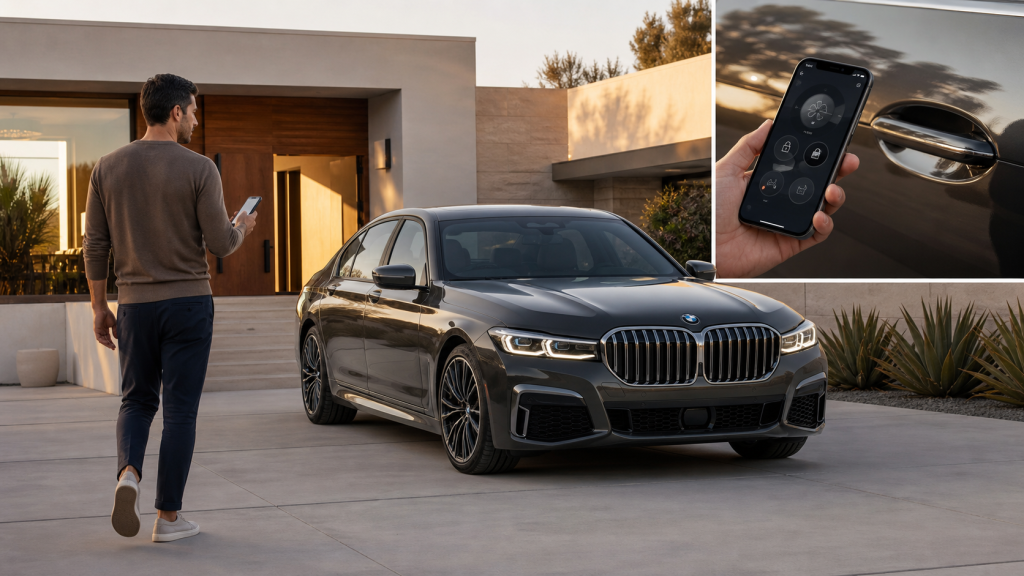
BMW Remote Services and Digital Key are the two connected-car features most owners ask about after delivery. Both rely on separate technical layers inside the ConnectedDrive ecosystem. Neither feature is simply an app button. Each operates through a distinct communication protocol. This post explains the mechanics behind each feature, how they relate to one another, and what setup your specific vehicle and phone require. What BMW Remote Services Does and How It Reaches Your Car BMW Remote Services is a cellular-based command layer. It lets the My BMW app send instructions to a vehicle regardless of physical distance. The key word is cellular. Remote Services does not operate over Bluetooth or Wi-Fi. Commands do not require the owner to be near the car. Every BMW with ConnectedDrive Services carries an embedded SIM card installed at the factory. That SIM card maintains an active data connection through a carrier network. It operates independent of any phone or hotspot. When an owner sends a remote lock command through the My BMW app, the instruction travels from the phone to BMW's servers. From those servers, it routes to the embedded SIM card in the vehicle. The car receives the command, executes it, and sends a confirmation back through the same path. more This architecture is what makes Remote Services work from a different city. The car does not need to be visible or nearby. It only needs to be within cellular coverage range. The functions available through this channel include door locking and unlocking, remote climate activation, and vehicle locating through flashing lights or horn activation. On equipped models, remote engine start is also available. Each command uses the same relay path: app to server to embedded SIM to vehicle. Activating Remote Services requires a one-time setup. The owner must register a BMW ID and link the vehicle using the last seven digits of the VIN. After that, Remote Services must be enabled within the ConnectedDrive customer portal or the My BMW app. The connection is then persistent. No re-authorization is required per session. What Separates Digital Key from Digital Key Plus? BMW Digital Key and BMW Digital Key Plus both allow a smartphone to replace the physical key fob. However, the communication technology each version uses is fundamentally different. That difference changes how the driver interacts with the car at the door. The standard Digital Key uses near-field communication, or NFC. NFC requires the phone to come within a few centimeters of the driver's door handle to trigger the lock or unlock command. Contact is deliberate. Once the driver holds the phone to the handle, the antenna in the door reads the credential stored in the phone's digital wallet. A confirmation signal returns and the car responds. It functions similarly to a tap-to-pay transaction. Digital Key Plus replaces NFC with Ultra Wideband, or UWB, technology. UWB sends short pulses across a wide frequency range. It uses the time difference of arrival between multiple antennas distributed around the car to calculate the phone's exact position in three-dimensional space. The car continuously tracks the phone's location as the driver approaches. When the system confirms the phone is within a calibrated threshold distance, the doors unlock automatically. No tap required. The driver walks up and the car is already open. This passive unlock is the core distinction between the two versions. Beyond that, Digital Key Plus supports tailgate control and direct lock and unlock commands through the My BMW app when the phone is in close proximity to the car. Standard Digital Key does not support those functions. Digital Key Plus requires iDrive 8 or a newer operating system. That requirement exists because iDrive 8 includes the UWB antenna integration. It also carries the updated Car Connectivity Consortium framework the protocol runs on. Sharing a Digital Key and How Access Restrictions Are Enforced BMW allows the primary owner to share Digital Key access with up to five additional people. Sharing uses iMessage for iPhone users and sends a credential to the recipient's digital wallet. Recipients do not need a BMW ID to receive and use a shared key. Downloading the My BMW app is also not required on their device. Access restrictions are available at the time of sharing. The primary owner can limit top speed and cap maximum audio volume on a shared key before sending it. These restrictions are not monitored remotely or enforced through the app after the fact. They are embedded in the digital key credential itself at the moment the key is created. This matters because it explains how enforcement works. The Car Connectivity Consortium Digital Key standard is the industry framework BMW's system is built on. It writes the permission parameters into the credential file. Every time the shared key is used to unlock and start the car, the vehicle reads those parameters. Speed limiting and audio capping activate at the hardware level when the vehicle recognizes a shared key credential with those flags set. No ongoing oversight is required from the person who shared the key. Device Compatibility and What to Do When Your Phone Has No Power Compatibility for each version of the Digital Key follows a clear split by device type and vehicle generation. The standard Digital Key, which uses NFC, is available on 2021 and newer BMW models and is compatible with Apple devices only. Digital Key Plus, which uses UWB, is available on models running iDrive 8 or newer. It supports both Apple and Android devices including Google Pixel and Samsung Galaxy. Models confirmed compatible with Digital Key Plus include: BMW 3 Series (2023 and newer), BMW 2 Series Coupe (2023 and newer), and BMW 4 Series (2024 and newer) are all supported on the UWB platform through their iDrive 8 architecture. BMW X1 (2023 and newer), BMW X5 (2024 and newer), BMW X6 (2024 and newer), and BMW X7 (2023 and newer) each carry the antenna array required for passive unlock with Digital Key Plus. BMW iX (2022 and newer), BMW i4 (2022 and newer), BMW i5 (2024 and newer), BMW i7 (2023 and newer), and BMW XM (2023 and newer) were among the first models to ship with the full UWB integration at launch. A common concern is what happens when the phone runs out of battery. BMW addresses this in two ways. First, compatible iPhones retain a low-power NFC reserve even when the battery is critically low. This allows the Digital Key to function briefly after the phone would otherwise appear dead. Second, BMW provides a Digital Key Card during setup. That card is an NFC credential shaped like a credit card. It stores independently of the phone and can be used on any compatible model the same way a phone-based NFC key would. Storing the card at home is the recommended approach. That placement ensures it serves as a genuine backup. How ConnectedDrive Ties the Remote and Access Layers Together ConnectedDrive is not a single feature. It is the infrastructure platform that Remote Services, Digital Key, and the My BMW app all run within. Without an active ConnectedDrive subscription, the cellular relay that Remote Services requires does not function. Furthermore, the BMW ID account created during ConnectedDrive setup links the vehicle to the app, authorizes key-sharing, and stores personalized driving profiles. BMW includes a trial ConnectedDrive subscription with new vehicle purchase. After the trial period, the owner selects which services to continue. Remote Services, real-time traffic, and BMW Intelligent Personal Assistant are each available as standalone subscriptions or in bundled packages through the ConnectedDrive Store. Digital Key itself does not require an active subscription after initial setup. The credential is stored in the phone's wallet. It communicates directly with the vehicle's NFC or UWB antennas without a server relay. For owners who want to evaluate what requires renewal and what does not, the separation is clear. The cellular command layer behind Remote Services requires an active data plan routed through ConnectedDrive. The proximity-based access layer behind Digital Key operates independently once provisioned. Both are managed through the same My BMW app interface, which is why they are frequently grouped together in conversations about BMW ownership technology. However, they draw from different infrastructure. Knowing that separation helps owners make informed decisions about which subscriptions to carry and which credentials to maintain after the trial period ends.

BMW 2 Series vs 3 Series: Performance Differences Explained

BMW 2 Series vs 3 Series is one of the most common comparisons shoppers run before visiting a BMW dealership, and the two models are closer in some areas and further apart in others than most side-by-side spec lists suggest. Both carry the same TwinPower Turbo engine at their respective base trims, share platform architecture, and are sold under the same badge. However, the body format, chassis calibration, and interior geometry each pull in different directions, and understanding those differences is what separates a good purchase decision from a regrettable one. Size and Body Format: More Than a Visual Choice The most foundational difference between the two models is the body itself. The 2 Series Coupe is a two-door vehicle with a sloped roofline, a shorter overall length of 179.0 inches, and a wheelbase of 107.9 inches. The 3 Series is a four-door sedan measuring 185.9 inches in length with a 112.2-inch wheelbase. That 4.3-inch wheelbase gap is not a styling choice. It is a structural decision that shapes how each car moves. A longer wheelbase spreads the vehicle's weight over a greater span between the front and rear axles. For the 3 Series, that translates to more absorption of road imperfections and a more settled character on highways. The 2 Series coupe's shorter wheelbase concentrates mass closer to the center of the car. Cornering forces act on a shorter moment arm, which is why direction changes in the two-door feel more immediate. more The roofline geometry carries its own set of consequences beyond appearance. A coupe's sloped rear glass reduces the available headroom for rear occupants. The 2 Series Coupe delivers 35.0 inches of rear headroom versus 37.6 inches in the 3 Series. That 2.6-inch reduction is not a number on a sheet. It is the physical clearance above the head of anyone seated behind the driver, and it follows directly from the coupe's profile shape. What Separates the 230i and 330i Despite a Shared Engine? Both the 230i and 330i use BMW's 2.0-liter TwinPower Turbo inline four-cylinder producing identical output of 255 horsepower and 295 lb-ft of torque. Furthermore, both pair that engine with an 8-speed automatic transmission. Shoppers who stop at that comparison frequently conclude the driving experience should be nearly equivalent. The chassis tells a different story.cargurus+1 The 2 Series Coupe weighs 3,446 pounds at the curb. The 3 Series sedan comes in at 3,644 pounds, a difference of 198 pounds. That weight gap, when driven through the same power output, produces a measurable difference in how each car responds to throttle input. Beyond that, suspension tuning diverges between the two platforms even where hardware overlaps. Here is what those differences produce in driving: The 230i posts a tighter turning circle of 36.4 feet versus the 330i's 37.4 feet, which reflects both the shorter wheelbase and the coupe's narrower front geometry. The 2 Series delivers 26 city and 35 highway mpg; the 3 Series returns 28 city and 35 highway, with its larger 15.6-gallon tank extending its highway driving range to 546 miles versus 480 for the coupe. The 3 Series begins at $49,350 MSRP compared to $43,550 for the 2 Series, a gap that reflects the sedan's additional structural investment in interior space and rear-seat geometry. At the performance trim level, the M240i produces 382 horsepower and the M340i produces 386 horsepower, both through the B58 3.0-liter inline-six. The output figures are nearly indistinguishable. However, the M240i delivers that power through a lighter, stiffer coupe chassis. The M340i channels the same engine through the sedan's longer, heavier platform. The result is two different sensations from the same core hardware. How Chassis Tuning Creates Two Distinct Driving Characters The 2 Series and 3 Series share engineering lineage, and yet a driver switching between them notices a meaningful shift in how each responds. That difference comes from suspension calibration, not engine output. BMW tunes the 2 Series Coupe with stiffer spring rates and a firmer damper setup relative to the 3 Series. The shorter wheelbase amplifies that tuning by reducing the lever arm the chassis uses to resist lateral forces during cornering. Body roll is the most direct way to feel this difference. In the coupe, the stiffer calibration and shorter chassis geometry limit lean through corners. The 3 Series manages body roll within a controlled range, but its tuning allows slightly more movement to absorb the demands of daily commuting and passenger comfort over longer distances. Neither calibration is a compromise. They are two purposeful answers to different priorities. Steering feel follows the same pattern. The 2 Series delivers a more immediate connection between wheel input and vehicle response, a consequence of the shorter wheelbase reducing the delay between what the driver asks and what the car does. The 3 Series uses a more progressive steering calibration that lightens effort at higher speeds and reduces fatigue on longer drives. Drivers who spend most of their time on two-lane roads will notice the coupe's directness. Drivers who spend most of their time on interstates will appreciate the sedan's composure. Rear Seat Access and Cargo Space: Why Format Changes Everything Interior volume comparisons between a two-door coupe and a four-door sedan frequently mislead because they treat cubic footage as a proxy for usability. The 3 Series offers 35.2 inches of rear legroom and 37.6 inches of rear headroom. The 2 Series Coupe delivers 32.2 inches of rear legroom and 35.0 inches of rear headroom. Those three-inch gaps in both dimensions reflect structural geometry, not design neglect. In a four-door format, rear passengers have a dedicated door opening sized for adult entry. In a two-door format, rear entry requires the front seat to fold forward. That process adds steps and reduces access clearance, which becomes a consistent friction point for anyone who regularly loads rear passengers. The 3 Series is rated for five occupants; the coupe seats four. That additional position is not an arbitrary spec. It follows from the sedan's ability to accommodate a fifth person at the rear center seat without the packaging constraints of a coupe body. Cargo space reflects the same logic. The 3 Series carries 16.9 cubic feet of trunk volume against the 2 Series Coupe's 13.8 cubic feet. Beyond that raw figure, the sedan's trunk opens to a full-width aperture that is not narrowed by a sloped rear glass. The coupe's trunk is shaped by the roofline and loads more narrowly as a result. For drivers who occasionally need the trunk, neither limits daily use. For drivers who consistently need full cargo access, the sedan's opening is the more accommodating format. Choosing Between the Two Models Based on How You Drive The question of which BMW to buy resolves most clearly when framed around driving pattern rather than specification rank. A driver who commutes alone or with one passenger, covers mostly shorter routes, and values the sensation of a car that responds sharply to input will find the 2 Series Coupe serves those conditions well. The lighter chassis, stiffer calibration, and two-door profile are not limitations in that context. They are the product's defining character. A driver who regularly carries rear passengers, covers highway miles on a consistent basis, or wants a car that adapts across a wider range of duties will find the 3 Series addresses those requirements without trade-off. The additional wheelbase, rear-seat access, and suspension calibration all reflect a car built for broader daily demands. The five-year true cost of ownership comes to $56,334 for the 2 Series Coupe and $62,214 for the 3 Series, a gap that reflects the sedan's additional capability in interior space, passenger geometry, and fuel capacity. For drivers drawn to the six-cylinder tier, the M240i and M340i sharpen the distinction. The M240i puts the B58's output through a lighter platform tuned for driver engagement above all else. The M340i routes the same power through a platform built to balance that engagement with composure and rear-seat usability. Both are purposeful products. The right one is determined by which trade-off fits the way the car will actually be used, not by which specification looks stronger on a comparison chart.

How BMW Adaptive Suspension Adjusts on Highways

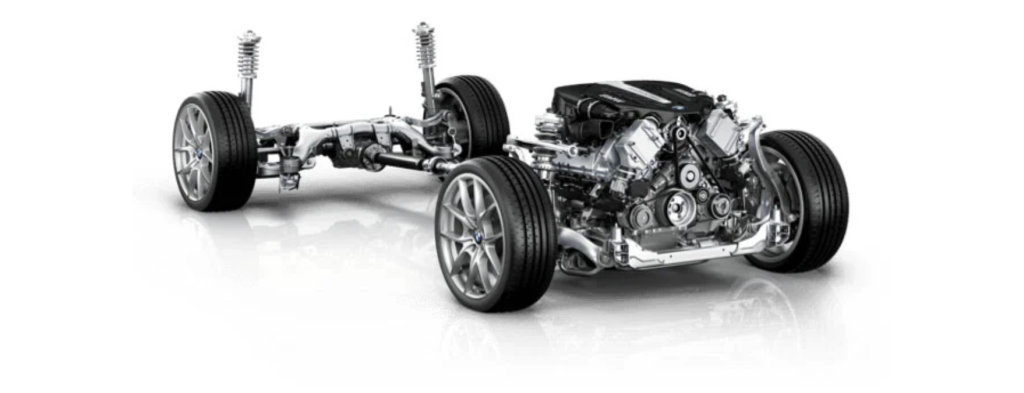
BMW adaptive suspension changes damper firmness in real time to adjust ride comfort, body movement, and highway stability as driving conditions shift. Unlike traditional suspension systems that rely on fixed damping characteristics, BMW adaptive dampers continuously react to steering input, braking force, acceleration, pavement texture, and vehicle movement. That constant adjustment changes how the vehicle settles over uneven pavement, responds during lane changes, and maintains stability during long highway travel. Understanding how the system works helps shoppers evaluate why adaptive suspension creates a noticeably different driving feel across BMW sedans and SUVs. How BMW Adaptive Suspension Changes Ride Behavior in Real Time BMW adaptive suspension relies on electronically controlled dampers that continuously adjust how quickly the suspension compresses and rebounds during driving. Inside each damper, electronically managed valves regulate hydraulic fluid movement. As the valve position changes, the suspension either firms up or softens almost instantly. The system monitors multiple sensors throughout the vehicle. Steering angle, wheel speed, throttle input, braking load, suspension travel, and body movement all feed data into the suspension control module. That information allows the dampers to react to changing road conditions while the vehicle is already moving through them. When the system detects rapid steering input or sudden braking force, the dampers can increase firmness to reduce excess body movement. During smoother highway cruising, damping pressure can soften to create a calmer ride over expansion joints and uneven pavement. BMW adaptive suspension continuously adjusts around: more • Steering movement • Braking pressure • Vehicle speed • Suspension travel • Wheel movement • Road surface variation This real time adjustment changes the driving feel far more dynamically than a traditional suspension setup with fixed damping calibration. Comfort Mode and Sport Mode Change More Than Steering Feel BMW drive modes alter several vehicle calibrations simultaneously, including suspension damping logic. Comfort mode prioritizes smoother body motion and softer vertical suspension movement during highway travel. Sport mode tightens damping response to reduce body roll and sharpen directional movement during acceleration and cornering. The difference becomes noticeable during uneven pavement transitions. In comfort mode, the dampers allow more controlled suspension travel so the vehicle absorbs road texture with less sharp cabin movement. In sport mode, the dampers resist compression more aggressively to stabilize the body during steering transitions and weight transfer. A BMW 5 Series equipped with adaptive suspension can therefore feel dramatically different depending on the selected drive mode. During long highway travel, comfort mode settles the vehicle more gradually over expansion joints and rough pavement patches. Sport mode maintains tighter body control during lane changes and directional corrections at higher speeds. BMW SUVs like the X5 and X7 also benefit from adaptive damping because larger vehicle mass naturally creates more body movement during acceleration and braking. Tightening the damping response during sport oriented driving helps control vertical motion without requiring permanently stiff suspension tuning during everyday travel. Florida Highway Surfaces Constantly Challenge Suspension Systems Florida highways expose suspension systems to constant pavement variation. Expansion joints, rain grooves, bridge transitions, heat expansion gaps, and uneven lane surfaces create nonstop changes in wheel movement during long distance driving. Fixed suspension setups react the same way regardless of surface variation. BMW adaptive suspension changes continuously as road texture shifts underneath the vehicle. This becomes important during extended interstate travel where suspension movement directly influences driver fatigue and cabin stability. Abrupt vertical movement forces the driver and passengers to constantly absorb repeated body motion through the seats and steering wheel. Softer damping during steady highway cruising reduces how sharply those movements transfer into the cabin. Highway suspension demands increase through: • Heat expanded pavement • Concrete expansion joints • Uneven lane transitions • Bridge elevation changes • Rain groove vibration • High speed crosswind correction Adaptive suspension also helps stabilize the vehicle during Florida storm conditions where standing water, wind gusts, and changing pavement traction require more precise body control. The dampers react fast enough to maintain steadier weight distribution during sudden steering corrections and braking inputs. This continuous calibration process helps explain why adaptive suspension feels calmer during long highway travel without removing the tighter body control drivers expect from BMW handling characteristics. Adaptive Dampers Control Weight Transfer and Body Movement Every vehicle shifts weight during acceleration, braking, and cornering. Suspension systems manage how quickly that weight transfers across the chassis. Softer suspension setups allow more body movement, while stiffer setups resist movement more aggressively. BMW adaptive suspension changes damping force dynamically so the vehicle can balance comfort and stability at the same time. During braking, the front dampers firm up to reduce excessive forward pitch. During acceleration, rear damping adjusts to stabilize weight transfer toward the rear axle. During cornering, outside dampers tighten to reduce leaning movement across the chassis. The system continuously manages: • Front to rear weight transfer • Side to side body roll • Suspension rebound speed • Compression resistance • Lane transition stability • Steering response balance This matters because body movement changes how stable the vehicle feels during higher speed travel. Excessive suspension movement delays steering response and increases driver correction input. Adaptive damping reduces those delays by controlling how quickly the chassis settles after directional changes. BMW adaptive suspension therefore operates as a stability management system just as much as a comfort system. What Shoppers Should Evaluate Before Choosing BMW Adaptive Suspension Adaptive suspension changes how the vehicle responds during daily driving, long highway travel, and aggressive directional movement. Shoppers considering the feature should evaluate how they use the vehicle most frequently and what driving characteristics matter most to them. Drivers spending substantial time on highways may notice the largest difference because the system constantly smooths pavement transitions while maintaining high speed body control. Drivers prioritizing sharper handling may appreciate how sport mode tightens suspension response during steering transitions without permanently stiffening the ride during commuting. Important evaluation points include: • Highway travel frequency • Pavement quality exposure • Preference for softer or firmer ride feel • Vehicle size and weight • Long distance commuting habits • Steering response expectations • Passenger comfort priorities BMW adaptive suspension is not simply a sport feature or comfort feature alone. The system continuously shifts between both objectives based on driving input and road conditions. Understanding how those adjustments work helps shoppers evaluate whether adaptive suspension matches the type of driving they encounter most throughout daily travel.

BMW 5 Series Lease vs SUV Lease Programs

A BMW 5 Series lease can look very different from a BMW SUV lease agreement, even when the vehicles sit near each other in pricing. That difference comes from how BMW Financial Services forecasts resale value, allocates depreciation, structures mileage assumptions, and evaluates long term market demand across vehicle categories. Sedans and SUVs do not depreciate at the same pace, attract the same ownership patterns, or maintain the same resale stability. Those variables directly shape monthly payment structure, lease incentives, and overall agreement terms. Understanding how those calculations work gives shoppers a clearer picture of why a BMW 5 Series lease may produce a different financial structure than programs tied to models like the BMW X3 or BMW X5. Residual Value Forecasting Shapes the Entire Lease Structure Residual value is the projected value of a BMW at the end of the lease term. BMW Financial Services uses that projected future value to calculate how much depreciation the shopper is responsible for during the contract period. A higher residual percentage lowers the depreciation spread between the starting price and projected future value, which can reduce the monthly lease obligation. The BMW 5 Series enters lease forecasting differently than BMW SUVs because sedan resale patterns and SUV resale patterns move differently across the used vehicle market. SUVs maintain stronger demand during certain market cycles due to cargo space, family usage, and broader buyer demand. Sedans, however, can sometimes maintain stronger payment efficiency because their lower MSRP creates a smaller depreciation balance overall. A shopper comparing a BMW 530i lease against a BMW X5 lease may notice that the SUV retains a strong residual percentage while still carrying a higher payment. That happens because the total depreciation amount tied to the larger SUV still remains higher despite strong resale confidence. The vehicle starts from a larger pricing baseline, which changes how depreciation distributes across the lease term. Key residual forecasting variables include: more • Vehicle category demand • Historical resale stability • Mileage projection modeling • Market inventory forecasting • MSRP growth across trim levels These forecasting calculations matter because lease agreements are fundamentally depreciation contracts. The payment is not only tied to the vehicle price. It is tied to how much future value BMW Financial Services expects the vehicle to retain by the end of the contract. Why SUV Lease Programs Structure Payments Differently BMW SUVs and sedans serve different ownership patterns, which changes how lease agreements are structured. BMW SUVs like the X3 and X5 frequently enter family centered ownership cycles with higher yearly mileage assumptions and broader utility usage. That creates a different risk profile for future resale forecasting. The BMW 5 Series follows a different ownership trend. Sedan buyers frequently prioritize commuting balance, highway comfort, and executive style driving patterns. Those driving patterns can create steadier wear projections and lower ownership stress forecasting during the lease period. This difference becomes visible when evaluating lease incentives and money factor adjustments. BMW SUVs may receive stronger advertised specials during periods where inventory balancing becomes important. The manufacturer may increase support on SUV inventory to maintain sales movement across larger volume categories. Sedans can follow different promotional cycles tied to business leasing demand and executive fleet forecasting. The result is that shoppers sometimes see SUV lease offers advertised with aggressive monthly pricing despite the larger vehicle size. That does not always mean the SUV carries lower ownership cost throughout the agreement. Tire replacement exposure, insurance rates, wheel size, and mileage forecasting still shape the total lease structure underneath the promotional offer. Areas shoppers should compare include: • Residual percentage • Mileage allowance • Tire and wheel replacement exposure • Insurance costs • Money factor structure • Lease end buyout forecasting Looking only at the advertised monthly payment removes most of the financial structure that separates one BMW lease program from another. Mileage Assumptions Change Lease Agreement Risk Mileage limits exist because mileage directly changes future resale forecasting. A BMW expected to accumulate 36,000 miles over a three year lease carries a different future market value than one projected to accumulate 45,000 or 50,000 miles. BMW Financial Services builds those projections directly into the lease structure. SUVs frequently carry different mileage expectations because their ownership patterns trend toward heavier family transportation, travel usage, and cargo movement. A BMW X5 lease agreement may therefore forecast broader wear exposure than a BMW 5 Series agreement under similar contract length. Mileage forecasting also impacts how wear and tear is evaluated at lease end. Larger wheel packages, heavier curb weight, and broader tire footprints found on BMW SUVs can increase tire replacement exposure during the lease term. Sedans like the BMW 5 Series may carry a different wear profile because of lower overall vehicle mass and different driving distribution patterns. This becomes important when evaluating whether a lower advertised payment truly represents stronger financial value. A shopper driving higher yearly mileage may discover that excess mileage charges or additional tire replacement costs offset early payment savings found in a promotional SUV lease structure. Lease agreements become easier to evaluate when shoppers examine the full ownership cycle instead of isolating the monthly payment alone. Market Demand and Incentives Reshape BMW Lease Offers BMW lease programs change throughout the year because inventory movement and resale forecasting constantly shift. SUVs currently hold broad market demand across the automotive industry, which creates a unique balance between incentive support and residual confidence. A BMW SUV with strong resale stability may still receive incentive support if inventory levels rise beyond forecast targets. At the same time, a BMW 5 Series lease program may receive different support timing tied to sedan demand, executive leasing cycles, or regional market patterns. That shifting structure explains why lease specials can look inconsistent across vehicle categories. The promotional offer shoppers see publicly may represent inventory balancing strategy just as much as it reflects the actual ownership math underneath the agreement. Shoppers researching BMW lease terms should evaluate: • Lease term length • Residual percentage changes by term • Regional incentive variations • Model year transition timing • Mileage tier differences • Lease end purchase options A shorter lease term can sometimes preserve stronger residual structure because the vehicle exits the contract earlier in its depreciation cycle. Longer lease terms may spread payments further while increasing future market uncertainty inside the residual calculation. Understanding how those moving variables interact creates a clearer picture of why BMW lease structures vary between sedans and SUVs even when the vehicles initially appear financially similar. What Shoppers Should Evaluate Beyond the Payment Amount The monthly payment only represents one layer of a BMW lease agreement. The stronger evaluation comes from understanding how depreciation, mileage forecasting, resale confidence, and ownership exposure all combine inside the contract structure. A BMW 5 Series lease may appeal to shoppers prioritizing payment efficiency, lower wear exposure, and executive sedan driving dynamics. BMW SUVs may fit shoppers needing cargo space, broader passenger flexibility, or higher seating position preferences. The correct structure depends on how the lease agreement matches the ownership pattern expected during the contract period. Looking deeper into the agreement creates a more accurate comparison between vehicle classes. Two BMW leases can advertise similar payments while carrying very different long term financial structures underneath. Shoppers comparing sedan and SUV lease programs should review: • Total depreciation allocation • Residual confidence levels • Mileage forecasting accuracy • Insurance differences • Tire replacement exposure • Lease end buyout value • Incentive timing across model categories Understanding those components creates a stronger foundation for evaluating BMW lease programs with greater clarity before signing a long term agreement.

BMW 3 Series vs Audi A4 Performance Comparison for Florida Drivers

Choosing between the BMW 3 Series and Audi A4 often comes down to how each vehicle feels in real-world driving. On paper, both deliver similar horsepower, turbocharged engines, and premium features. In practice, they behave very differently once you factor in drivetrain design, suspension tuning, and how each system responds to daily conditions like traffic, heat, and wet roads. Understanding these differences requires looking beyond specs and into how each system works, how it influences driving behavior, and what that means for Florida drivers navigating a mix of city streets, highways, and changing weather conditions. Which performs better BMW 3 Series or Audi A4 Performance is defined by how power is delivered, not just how much is produced. The BMW 3 Series and Audi A4 both use turbocharged four-cylinder engines, but they are tuned and paired with different drivetrain layouts that change how that power feels on the road. The BMW 3 Series, particularly the 330i, uses a rear-wheel drive platform designed to balance weight and maximize traction during acceleration. Power is sent to the rear wheels, allowing the front wheels to focus on steering. This separation creates a more direct and responsive driving feel. The Audi A4, equipped with quattro all-wheel drive, distributes power between the front and rear wheels. This improves traction, especially in low-grip conditions, but also changes how the vehicle responds during acceleration and cornering. From a system perspective: more BMW’s turbo tuning emphasizes linear power delivery and responsiveness Audi’s turbo tuning prioritizes smooth acceleration and traction stability In real-world Florida driving, this translates to: BMW feeling more responsive when merging or accelerating on open highways Audi feeling more planted when roads are wet or during sudden traction changes For drivers who prioritize engagement and responsiveness, the BMW 3 Series delivers a more performance-oriented experience. For those who value stability and predictability, the Audi A4 offers a more controlled power delivery. Handling dynamics and drivetrain design Handling is shaped by how a vehicle distributes weight, manages traction, and responds to steering input. The BMW 3 Series and Audi A4 approach this differently through their drivetrain configurations. The BMW 3 Series uses a rear-wheel drive architecture that promotes balanced weight distribution. This allows the vehicle to rotate more naturally during cornering, giving the driver a greater sense of control and connection to the road. The Audi A4’s quattro system continuously adjusts power distribution between all four wheels. This enhances grip but also introduces a more stable, less dynamic cornering behavior. Key mechanical differences: Rear-wheel drive separates steering and power delivery All-wheel drive combines traction across multiple contact points BMW steering systems are tuned for feedback and precision Audi steering prioritizes stability and ease of control For Florida drivers, where heavy snow is not a concern, the choice comes down to driving preference: BMW provides sharper cornering and a more engaging feel on dry roads Audi offers added confidence during rain and slick conditions This distinction is important because it defines how the vehicle reacts in everyday scenarios like highway curves, sudden lane changes, or wet pavement. Which is better for daily driving BMW or Audi Daily driving comfort is influenced by suspension design, damping systems, and how the vehicle absorbs road imperfections. The BMW 3 Series and Audi A4 are tuned with different priorities in mind. BMW’s suspension is calibrated for sport performance. It uses firmer damping to reduce body movement and improve handling precision. This creates a more connected feel but can transmit more road texture into the cabin. Audi’s suspension tuning focuses on comfort and isolation. It is designed to absorb imperfections and deliver a smoother ride, especially over uneven surfaces. In practical terms: BMW feels more controlled and responsive but slightly firmer Audi feels smoother and more relaxed during longer drives For Florida driving conditions, which often include long highway commutes and urban traffic: BMW suits drivers who want engagement even during routine drives Audi suits drivers who prioritize comfort and reduced fatigue This difference becomes noticeable over time. Suspension tuning affects how the vehicle feels during daily use, not just during spirited driving. Interior technology and driver interaction Technology plays a role in how drivers interact with the vehicle, from infotainment systems to driver assistance features. The BMW 3 Series and Audi A4 both offer advanced systems, but their design philosophies differ. BMW’s iDrive system is built around structured control and driver focus. It uses a combination of a central controller and touchscreen interface, allowing drivers to navigate menus without relying entirely on touch input. Audi’s MMI system emphasizes visual clarity and touchscreen interaction. It features clean graphics and intuitive layouts but relies more heavily on screen-based controls. System differences: BMW iDrive prioritizes minimal distraction through tactile control options Audi MMI emphasizes modern interface design and visual simplicity For drivers: BMW offers a more controlled interaction, especially while driving Audi provides a more familiar, smartphone-like experience In real-world use, this affects how easily drivers can adjust settings, navigate menus, and stay focused on the road. The choice depends on whether the driver values tactile control or visual simplicity.

When to Replace Your BMW Key Fob Battery and OEM Replacement Options

A BMW key fob is more than a remote. It is part of a continuous communication system between you and your vehicle, managing access, authentication, and convenience features like Comfort Access. When the battery begins to weaken, that communication becomes inconsistent, which is why small symptoms like reduced range or delayed response often appear before complete failure. Understanding when to replace your BMW key fob battery and when a full replacement is necessary comes down to how the system works, how signals are transmitted, and how BMW designs its key technology to interact with the vehicle. How does a BMW key fob actually work A BMW key fob uses low frequency and radio frequency signals to communicate with the vehicle’s onboard systems. Low frequency signals allow the car to detect the presence of the key nearby, while radio frequency signals transmit commands such as locking, unlocking, or starting the engine. In BMW vehicles equipped with Comfort Access, this communication is continuous. The vehicle is constantly checking for a valid key signal to allow entry and ignition. That means the key fob battery is not just used when you press a button. It is actively supporting authentication in the background. Battery voltage plays a direct role in this process. As the battery weakens: more Signal strength decreases, reducing communication range Response time becomes inconsistent The vehicle may struggle to detect the key reliably BMW key systems are also encrypted, meaning the signal must be both strong and accurate to be recognized. If voltage drops below a functional threshold, the system may reject the key entirely even if it is physically present. For a BMW owner, this explains why a key can appear to “randomly stop working.” The issue is not randomness. It is a gradual decline in signal reliability caused by battery degradation. When should you replace your BMW key fob battery A BMW key fob battery should be replaced when signal performance begins to decline or when the vehicle displays a low battery warning. These signs indicate that the battery can no longer maintain consistent communication with the vehicle. Common indicators include: Reduced locking or unlocking range Delayed response when pressing buttons Intermittent “key not detected” messages Warning notifications within the vehicle display These symptoms occur because the battery can no longer sustain the voltage required for stable signal transmission. In Comfort Access systems, this is especially noticeable because the vehicle relies on continuous communication rather than single button inputs. Battery lifespan typically ranges between two to four years, depending on usage patterns and environmental conditions. Frequent use of remote functions or leaving the key near the vehicle can accelerate battery drain. Replacing the battery at the first signs of decline prevents full signal failure. It also ensures that the key continues to function reliably in both active and passive access scenarios. How BMW key fob battery replacement works BMW key fob battery replacement involves accessing the internal battery compartment, replacing the cell, and restoring proper signal output. Most modern BMW key fobs use coin-style batteries such as CR2032 or CR2450, depending on the model and key design. The process varies slightly based on the key type: Standard BMW key fobs typically allow manual opening with a release tab Comfort Access keys may have sealed or more compact designs Some older or rechargeable keys require different handling In most cases, replacing the battery does not require reprogramming. The key retains its encryption and pairing with the vehicle because the battery powers the signal, not the stored data. However, proper installation matters. Incorrect battery orientation or poor contact can result in continued signal issues even after replacement. From a system perspective, replacing the battery restores: Full signal strength Consistent communication with vehicle modules Reliable detection for locking, unlocking, and ignition For BMW owners, this means battery replacement is not just routine maintenance. It is essential to maintaining uninterrupted access and system functionality. OEM BMW key replacement vs battery replacement decisions A BMW key fob should be fully replaced when the issue extends beyond battery-related signal loss and involves hardware failure, damage, or communication faults within the key itself. Understanding the difference prevents unnecessary replacement costs while ensuring reliable operation. Battery replacement is appropriate when: The key functions inconsistently but still responds Symptoms improve temporarily after battery change Physical condition of the key is intact Full key replacement is necessary when: The key is not detected even with a new battery Internal components are damaged or worn The key cannot maintain a stable encrypted connection BMW OEM keys are designed to integrate directly with the vehicle’s security and communication systems. This includes encrypted authentication, Comfort Access compatibility, and synchronization with vehicle modules. Aftermarket keys often lack: Full compatibility with BMW encryption systems Reliable signal consistency Proper integration with Comfort Access features This difference matters because the key is not just a remote. It is a security device tied to the vehicle’s identity. Using an OEM BMW key ensures: Accurate communication with onboard systems Reliable long-term performance Proper programming and vehicle recognition For a BMW owner, the decision comes down to identifying whether the issue is power-related or system-related. A battery resolves signal strength issues. A full replacement resolves hardware or communication failures.

Contact Us

Fill out this form below and we'll contact you shortly
*Required Fields