


Modern BMW safety systems are designed to support drivers across very different environments. City streets and highways place fundamentally different demands on a vehicle’s safety architecture, and BMW engineers its driver assistance technologies to adapt based on speed, traffic density, and surrounding conditions. Understanding how these systems behave in real world use helps drivers trust the assistance without overestimating its role.
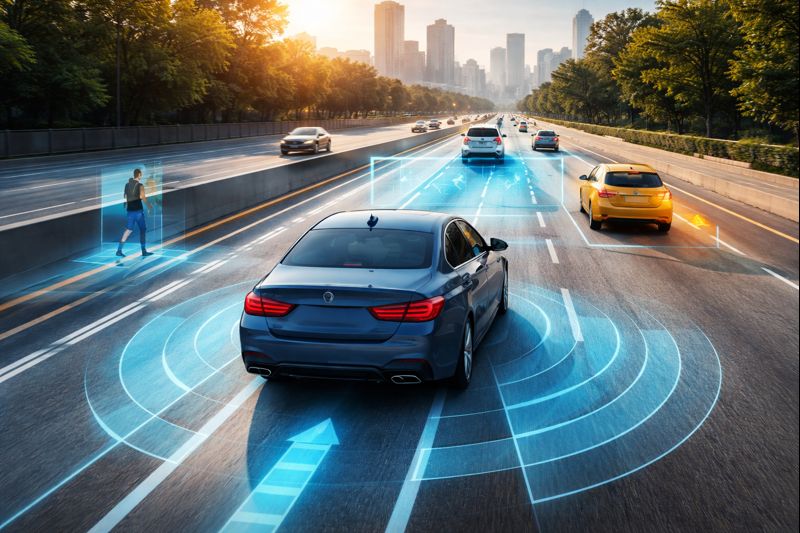
BMW safety technology is built around support, not replacement. The systems assist with awareness, braking, and steering input, but the driver remains responsible at all times.
How BMW Safety System Architecture Works
BMW safety systems rely on a combination of cameras, radar sensors, and control modules working together in real time. This layered approach allows the vehicle to interpret distance, speed, lane markings, and surrounding traffic simultaneously.
Key architectural elements include:
- Forward facing cameras that monitor lane markings, vehicles, and pedestrians
- Radar sensors that track distance and closing speed in traffic
- Side sensors that monitor adjacent lanes
- Central processing that blends inputs to determine alerts or intervention
This sensor fusion allows BMW systems to respond differently at low speed urban driving versus sustained highway travel.
City Driving Safety Support
Urban environments are unpredictable. Traffic lights, pedestrians, cyclists, and sudden stops require rapid system response at lower speeds.
BMW safety systems in city driving focus on:
- Forward collision warning
Alerts the driver when a vehicle or obstacle ahead is detected and closing speed suggests a potential collision. - Automatic emergency braking
Applies braking force when a collision risk is imminent and the driver does not respond quickly enough. This is most effective at city speeds where stopping distances are shorter. - Pedestrian and cyclist detection
Uses camera recognition to identify vulnerable road users in urban settings. - Lane departure alerts
Provides warning if the vehicle drifts out of its lane at lower speeds without signaling.
In city driving, these systems are designed to intervene quickly but subtly. Drivers may feel brief braking input or steering resistance rather than aggressive correction.
Highway Driving Safety Support
Highway driving emphasizes lane discipline, sustained speed, and monitoring of surrounding traffic rather than sudden stops.
BMW safety systems on the highway prioritize:
- Blind spot monitoring
Detects vehicles in adjacent lanes and provides visual or steering alerts when a lane change could cause conflict. - Lane keeping assistance
Applies gentle steering input to help maintain lane position at highway speeds. - Adaptive cruise control
Maintains set speed while adjusting distance to vehicles ahead, reducing driver fatigue during long drives. - Forward collision mitigation at higher speeds
Focuses more on alerts and partial braking assistance rather than full stop intervention.
At highway speeds, BMW systems favor gradual correction and early warnings rather than abrupt action.
Traffic Jam Assist in Stop and Go Conditions
Traffic Jam Assist is designed specifically for congested highway conditions rather than open road travel.
When operating within defined speed limits:
- The system assists with steering in slow moving traffic
- Adaptive cruise manages acceleration and braking
- The vehicle maintains lane position during stop and go movement
- The driver must remain attentive and ready to take control
Traffic Jam Assist reduces physical strain during congestion but does not eliminate driver responsibility. Hands on steering and situational awareness are still required.
Alert Versus Intervention Behavior
A critical distinction across BMW safety systems is the difference between alerting and intervention.
Alert based systems notify the driver through visual, audible, or haptic feedback. Intervention systems actively apply braking or steering input when necessary.
BMW calibrates this balance carefully:
- Alerts are prioritized at higher speeds
- Intervention is more likely at lower speeds where collision avoidance is achievable
- Steering input remains subtle to avoid startling the driver
This approach helps maintain driver confidence without encouraging overreliance.
System Limitations Drivers Should Understand
BMW safety systems are highly capable, but they are not infallible. Performance depends on environmental conditions and driver engagement.
Important limitations include:
- Reduced effectiveness in heavy rain, fog, or snow
- Dependence on visible lane markings for lane assistance
- Sensor obstruction from dirt or ice
- Situations where unusual traffic patterns confuse detection logic
Understanding these limits reinforces appropriate driver expectations and safer use.
Driver Responsibility and Engagement
Across all BMW safety technologies, the driver remains the primary decision maker. Systems are designed to assist, not to operate autonomously.
BMW reinforces this through:
- Steering wheel contact monitoring
- Visual alerts prompting driver attention
- Automatic system disengagement if conditions exceed capability
This philosophy reflects BMW’s emphasis on driver involvement rather than passive supervision.
How Safety Systems Fit Real Driving
BMW safety systems support drivers differently depending on environment. In the city, they focus on collision avoidance and pedestrian awareness. On the highway, they emphasize lane discipline, spacing, and fatigue reduction. In congestion, they reduce workload without removing responsibility.
Drivers who understand how and when these systems assist gain the most benefit. Confidence comes from knowing what the vehicle will do and what it will not do.
BMW’s approach prioritizes clarity, consistency, and support across real world driving conditions rather than relying on marketing promises.
Connect with us


