

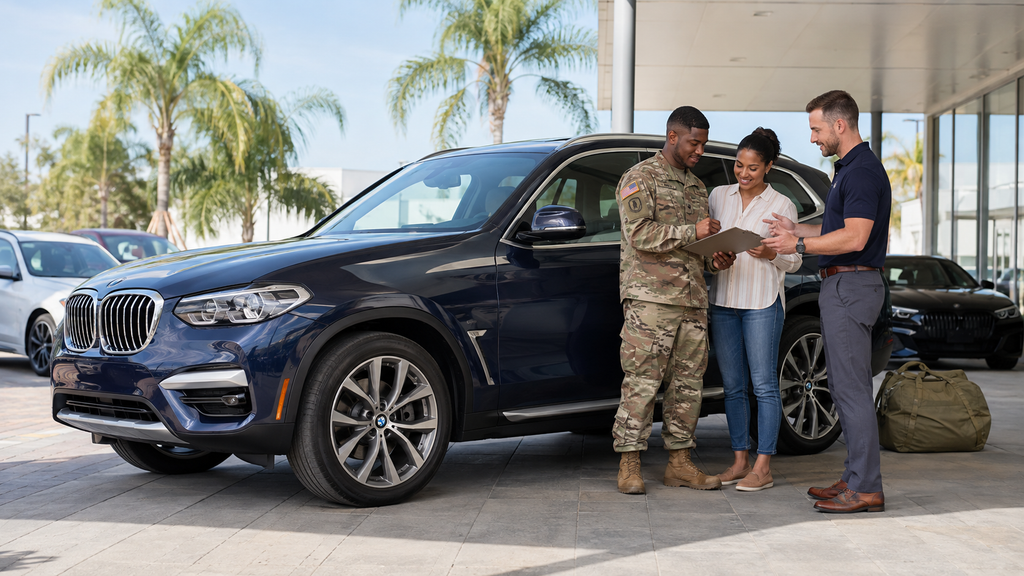
BMW military discount eligibility can matter for Jacksonville families managing vehicle timing around service, relocation, and household plans. The program can reduce the purchase or lease cost on qualifying new BMW models. However, the amount can change by model and transaction. Therefore, military families should verify current terms before signing paperwork. Jacksonville adds another layer because PCS timing and Florida registration can shape the process. In addition, families may need documents for military status, residency, insurance, and registration. A clear plan can keep those pieces from colliding at delivery. Who Qualifies for the BMW Military Discount Who can qualify for the BMW military discount? BMW currently includes several military groups and family categories within its incentive program. Eligible groups include Active Duty members, National Guard members, Reservists, Veterans, Retirees, Military Spouses, and Surviving Spouses. Immediate Military Family Members can also qualify after verification. Therefore, eligibility reaches beyond active duty personnel alone. more BMW uses ID.me to verify status online. Once verification is complete, the customer submits the required lead form. BMW then sends a confirmation email with a Customer ID and Offer Code. The BMW Center uses those identifiers when applying the incentive. Before starting the process, gather the details tied to your military status. This preparation can make the verification step easier. Confirm which qualifying military category applies to you before submitting the ID.me verification. Complete the BMW lead form after verification so the Customer ID and Offer Code can be issued. Keep the confirmation email available when discussing the transaction with the BMW Center. Because eligibility rules can change, check the current BMW program page near your purchase or lease date. That final check matters even if you qualified under an earlier promotion. How ID.me Verification Connects to the BMW Offer ID.me handles the identity and military status check for BMW. However, verification alone does not finish the incentive process. After ID.me confirms status, BMW requires the customer to submit its lead form. Then BMW sends the Customer ID and Offer Code by email. Those two identifiers connect the verified customer with the offer at the BMW Center. This sequence matters because the dealership cannot rely on a verbal military status claim. The transaction needs the current program identifiers. Therefore, completing verification before your visit can reduce paperwork at the store. A spouse or immediate family member should also verify under the proper category. BMW lists those groups separately within the current program. For this reason, the person using the incentive should complete the correct verification path. The process is straightforward when each step happens in order. Verify status first, complete the lead form, save the email, then review the current offer. Why the Offer Amount Needs Current Verification How much should a military family expect from the BMW program? The amount can vary by model, transaction structure, and current promotion. BMW currently advertises military and first responder incentives from $500 to $5,000 on eligible new leases or purchases. However, each BMW series can carry its own range. Some models also have separate purchase or lease structures. Tom Bush BMW may also list local military program offers for specific models. Those listings can carry their own dates and amounts. Therefore, one number should never be treated as universal across the entire lineup. The payment method can matter too. A lease, cash purchase, or financed purchase may follow different program rules. In addition, promotional financing can have separate restrictions. Before comparing numbers, match the current incentive to the exact BMW under consideration. Then confirm whether the offer fits the planned lease or purchase path. This keeps an outdated promotion from shaping the budget. PCS Timing Can Change the Lease Versus Finance Decision A military household may have a clear plan today and receive new orders later. Therefore, contract timing deserves careful review before choosing a lease. A lease usually carries a fixed term and mileage allowance. If PCS orders arrive during that term, the household may need to reassess the contract. Federal protections can apply in certain qualifying military situations. Military Consumer guidance explains that some service members can terminate qualifying vehicle leases after certain PCS orders. The rule can apply to qualifying overseas moves lasting at least 180 days. However, wear, damage, mileage, and other charges can still remain. Financing follows a different structure. The household owns the vehicle subject to the loan and can later sell or trade it. That route may suit families who expect more uncertainty around assignment length. Before choosing either path, compare the contract timeline with likely duty changes. Review mileage needs, relocation plans, possible overseas assignments, and expected time in Jacksonville. No single contract works for every military household. The right review starts with the service timeline and written contract terms. Florida Registration Can Look Different for Military Households Military residency and duty station location are not always the same. Therefore, Jacksonville families should check Florida registration rules before assuming standard treatment applies. Florida provides certain registration provisions for qualifying military members. Some nonresident service members may qualify for an exemption from the state's $225 initial registration fee. Supporting military documents are required for that exemption. Jacksonville's Tax Collector also lists military paperwork for title and registration processing. The required records can include military orders, insurance records, title documents, and exemption forms. Before visiting the registration office, review these items carefully. Confirm whether you are a Florida resident or a qualifying nonresident service member for registration purposes. Gather military orders and the required Florida forms before submitting title or registration paperwork. Confirm that the insurance policy meets Florida requirements for a vehicle kept in the state. A service member stationed in Jacksonville may still maintain legal residence elsewhere. That distinction can change which forms apply. Therefore, verify residency status before completing the registration packet. Prepare the Paperwork Before Choosing the BMW The final step is bringing the military program and relocation details into one purchase plan. Start with current BMW eligibility and the correct ID.me verification path. Next, compare the selected BMW with the current military offer. Confirm the exact model, transaction type, incentive amount, and expiration date. Then review lease or finance timing against upcoming orders or known relocation plans. Registration deserves the same preparation. Gather military orders, insurance records, identification, and any Florida forms tied to your residency status. In addition, keep the BMW Customer ID and Offer Code accessible for the dealership. A Jacksonville military family may need to manage several timelines at once. Service obligations, lease terms, registration deadlines, and move dates can all overlap. Therefore, a little preparation before delivery can prevent avoidable delays. Tom Bush BMW Jacksonville can review current BMW program details for the model you choose. Still, official BMW and Florida sources should guide eligibility and registration questions. That approach keeps the transaction tied to current rules and current paperwork.
BMW Certified Pre Owned Protection Guide for Jacksonville
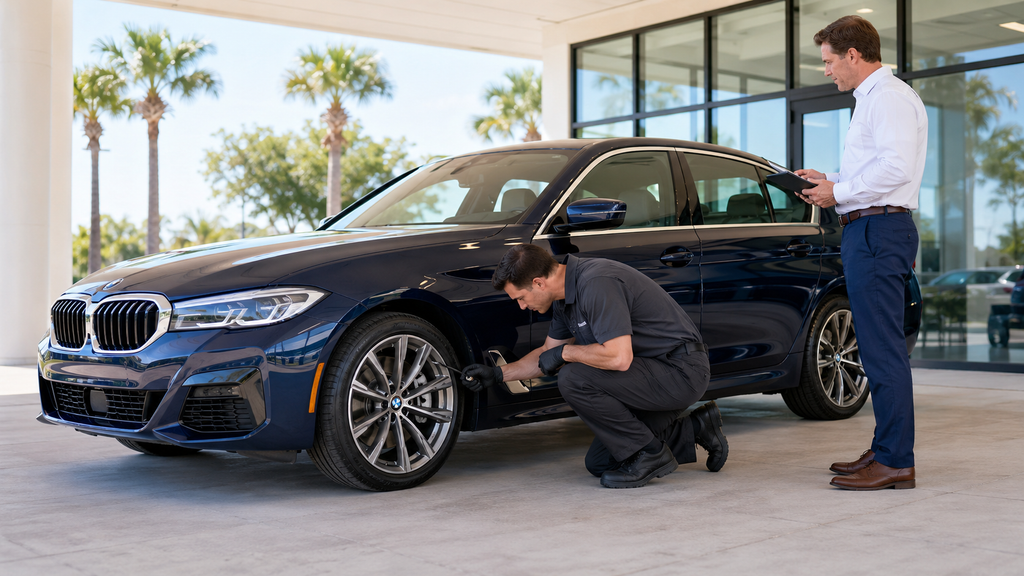
BMW Certified Pre Owned vehicles give Jacksonville shoppers a BMW backed process before they compare protection and history. The program begins before warranty terms even become relevant. BMW first reviews age, mileage, records, mechanical condition, and prior care. Therefore, certification involves several checkpoints before a used BMW earns the Certified label. That process matters when you compare Certified inventory with ordinary used inventory. A standard used BMW may still be an excellent choice. However, it does not pass through BMW's Certified requirements unless it qualifies and completes the required review. What Makes a BMW Eligible for Certification What separates a BMW Certified model from another used BMW? Certification starts with eligibility rules before inspection work begins. BMW currently limits qualifying models to five years old or newer. The vehicle must also have fewer than 60,000 miles. In addition, BMW reviews history and maintenance records before certification continues. A vehicle with unacceptable history can fail before the mechanical review reaches completion. Therefore, certification is not a cosmetic label added after detailing. BMW uses age, mileage, records, condition, and inspection results together. more Maintenance records also matter because they show how the BMW was cared for before resale. Missing care can raise questions about service history. Likewise, prior damage or improper modifications can interfere with certification. A Jacksonville shopper should review the individual vehicle history before focusing on warranty language. Certification adds BMW requirements, but each used BMW still has its own past. That history should remain part of the decision. What the BMW Certified Inspection Checks What does BMW inspect before approving a Certified vehicle? The review covers mechanical, cosmetic, diagnostic, and road test items. BMW technicians examine tires, wheels, brakes, exterior panels, service status, and mechanical areas. They also review onboard diagnostic information. Furthermore, a road test gives the technician another chance to identify concerns that may not appear while parked. Several inspection areas deserve close attention: Tire tread and wheel condition reveal whether road contact parts meet BMW certification standards before delivery. Brake measurements show whether friction components meet the certification threshold when the technician completes the review. Diagnostic scans can reveal stored faults or electronic concerns that a visual inspection may not show. The road test adds another layer because some concerns appear only while the BMW is moving. Steering response, braking, drivetrain operation, and cabin noises can all receive attention during that drive. However, passing inspection does not make the BMW new again. The vehicle still has prior mileage and prior use. Certification means it met BMW's requirements at the time of review. How BMW CPO Warranty Timing Works When does BMW Certified Pre Owned warranty protection begin? The answer starts with the original BMW New Vehicle Limited Warranty. BMW's new vehicle warranty lasts four years or 50,000 miles, whichever comes first. A younger Certified BMW may still have part of that original term remaining. Therefore, the CPO period may not start on the day you purchase the vehicle. BMW states that CPO protection follows the remaining new vehicle warranty. The CPO Limited Warranty then adds one year with unlimited miles. This sequence makes the original in service date essential. Consider a Certified BMW that still has several months of new vehicle warranty remaining. Those months run first. After that warranty expires, the one year CPO term begins. A shopper should ask for the original in service date and current warranty status. Those two details clarify where the BMW sits on the coverage timeline. BMW CPO Protection Versus a New Vehicle Warranty Does a Certified BMW carry the same warranty as a new BMW? No, the two protection periods follow different terms and timing. A new BMW begins with the four year or 50,000 mile New Vehicle Limited Warranty. A Certified BMW may inherit whatever portion of that original term remains. Afterward, the one year unlimited mileage CPO period can begin. Therefore, comparing only the words "warranty included" can hide the timeline. Two Certified BMWs may have different remaining protection because their original in service dates differ. Review these items before comparing a new BMW with a Certified BMW: Confirm the original in service date so you know how much new vehicle warranty remains. Confirm the current mileage because mileage can end the original warranty before four years pass. Ask for the CPO warranty documents so you can review covered defects and listed exclusions. A newer Certified BMW may still sit mainly within its original warranty. An older Certified BMW may be closer to the CPO portion. The calendar and mileage tell the story more clearly than the Certified label alone. What BMW CPO Coverage Does Not Include Does BMW CPO protection cover every repair? No, BMW uses an exclusionary warranty with items that remain outside the plan. CPO protection focuses on certain defects in materials and workmanship. Routine maintenance does not become free simply because the BMW has certification. Wear related parts can also fall outside warranty protection. That distinction deserves attention before purchase. Brake wear, tires, scheduled service, cosmetic items, and other excluded repairs can remain the owner's responsibility. Therefore, shoppers should read the current warranty document for the specific model year. The inspection and the warranty also serve different purposes. The inspection checks whether the BMW meets certification requirements at that time. The warranty addresses qualifying defects during the covered period. Those two layers work together, but they are not interchangeable. A passed inspection does not promise that every future repair will receive warranty payment. Electric BMW Models Add Separate Battery Protection Certified electric BMW models add another protection layer because the high voltage battery follows separate terms. That battery protection does not use the same one year CPO timeline. BMW states that high voltage battery defect protection can continue for eight years or 100,000 miles. The term begins from the original in service date. Therefore, a Certified electric BMW may retain battery protection beyond the standard CPO period. BMW also lists State of Health protection for qualifying Certified electric models. Current BMW information sets a 75 percent threshold for specified model years and delivery dates. The same eight year or 100,000 mile window applies to that protection. A shopper considering a Certified i4, i5, i7, or iX should separate these timelines. First, review remaining new vehicle protection. Next, review the CPO term. Then review the high voltage battery terms for that exact model. BMW Certified Pre Owned protection gives Jacksonville shoppers several layers to review before choosing a vehicle. Certification starts with eligibility and inspection, then warranty timing adds another decision point. Electric BMW models can add separate battery terms as well. Reading each timeline together gives a clearer view of what the Certified label includes.