


BMW iDrive is not simply an infotainment screen. It is the operating system of the vehicle’s cabin, designed to manage navigation, communication, vehicle settings, driver assistance interaction, and personalization through a unified control logic. For Jacksonville drivers who spend time in highway traffic, suburban commuting, and longer coastal drives, understanding how iDrive works explains why BMW cabins feel intuitive rather than overwhelming.
BMW approaches interior technology as an extension of driving dynamics. The goal is to reduce distraction, support decision making, and keep the driver connected to the vehicle rather than buried in menus.
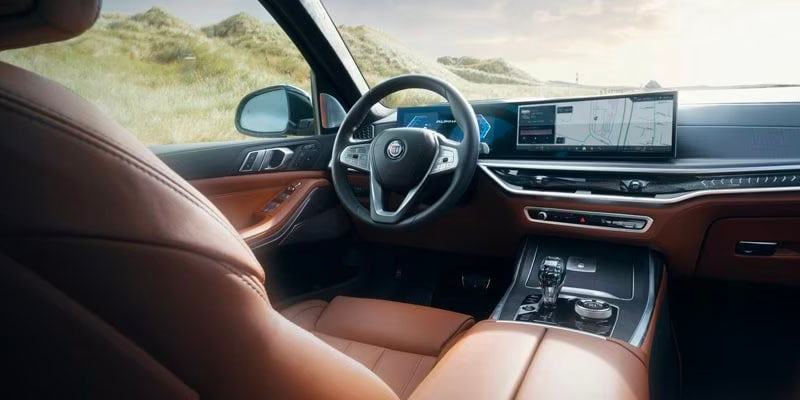
What BMW iDrive Actually Controls
BMW iDrive functions as a centralized interface that connects multiple vehicle systems through one operating environment. Instead of separate systems competing for attention, iDrive coordinates information and controls into a consistent structure.
BMW iDrive manages:
- Navigation and route guidance
- Media and communication functions
- Climate and comfort settings
- Driver assistance system configuration
- Vehicle performance and driving mode adjustments
- Personal driver profiles and preferences
This consolidation is critical for minimizing cognitive load while driving.
Human Machine Interface Design Philosophy
BMW designs iDrive around human machine interface principles that prioritize muscle memory and glance efficiency. Rather than forcing all interaction through touch, BMW offers multiple input methods so drivers can choose what feels most natural.
iDrive input methods include:
- Rotary controller with tactile feedback
- Touchscreen input when appropriate
- Steering wheel mounted controls
- Natural voice commands
By allowing interaction without constant screen contact, BMW reduces eye off road time during real world driving.
Why the Rotary Controller Still Matters
While many manufacturers have removed physical controls entirely, BMW continues to use the rotary controller as a core input device. This is intentional.
The rotary controller allows:
- Menu navigation without visual confirmation
- Precise selection while keeping hands stable
- Reduced distraction during highway driving
- Faster interaction once muscle memory develops
For Jacksonville drivers dealing with stop and go traffic or long highway stretches, this control method supports safer interaction than pure touchscreen reliance.
Digital Displays and Information Hierarchy
BMW digital instrument clusters and central displays are designed with a clear information hierarchy. Important driving data remains closest to the driver’s line of sight, while secondary information is positioned where it can be accessed when needed.
Display priorities include:
- Vehicle speed and critical alerts always visible
- Navigation prompts integrated into the instrument display
- Driver assistance status clearly indicated
- Media and secondary functions separated from core driving data
This layout ensures the driver receives the right information at the right time.
Navigation and Real World Driving Support
BMW iDrive navigation is tightly integrated into the vehicle’s systems. Rather than acting as a standalone map, it communicates with driver assistance features and display logic.
Navigation integration includes:
- Turn by turn guidance displayed in the instrument cluster
- Clear lane guidance for complex interchanges
- Predictive routing based on traffic patterns
- Smooth transitions between map views and driving data
This is especially valuable in Jacksonville where highway interchanges and traffic flow can change quickly.
Voice Control and Natural Interaction
BMW voice control is designed to reduce the need for manual input. Natural language processing allows drivers to speak commands conversationally rather than memorizing phrases.
Voice control can manage:
- Navigation destinations
- Climate adjustments
- Media selection
- Phone calls and messages
- Vehicle setting changes
By shifting interaction from hands and eyes to voice, BMW supports safer operation during daily driving.
Personalization and Driver Profiles
BMW iDrive supports driver profiles that store preferences across multiple systems. This allows the vehicle to adapt automatically to different drivers.
Driver profiles can retain:
- Seat and mirror positions
- Climate preferences
- Display layouts
- Navigation history
- Media and communication settings
For households with multiple drivers, this reduces setup time and improves consistency.
Integration with Apple CarPlay and Android Auto
BMW iDrive supports smartphone integration while maintaining its own interface logic. Rather than replacing BMW’s system, smartphone platforms operate within it.
Integration benefits include:
- Seamless transition between native BMW functions and smartphone apps
- Use of rotary controller and steering wheel controls
- Clear display formatting consistent with BMW design
- Reduced system conflicts between platforms
This preserves the BMW cabin experience while supporting modern connectivity.
How BMW iDrive Reduces Distraction
Distraction reduction is built into iDrive at the system level. BMW evaluates how drivers interact with controls during motion and designs accordingly.
Distraction minimizing features include:
- Limited menu depth for commonly used functions
- Context aware menu behavior
- Lockouts for complex interactions while driving
- Consistent control placement across models
These choices help ensure technology supports driving rather than competing with it.
Cabin Technology and Driving Dynamics Connection
BMW does not treat cabin technology as separate from driving performance. Systems like driving modes, stability control feedback, and navigation cues are designed to work together.
This integration allows:
- Clear feedback when vehicle dynamics change
- Predictable system behavior
- Driver confidence during varying road conditions
- A cohesive driving experience rather than fragmented systems
Technology becomes part of the vehicle’s character rather than an add on.
What Jacksonville Drivers Should Evaluate in Cabin Technology
When evaluating in vehicle technology, drivers should look beyond screen size and feature counts.
Important considerations include:
- Ease of use while driving
- Clarity of information presentation
- Balance between digital and physical controls
- Learning curve over long term ownership
- How well systems adapt to daily driving patterns
BMW iDrive is designed to improve with familiarity rather than feel complicated over time.
Final Perspective on BMW iDrive and Intelligent Cabin Systems
BMW iDrive represents a mature approach to in vehicle technology. By focusing on human centered design, multi input flexibility, and system integration, BMW creates cabins that feel intelligent without being distracting.
For Jacksonville drivers who value precision, clarity, and technology that enhances rather than interrupts driving, BMW iDrive delivers a digital experience grounded in engineering discipline. It is not about adding more screens. It is about making every interaction feel intentional, efficient, and connected to the drive itself.
Connect with us


Recent Blog Entries
- How BMW Safety Systems Support Highway and City Driving
- Certified Pre-Owned BMW Inspections Explained
- Understanding BMW Plug In Hybrid Daily Driving Behavior
- How BMW X5 and 5 Series Lease Paths Support Jacksonville Drivers Comparing Options
- What Jacksonville Buyers Should Know About BMW Maintenance Coverage