


BMW performance engineering is often discussed in the context of speed and sportiness, but its real value shows up in everyday driving. The way a BMW accelerates from a stoplight, holds its line on the highway, or responds to steering input during a commute reflects engineering decisions made to support control, predictability, and confidence rather than peak numbers alone. For Jacksonville drivers navigating highways, surface streets, and changing traffic patterns, this approach makes performance relevant even at normal speeds.
Understanding BMW performance means looking at how the vehicle is engineered as a complete system rather than focusing on individual components.
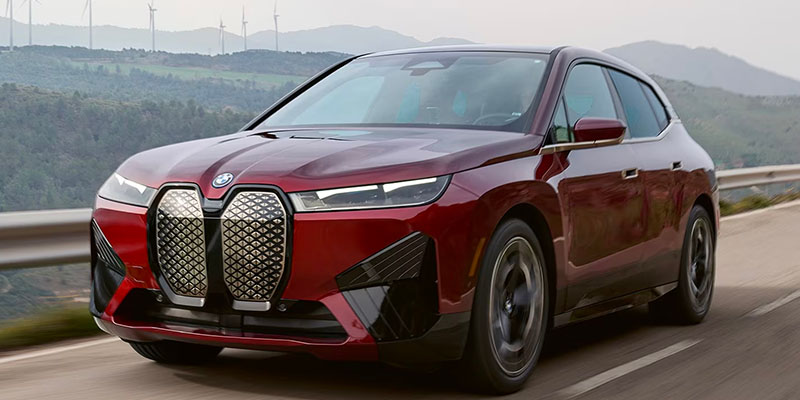
Performance as an Integrated Engineering System
BMW does not treat performance as a single attribute. It is the result of how multiple systems work together under real driving conditions.
Key elements of BMW performance engineering include:
- Balanced weight distribution to support neutral handling
- A low center of gravity to improve stability
- Rigid chassis construction that allows precise suspension tuning
- Powertrain calibration designed for smooth and usable output
This system level focus ensures that performance is accessible and beneficial in daily use rather than reserved for aggressive driving.
Chassis Balance and Vehicle Control
Chassis balance is foundational to how a BMW feels on the road. Proper weight distribution allows the vehicle to respond consistently to steering, braking, and acceleration inputs.
Benefits of BMW chassis balance include:
- Predictable handling during lane changes
- Reduced body roll through curves
- Stable braking under varying loads
- Confident behavior at highway speeds
For daily driving, this translates to a vehicle that feels settled and composed rather than reactive.
Suspension Tuning for Real Roads
BMW suspension systems are tuned to handle imperfect road surfaces without isolating the driver from feedback. Rather than relying on overly soft settings, BMW focuses on maintaining tire contact and controlled body movement.
Suspension tuning priorities include:
- Absorbing bumps without excessive rebound
- Maintaining traction on uneven pavement
- Supporting confident cornering without harshness
- Preserving ride comfort over long distances
This balance is especially noticeable on Florida roads where surface conditions can vary widely.
Steering Precision and Driver Feedback
Steering is one of the most direct connections between the driver and the vehicle. BMW engineers steering systems to provide clarity and consistency rather than exaggerated response.
Steering characteristics include:
- Linear response that matches driver input
- Stable on center feel for straight line driving
- Progressive feedback as cornering loads increase
- Minimal correction required at highway speeds
These traits reduce driver fatigue and improve confidence during everyday travel.
Powertrain Engineering for Daily Use
BMW engines are designed to deliver usable torque across a broad range of speeds. Turbocharging is employed to enhance responsiveness without requiring high engine speeds.
Powertrain design focuses on:
- Smooth acceleration from low speeds
- Strong midrange power for passing and merging
- Efficient cruising behavior
- Reduced mechanical stress during normal driving
This makes BMW performance noticeable during routine situations rather than only during spirited driving.
Transmission Calibration and Smooth Operation
Transmission behavior plays a significant role in daily drivability. BMW calibrates transmissions to work seamlessly with engine output and driving conditions.
Transmission characteristics include:
- Timely gear changes that avoid hesitation
- Smooth downshifts that support controlled deceleration
- Intelligent gear selection based on driving style
- Reduced gear hunting in traffic
The result is a driving experience that feels cohesive and refined.
Performance Benefits in Highway Driving
Jacksonville drivers often spend extended time on highways. BMW performance engineering supports stability and comfort during these conditions.
Highway focused benefits include:
- Strong straight line tracking
- Reduced wind and road noise
- Confident response during passing maneuvers
- Minimal steering correction at speed
These attributes make daily commutes and longer drives less tiring and more controlled.
Daily Drivability Versus Track Focus
BMW performance engineering is not designed solely for track use. Instead, it prioritizes consistency and confidence across all driving scenarios.
This approach benefits drivers by:
- Enhancing safety through predictability
- Supporting smooth operation in traffic
- Improving comfort without sacrificing engagement
- Making performance accessible without specialized driving skills
Performance becomes a quality that enhances every drive rather than a feature reserved for extremes.
Why Performance Matters Even at Normal Speeds
Performance engineering influences how a vehicle responds to routine inputs. Smooth braking, controlled acceleration, and stable handling all stem from the same principles that define BMW performance.
In daily driving, this means:
- Reduced stress in traffic
- Greater confidence during unexpected situations
- Easier control in changing conditions
- A more enjoyable driving experience overall
Performance is felt through refinement as much as responsiveness.
What Jacksonville Drivers Should Evaluate
When evaluating performance for daily driving, shoppers should consider:
- How the vehicle feels during normal acceleration
- Steering confidence at highway speeds
- Ride comfort on local roads
- Stability during lane changes and braking
- Overall driver confidence rather than raw power
BMW performance engineering is best judged by how naturally the vehicle responds in everyday use.
Final Perspective on BMW Performance Engineering
BMW performance engineering for 2025 models reflects a disciplined approach focused on control, balance, and real world usability. By integrating chassis tuning, steering precision, suspension design, and powertrain calibration, BMW creates vehicles that feel confident and engaging without sacrificing comfort.
For Jacksonville drivers who want performance that enhances daily driving rather than overwhelming it, BMW delivers engineering that works quietly and consistently in the background. Performance becomes a source of reassurance and enjoyment every time the road opens up.
BMW iDrive is not simply an infotainment screen. It is the operating system of the vehicle’s cabin, designed to manage navigation, communication, vehicle settings, driver assistance interaction, and personalization through a unified control logic. For Jacksonville drivers who spend time in highway traffic, suburban commuting, and longer coastal drives, understanding how iDrive works explains why BMW cabins feel intuitive rather than overwhelming.
BMW approaches interior technology as an extension of driving dynamics. The goal is to reduce distraction, support decision making, and keep the driver connected to the vehicle rather than buried in menus.
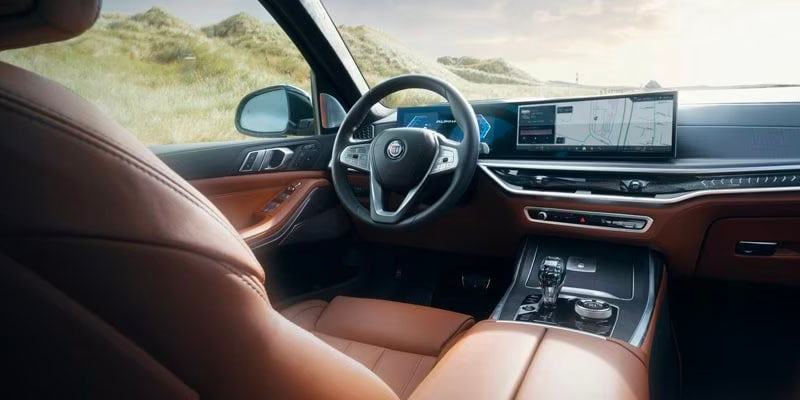
What BMW iDrive Actually Controls
BMW iDrive functions as a centralized interface that connects multiple vehicle systems through one operating environment. Instead of separate systems competing for attention, iDrive coordinates information and controls into a consistent structure.
BMW iDrive manages:
- Navigation and route guidance
- Media and communication functions
- Climate and comfort settings
- Driver assistance system configuration
- Vehicle performance and driving mode adjustments
- Personal driver profiles and preferences
This consolidation is critical for minimizing cognitive load while driving.
Human Machine Interface Design Philosophy
BMW designs iDrive around human machine interface principles that prioritize muscle memory and glance efficiency. Rather than forcing all interaction through touch, BMW offers multiple input methods so drivers can choose what feels most natural.
iDrive input methods include:
- Rotary controller with tactile feedback
- Touchscreen input when appropriate
- Steering wheel mounted controls
- Natural voice commands
By allowing interaction without constant screen contact, BMW reduces eye off road time during real world driving.
Why the Rotary Controller Still Matters
While many manufacturers have removed physical controls entirely, BMW continues to use the rotary controller as a core input device. This is intentional.
The rotary controller allows:
- Menu navigation without visual confirmation
- Precise selection while keeping hands stable
- Reduced distraction during highway driving
- Faster interaction once muscle memory develops
For Jacksonville drivers dealing with stop and go traffic or long highway stretches, this control method supports safer interaction than pure touchscreen reliance.
Digital Displays and Information Hierarchy
BMW digital instrument clusters and central displays are designed with a clear information hierarchy. Important driving data remains closest to the driver’s line of sight, while secondary information is positioned where it can be accessed when needed.
Display priorities include:
- Vehicle speed and critical alerts always visible
- Navigation prompts integrated into the instrument display
- Driver assistance status clearly indicated
- Media and secondary functions separated from core driving data
This layout ensures the driver receives the right information at the right time.
Navigation and Real World Driving Support
BMW iDrive navigation is tightly integrated into the vehicle’s systems. Rather than acting as a standalone map, it communicates with driver assistance features and display logic.
Navigation integration includes:
- Turn by turn guidance displayed in the instrument cluster
- Clear lane guidance for complex interchanges
- Predictive routing based on traffic patterns
- Smooth transitions between map views and driving data
This is especially valuable in Jacksonville where highway interchanges and traffic flow can change quickly.
Voice Control and Natural Interaction
BMW voice control is designed to reduce the need for manual input. Natural language processing allows drivers to speak commands conversationally rather than memorizing phrases.
Voice control can manage:
- Navigation destinations
- Climate adjustments
- Media selection
- Phone calls and messages
- Vehicle setting changes
By shifting interaction from hands and eyes to voice, BMW supports safer operation during daily driving.
Personalization and Driver Profiles
BMW iDrive supports driver profiles that store preferences across multiple systems. This allows the vehicle to adapt automatically to different drivers.
Driver profiles can retain:
- Seat and mirror positions
- Climate preferences
- Display layouts
- Navigation history
- Media and communication settings
For households with multiple drivers, this reduces setup time and improves consistency.
Integration with Apple CarPlay and Android Auto
BMW iDrive supports smartphone integration while maintaining its own interface logic. Rather than replacing BMW’s system, smartphone platforms operate within it.
Integration benefits include:
- Seamless transition between native BMW functions and smartphone apps
- Use of rotary controller and steering wheel controls
- Clear display formatting consistent with BMW design
- Reduced system conflicts between platforms
This preserves the BMW cabin experience while supporting modern connectivity.
How BMW iDrive Reduces Distraction
Distraction reduction is built into iDrive at the system level. BMW evaluates how drivers interact with controls during motion and designs accordingly.
Distraction minimizing features include:
- Limited menu depth for commonly used functions
- Context aware menu behavior
- Lockouts for complex interactions while driving
- Consistent control placement across models
These choices help ensure technology supports driving rather than competing with it.
Cabin Technology and Driving Dynamics Connection
BMW does not treat cabin technology as separate from driving performance. Systems like driving modes, stability control feedback, and navigation cues are designed to work together.
This integration allows:
- Clear feedback when vehicle dynamics change
- Predictable system behavior
- Driver confidence during varying road conditions
- A cohesive driving experience rather than fragmented systems
Technology becomes part of the vehicle’s character rather than an add on.
What Jacksonville Drivers Should Evaluate in Cabin Technology
When evaluating in vehicle technology, drivers should look beyond screen size and feature counts.
Important considerations include:
- Ease of use while driving
- Clarity of information presentation
- Balance between digital and physical controls
- Learning curve over long term ownership
- How well systems adapt to daily driving patterns
BMW iDrive is designed to improve with familiarity rather than feel complicated over time.
Final Perspective on BMW iDrive and Intelligent Cabin Systems
BMW iDrive represents a mature approach to in vehicle technology. By focusing on human centered design, multi input flexibility, and system integration, BMW creates cabins that feel intelligent without being distracting.
For Jacksonville drivers who value precision, clarity, and technology that enhances rather than interrupts driving, BMW iDrive delivers a digital experience grounded in engineering discipline. It is not about adding more screens. It is about making every interaction feel intentional, efficient, and connected to the drive itself.
Six Reasons Drivers Love the 2025 BMW 3 Series
A sports sedan with luxury features, the 2025 BMW 3 Series offers outstanding performance, sumptuous comfort, and advanced technology. Here are some reasons why drivers love the BMW 3 Series.
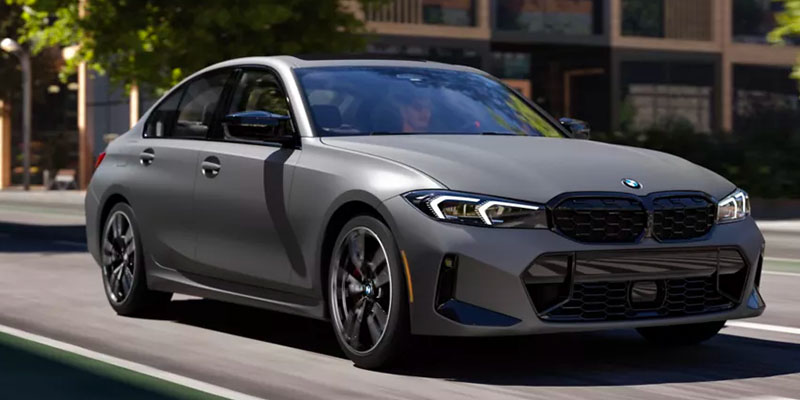
1. Choice of Potent Powertrains
There are two powertrains available that combine a traditional gas engine with an integrated mild-hybrid system. Although the cars can’t be driven solely in electric mode, it means that you’ll get maximum mileage and smooth, uninterrupted power from the engine.
The base 330i trim comes with a 2.0-liter four-cylinder turbo engine that’s supported by a 48V mild-hybrid. The performance-focused M340i has a 3.0-liter six-cylinder turbo engine, plus the same 48V mild-hybrid support. The two engines deliver 255 hp and 295 lb-ft of torque and 386 hp and 396 lb-ft of torque, respectively.
2. Generous Cargo Capacity
Despite the sporty style of the 2025 3 Series, practicality hasn’t been overlooked. In the trunk, there are 17 cubic feet of cargo space with the seats upright, which fits five suitcases. With the rear seats folded, the capacity increases to 17 suitcases. Additional packages provide the option to upgrade to either a power tailgate or a hands-free mechanism.
Read the rest of this entry »BMW Head-Up Display: Keeping Your Eyes on the Road
The BMW head-up display allows you to keep your eyes on the road while still accessing a range of valuable driving data. To get a demonstration of how this advanced technology works, visit your local BMW dealership today.
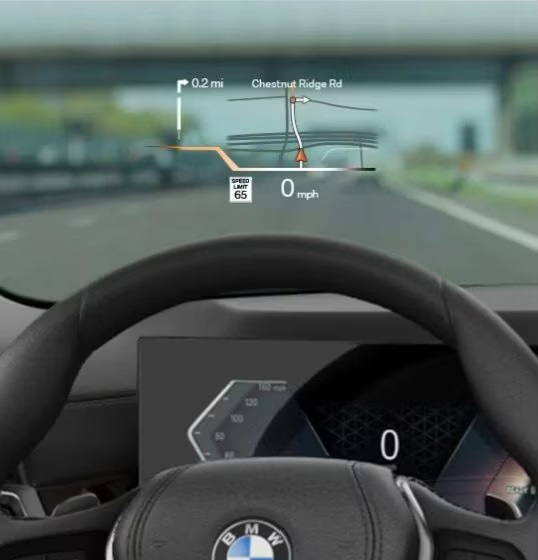
What is the Head-Up Display?
The HUD is designed to keep your focus on the road ahead while enabling you to access all the vital information that would normally be displayed on your dashboard. Data such as speed, RPM, lane guiding, and navigation are projected into your line of vision, allowing you to process the information in roughly half the time. This has the dual benefit of keeping your eyes looking forward and minimizing processing time for improved focus.
The precise information included in the HUD depends on the BMW model. On higher trims that are equipped with night vision, you can also receive alerts for any pedestrians in the road ahead. Other advanced features that can be integrated into the HUD include collision warning, cruise control status, and speed limit warnings.
How Does It Work?
Read the rest of this entry »Why the 2025 BMW M8 Is a Performance Icon
What’s the 2025 BMW M8 all about? Everything you expect from BMW: speed, luxury, space, and a premium subcompact coupe that’s perfect for daily driving but equally at home on the racetrack. Here’s why drivers are talking about it.

This offering from BMW, also known as the M8 Competition Coupe, starts out strong with a 4.4 L, twin-turbocharged V8 engine. Combine that with an eight-speed sport transmission, selectable drive modes, and standard all-wheel drive, and you get all the traction you need whether you’re on wet or dry roads and the stability to take corners at speed. This engine turns out 617 hp and 553 pound-feet of torque.
But it’s not just about power. For a truly powerful, controlled, and comfortable ride, you need all the great features that BMW has built in to allow for perfect handling and a wonderful ride feel. For example, there’s the adaptive suspension system, a power-assisted and even speed-sensitive steering, and an electro-mechanical limited-slip differential. Then there’s the brake system, which has been specially designed to give you perfect control. It comes with more than just the standard hill assist that comes on lots of cars: this system can both hold and regulate brake pressure going up or down hills.
Read the rest of this entry »How to Use BMW Gesture Control
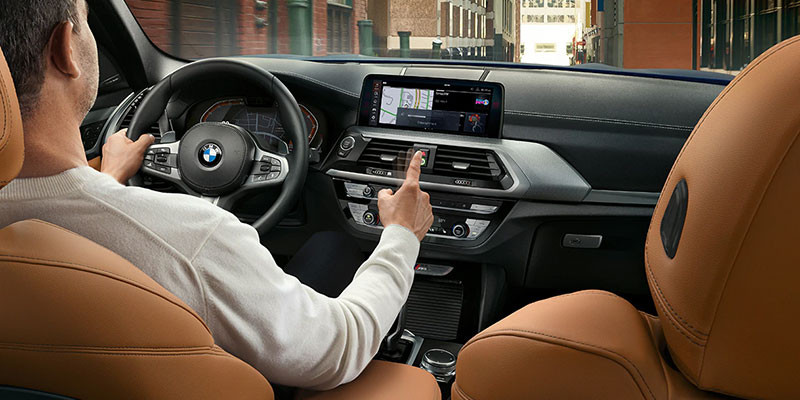
BMW gesture control first arrived on the scene in 2015, allowing drivers to interact with the iDrive system without diverting their attention from the road. Since 2023, gesture control has gradually been phased out in favor of voice commands and a touchscreen interface. However, many BMW certified and pre-owned vehicles still include gesture control, which is great news for the many drivers who found it useful.
How Does Gesture Control Work?
Gesture control operates through a 3D camera positioned in the BMW roof lining. This interprets hand movements and carries out the corresponding action within the iDrive system. As it’s possible to make gestures without taking your eyes off the road, gesture control enhances driver safety.
What Controls Are Available?
The exact controls may vary by model, so it’s advisable to check the instructions before driving. All information relating to gesture control can be found within iDrive under the “Gesture” option. Some of the most popular gesture controls included are:
- Accept a call: extend and retract your finger
- Reject a call: wave your hand to the right
- Volume control: move your hand with your finger extended in a circular motion
- Move the camera: pinch and drag your finger and thumb
- Skip a track/change station: extend your thumb to the left or right
Although some controls appear to rely on finger movements, you’ll get the best results by moving your whole hand at the same time. It’s also important to ensure that your whole hand is visible to the camera located above.
Read the rest of this entry »Six Reasons Drivers Choose the 2025 BMW X4
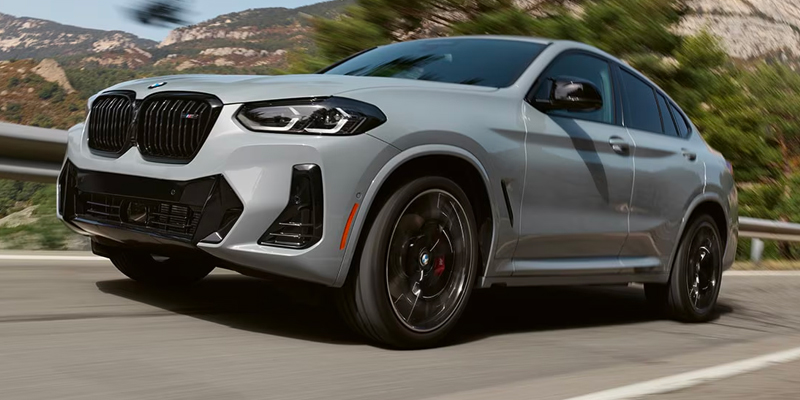
The 2025 BMW X4 is a sleek, coupe-style compact SUV that delivers both practicality and performance. Its distinctive silhouette, exceptional interior, and advanced technology mean the X4 appeals to discerning drivers who demand a sporty SUV that’s outstanding in every area.
1. Unforgettable Performance
You don’t need to opt for the top X4 trim to experience outstanding power and performance. The base X4 xDrive30i has a 2.0-liter BMW TwinPower Turbo four-cylinder engine that delivers 248 horsepower. Higher trims such as the M40i increase the power further with a 3.0-liter BMW M TwinPower Turbo six-cylinder engine that delivers a phenomenal 382 horsepower.
2. Striking Design
The exquisite styling of the X4 matches the high quality of its performance, with clean, swooping lines and a fastback profile. This creates an aerodynamic, sporty appearance that’s complemented by 19-inch wheels with chrome accents. For a more aggressive style, the M40i trim offers an M Aerodynamic Kit that includes side skirts, a sporty front fascia, and a rear diffuser.
Read the rest of this entry »3 Standout Features of the 2025 BMW i7
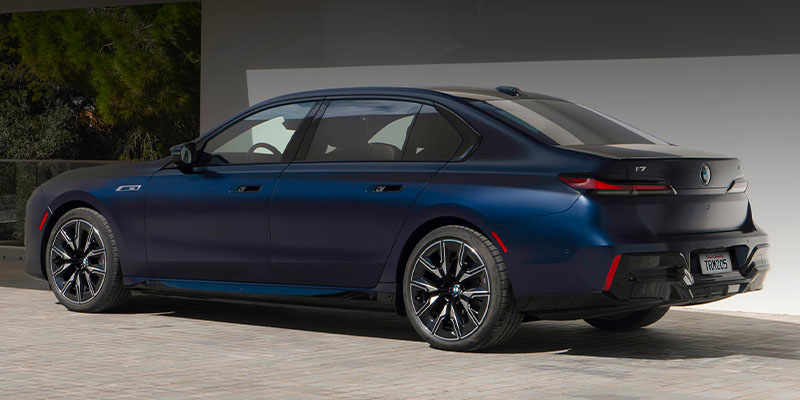
The 2025 BMW i7 is a comfortable, elegant, and refined luxury sedan. It also takes performance to the next level with its all-electric power. We’re going to dive in and check out some of its many standout features.
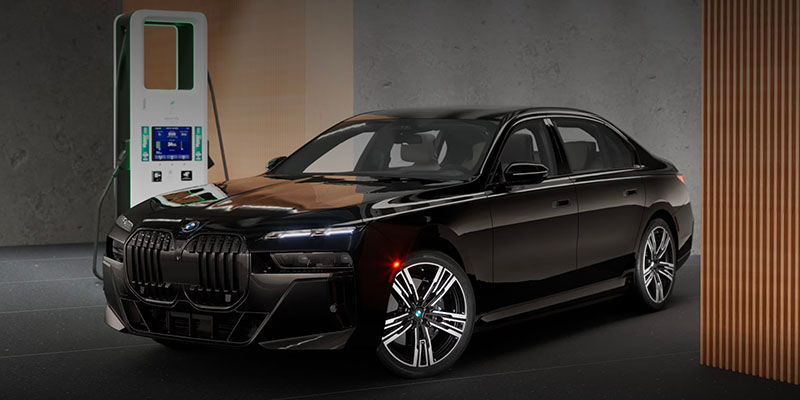
The i7 is available in three versions: the i7 eDrive50 with RWD, the i7 xDrive60 with AWD, and the i7 M70 with AWD and motorsport-level performance. The eDrive50 uses a single electric motor connected to the rear axle that delivers 449 hp. It can travel up to 314 miles on a full battery and accelerates from 0 to 60 mph in 5.3 seconds.
The xDrive60 uses two electric motors, one connected to the rear axle and the other connected to the front axle. These motors produce 536 hp and give you an acceleration of 0-60 mph in 4.5 seconds. It can easily reach up to 311 miles on a fully charged battery. Finally, the M70 option also features a dual-motor setup that delivers 650 hp, reaches 0-60 mph in 3.5 seconds, and has a range of up to 285 miles.
Sophisticated Interior
The centerpiece of your dashboard is the BMW Curved Display, which combines a 14.9″ information display and a 12.3″ instrument cluster. Its central location places all the information you need within easy sight and reach. You’ll also see the BMW Interaction Bar, which stretches across the dashboard and into the door panels. It allows you to control opening the front doors, change climate control settings, activate your hazard lights, and more.
Read the rest of this entry »Designed for Everyday Life: The 2025 BMW X3
The 2025 BMW X3 signals the fourth generation of this flagship compact crossover SUV. With a standard all-wheel drive, this SUV is optimized for highway cruising, driving in rainy weather, and tackling tough driving conditions.
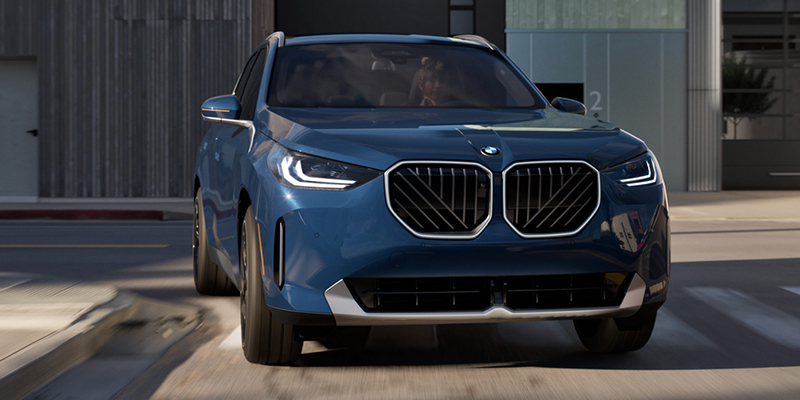
The X3 is powered by a lightweight 2.0-liter turbocharged I4 engine with an output of 255 horsepower and 295 lb-ft of torque. This model delivers 27 MPG in urban areas and 33 MPG on the freeway thanks to its hybrid electric motor. The engine eliminates idle fuel waste with a start-stop system and recharges the electric motor with a four-wheel regenerative brake system.
Exterior Features
The X3 comes with 19-inch all-season tires and a steel spare wheel. Body-colored door handles and a rear bumper emphasize the modern appearance of the HEV SUV. The side mirrors are power-adjustable and power-folding with heated glass and auto-dimming glass on the driver’s side. Built-in turn signals on the outside mirrors add an extra layer of safety by broadcasting your turning intentions.
Interior Features
This BMW comes with a 12-speaker Hi-Fi sound system and voice-activated technology to alter in-cabin settings. Audio streaming and pass-through phone features are supported by Bluetooth technology. The X3 has a wireless charger to keep your device batteries topped off as you travel. New models are equipped with a one-year trial for SiriusXM satellite radio. The infotainment unit offers turn-by-turn navigation and real-time traffic updates.
Read the rest of this entry »Is Leasing a BMW Right for You? 6 Benefits
Are you dreaming of driving a BMW but concerned about the cost? Leasing might be the perfect solution. With a lease, you save a boatload of money, bringing even The Ultimate Driving Machine down to a very affordable price. When you look into your BMW leasing options, you’ll find even more benefits, as outlined below.

Explore the Benefits of Leasing BMW Models
Cost-Savings
When you sit down and consider the math, leasing almost always trumps buying. When leasing a new BMW, the lessor calculates how much the car is likely to depreciate while in your possession. You then only need to pay that amount, which is far lower than the car’s full value.
Connect with us


Recent Blog Entries
- How BMW Safety Systems Support Highway and City Driving
- Certified Pre-Owned BMW Inspections Explained
- Understanding BMW Plug In Hybrid Daily Driving Behavior
- How BMW X5 and 5 Series Lease Paths Support Jacksonville Drivers Comparing Options
- What Jacksonville Buyers Should Know About BMW Maintenance Coverage