


BMW vehicles are engineered with advanced braking systems designed to deliver consistent stopping power and predictable pedal feel across a wide range of driving conditions. For many owners, one of the most common maintenance questions is when brake service will actually be required. Unlike older maintenance schedules that relied on fixed mileage intervals, BMW vehicles use a monitoring system that evaluates braking components and predicts service timing based on real driving conditions.
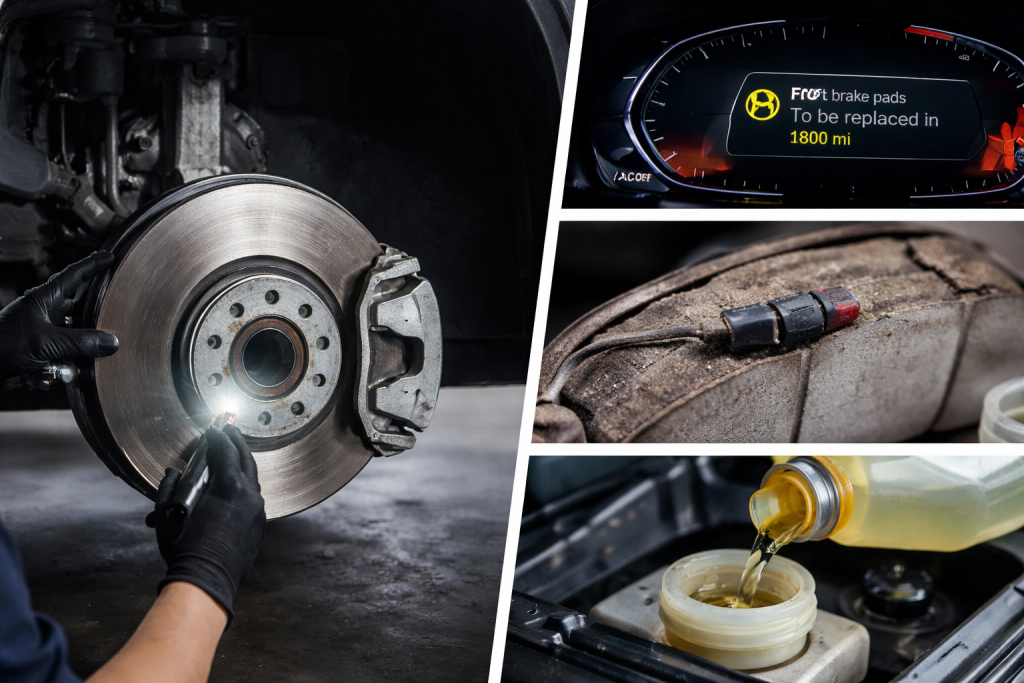
This approach allows BMW brake service intervals to adapt to how the vehicle is used rather than following a universal replacement schedule. Understanding how BMW determines brake service timing, how brake wear sensors work, and why different brake components are monitored separately can help owners interpret service reminders and plan maintenance more effectively.
How BMW Determines Brake Service Timing
Many BMW owners ask whether brake pads follow a fixed replacement schedule. BMW vehicles instead rely on a maintenance monitoring system called BMW Condition Based Service. BMW Condition Based Service is a vehicle maintenance system that uses sensors, elapsed time, mileage, and driving conditions to forecast when service items such as brake pads or brake fluid will need attention.
The system continuously analyzes vehicle operation to estimate remaining service life for several components. Rather than assigning one universal interval for brake service, the system evaluates how frequently and how aggressively the brakes are used.
Several factors can influence BMW brake service timing:
• city driving with frequent braking
• highway driving with longer steady speeds
• vehicle weight and passenger load
• driving style and braking intensity
• road conditions and traffic patterns
Because braking demands vary significantly between drivers, BMW Condition Based Service allows the vehicle to estimate service timing more accurately than a fixed schedule.
What BMW Brake Wear Sensors Are Monitoring
Another question BMW drivers often ask is how the vehicle knows when brake service is required. BMW vehicles use brake wear sensors to help monitor the condition of the brake pads.
BMW brake wear sensors are electronic components installed in the brake pad assembly that detect when pad material has worn close to its service limit. When the pad thickness approaches a predetermined threshold, the sensor triggers a service message within the vehicle’s maintenance display.
This warning gives drivers advance notice that brake service will soon be required. The system helps prevent situations where brake pads wear down too far and begin damaging the brake rotor.
The brake monitoring system works together with the BMW Condition Based Service system to estimate the remaining lifespan of the brake components. Drivers typically see this information in the vehicle’s maintenance status screen, which displays the estimated distance remaining before brake service is needed.
Why Front and Rear Brake Service Intervals Can Differ
Many owners are surprised when their BMW indicates that front and rear brake pads require service at different times. This difference occurs because braking forces are not distributed evenly between the front and rear wheels.
During most braking events, a vehicle’s weight shifts forward. This weight transfer places a greater load on the front brakes, which means the front brake pads often experience more wear than the rear pads.
BMW vehicles monitor front brake pads and rear brake pads as separate service items. This allows the maintenance system to recommend service for each axle based on its actual wear rather than assuming all four brakes wear evenly.
For drivers, this means it is normal for brake service timing to vary between the front and rear braking systems. In many cases, front brake pads may require replacement earlier than the rear pads because they handle a greater share of braking force.
Why Brake Fluid Service Is Tracked Separately
Brake service reminders sometimes include brake fluid replacement even when brake pads still have remaining life. This can be confusing for owners who associate brake service only with pad wear.
Brake fluid plays a different role within the braking system. Hydraulic brake fluid transfers force from the brake pedal to the brake calipers, allowing the vehicle to apply braking pressure to the wheels.
Over time, brake fluid gradually absorbs moisture from the surrounding air. This moisture contamination can reduce the fluid’s boiling point and affect braking performance during heavy braking conditions.
Because fluid degradation occurs gradually with time rather than mileage alone, BMW tracks brake fluid replacement using a time based service interval instead of a wear measurement. Even vehicles that are driven relatively few miles may still require brake fluid service after a certain period of time.
Separating brake pad wear from brake fluid service allows BMW’s maintenance system to ensure that both mechanical wear and fluid condition are addressed at the appropriate intervals.
Understanding BMW Brake Warning Messages
BMW drivers may encounter several types of alerts related to brake service. These alerts are designed to provide early notification that maintenance will soon be required.
Service messages typically appear within the vehicle’s maintenance display and may include an estimated number of miles remaining before brake pad replacement is recommended. These messages allow drivers to plan service before the braking components reach their wear limits.
In some cases, drivers may not see detailed brake pad status far in advance. Certain BMW vehicles only display the remaining brake pad service estimate once the vehicle approaches the final portion of the service interval. This behavior helps ensure that the maintenance display provides accurate information as the system approaches the service threshold.
Understanding how these alerts function can help owners interpret service messages correctly and schedule maintenance at the appropriate time.
BMW braking systems are engineered to maintain reliable performance while giving drivers clear insight into upcoming service needs. By using brake wear sensors and the BMW Condition Based Service system, the vehicle can estimate brake service intervals based on real driving conditions rather than relying on fixed mileage estimates. For owners, this monitoring approach helps ensure that brake pads, brake fluid, and related components receive attention when they are truly needed, supporting both safety and long term vehicle performance.
Connect with us


