
Blog / Jacksonville BMW Dealer

How BMW Adaptive Suspension Adjusts on Highways

BMW adaptive suspension changes damper firmness in real time to adjust ride comfort, body movement, and highway stability as driving conditions shift. Unlike traditional suspension systems that rely on fixed damping characteristics, BMW adaptive dampers continuously react to steering input, braking force, acceleration, pavement texture, and vehicle movement. That constant adjustment changes how the vehicle settles over uneven pavement, responds during lane changes, and maintains stability during long highway travel. Understanding how the system works helps shoppers evaluate why adaptive suspension creates a noticeably different driving feel across BMW sedans and SUVs.

How BMW Adaptive Suspension Changes Ride Behavior in Real Time

BMW adaptive suspension relies on electronically controlled dampers that continuously adjust how quickly the suspension compresses and rebounds during driving. Inside each damper, electronically managed valves regulate hydraulic fluid movement. As the valve position changes, the suspension either firms up or softens almost instantly.

The system monitors multiple sensors throughout the vehicle. Steering angle, wheel speed, throttle input, braking load, suspension travel, and body movement all feed data into the suspension control module. That information allows the dampers to react to changing road conditions while the vehicle is already moving through them.

When the system detects rapid steering input or sudden braking force, the dampers can increase firmness to reduce excess body movement. During smoother highway cruising, damping pressure can soften to create a calmer ride over expansion joints and uneven pavement.

BMW adaptive suspension continuously adjusts around:

• Steering movement
• Braking pressure
• Vehicle speed
• Suspension travel
• Wheel movement
• Road surface variation

This real time adjustment changes the driving feel far more dynamically than a traditional suspension setup with fixed damping calibration.

Comfort Mode and Sport Mode Change More Than Steering Feel

BMW drive modes alter several vehicle calibrations simultaneously, including suspension damping logic. Comfort mode prioritizes smoother body motion and softer vertical suspension movement during highway travel. Sport mode tightens damping response to reduce body roll and sharpen directional movement during acceleration and cornering.

The difference becomes noticeable during uneven pavement transitions. In comfort mode, the dampers allow more controlled suspension travel so the vehicle absorbs road texture with less sharp cabin movement. In sport mode, the dampers resist compression more aggressively to stabilize the body during steering transitions and weight transfer.

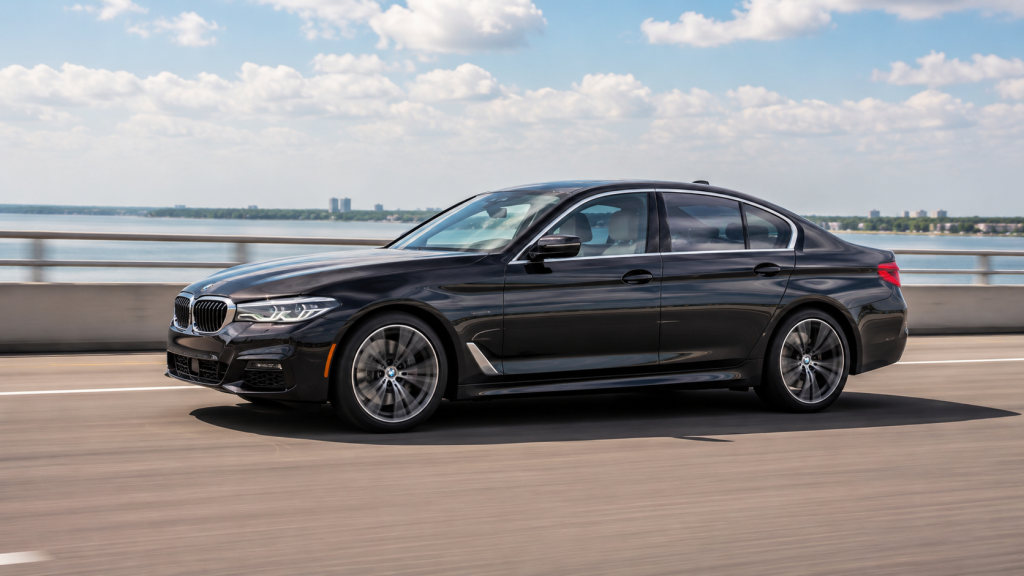
A BMW 5 Series equipped with adaptive suspension can therefore feel dramatically different depending on the selected drive mode. During long highway travel, comfort mode settles the vehicle more gradually over expansion joints and rough pavement patches. Sport mode maintains tighter body control during lane changes and directional corrections at higher speeds.

BMW SUVs like the X5 and X7 also benefit from adaptive damping because larger vehicle mass naturally creates more body movement during acceleration and braking. Tightening the damping response during sport oriented driving helps control vertical motion without requiring permanently stiff suspension tuning during everyday travel.

Florida Highway Surfaces Constantly Challenge Suspension Systems

Florida highways expose suspension systems to constant pavement variation. Expansion joints, rain grooves, bridge transitions, heat expansion gaps, and uneven lane surfaces create nonstop changes in wheel movement during long distance driving. Fixed suspension setups react the same way regardless of surface variation. BMW adaptive suspension changes continuously as road texture shifts underneath the vehicle.

This becomes important during extended interstate travel where suspension movement directly influences driver fatigue and cabin stability. Abrupt vertical movement forces the driver and passengers to constantly absorb repeated body motion through the seats and steering wheel. Softer damping during steady highway cruising reduces how sharply those movements transfer into the cabin.

Highway suspension demands increase through:

• Heat expanded pavement
• Concrete expansion joints
• Uneven lane transitions
• Bridge elevation changes
• Rain groove vibration
• High speed crosswind correction

Adaptive suspension also helps stabilize the vehicle during Florida storm conditions where standing water, wind gusts, and changing pavement traction require more precise body control. The dampers react fast enough to maintain steadier weight distribution during sudden steering corrections and braking inputs.

This continuous calibration process helps explain why adaptive suspension feels calmer during long highway travel without removing the tighter body control drivers expect from BMW handling characteristics.

Adaptive Dampers Control Weight Transfer and Body Movement

Every vehicle shifts weight during acceleration, braking, and cornering. Suspension systems manage how quickly that weight transfers across the chassis. Softer suspension setups allow more body movement, while stiffer setups resist movement more aggressively.

BMW adaptive suspension changes damping force dynamically so the vehicle can balance comfort and stability at the same time. During braking, the front dampers firm up to reduce excessive forward pitch. During acceleration, rear damping adjusts to stabilize weight transfer toward the rear axle. During cornering, outside dampers tighten to reduce leaning movement across the chassis.

The system continuously manages:

• Front to rear weight transfer
• Side to side body roll
• Suspension rebound speed
• Compression resistance
• Lane transition stability
• Steering response balance

This matters because body movement changes how stable the vehicle feels during higher speed travel. Excessive suspension movement delays steering response and increases driver correction input. Adaptive damping reduces those delays by controlling how quickly the chassis settles after directional changes.

BMW adaptive suspension therefore operates as a stability management system just as much as a comfort system.

What Shoppers Should Evaluate Before Choosing BMW Adaptive Suspension

Adaptive suspension changes how the vehicle responds during daily driving, long highway travel, and aggressive directional movement. Shoppers considering the feature should evaluate how they use the vehicle most frequently and what driving characteristics matter most to them.

Drivers spending substantial time on highways may notice the largest difference because the system constantly smooths pavement transitions while maintaining high speed body control. Drivers prioritizing sharper handling may appreciate how sport mode tightens suspension response during steering transitions without permanently stiffening the ride during commuting.

Important evaluation points include:

• Highway travel frequency
• Pavement quality exposure
• Preference for softer or firmer ride feel
• Vehicle size and weight
• Long distance commuting habits
• Steering response expectations
• Passenger comfort priorities

BMW adaptive suspension is not simply a sport feature or comfort feature alone. The system continuously shifts between both objectives based on driving input and road conditions. Understanding how those adjustments work helps shoppers evaluate whether adaptive suspension matches the type of driving they encounter most throughout daily travel.


Posted in:

Related Posts

BMW military discount

BMW Military Discount Guide for Jacksonville Families

BMW military discount eligibility can matter for Jacksonville families managing vehicle timing around service, relocation, and household plans. The program can reduce the purchase or lease cost on qualifying new BMW models. However, the amount can change by model and transaction. Therefore, military families should verify current terms before signing paperwork. Jacksonville adds another layer because PCS timing and Florida registration can shape the process. In addition, families may need documents for military status, residency, insurance, and registration. A clear plan can keep those pieces from colliding at delivery. Who Qualifies for the BMW Military Discount Who can qualify for the BMW military discount? BMW currently includes several military groups and family categories within its incentive program. Eligible groups include Active Duty members, National Guard members, Reservists, Veterans, Retirees, Military Spouses, and Surviving Spouses. Immediate Military Family Members can also qualify after verification. Therefore, eligibility reaches beyond active duty personnel alone. more BMW uses ID.me to verify status online. Once verification is complete, the customer submits the required lead form. BMW then sends a confirmation email with a Customer ID and Offer Code. The BMW Center uses those identifiers when applying the incentive. Before starting the process, gather the details tied to your military status. This preparation can make the verification step easier. Confirm which qualifying military category applies to you before submitting the ID.me verification. Complete the BMW lead form after verification so the Customer ID and Offer Code can be issued. Keep the confirmation email available when discussing the transaction with the BMW Center. Because eligibility rules can change, check the current BMW program page near your purchase or lease date. That final check matters even if you qualified under an earlier promotion. How ID.me Verification Connects to the BMW Offer ID.me handles the identity and military status check for BMW. However, verification alone does not finish the incentive process. After ID.me confirms status, BMW requires the customer to submit its lead form. Then BMW sends the Customer ID and Offer Code by email. Those two identifiers connect the verified customer with the offer at the BMW Center. This sequence matters because the dealership cannot rely on a verbal military status claim. The transaction needs the current program identifiers. Therefore, completing verification before your visit can reduce paperwork at the store. A spouse or immediate family member should also verify under the proper category. BMW lists those groups separately within the current program. For this reason, the person using the incentive should complete the correct verification path. The process is straightforward when each step happens in order. Verify status first, complete the lead form, save the email, then review the current offer. Why the Offer Amount Needs Current Verification How much should a military family expect from the BMW program? The amount can vary by model, transaction structure, and current promotion. BMW currently advertises military and first responder incentives from $500 to $5,000 on eligible new leases or purchases. However, each BMW series can carry its own range. Some models also have separate purchase or lease structures. Tom Bush BMW may also list local military program offers for specific models. Those listings can carry their own dates and amounts. Therefore, one number should never be treated as universal across the entire lineup. The payment method can matter too. A lease, cash purchase, or financed purchase may follow different program rules. In addition, promotional financing can have separate restrictions. Before comparing numbers, match the current incentive to the exact BMW under consideration. Then confirm whether the offer fits the planned lease or purchase path. This keeps an outdated promotion from shaping the budget. PCS Timing Can Change the Lease Versus Finance Decision A military household may have a clear plan today and receive new orders later. Therefore, contract timing deserves careful review before choosing a lease. A lease usually carries a fixed term and mileage allowance. If PCS orders arrive during that term, the household may need to reassess the contract. Federal protections can apply in certain qualifying military situations. Military Consumer guidance explains that some service members can terminate qualifying vehicle leases after certain PCS orders. The rule can apply to qualifying overseas moves lasting at least 180 days. However, wear, damage, mileage, and other charges can still remain. Financing follows a different structure. The household owns the vehicle subject to the loan and can later sell or trade it. That route may suit families who expect more uncertainty around assignment length. Before choosing either path, compare the contract timeline with likely duty changes. Review mileage needs, relocation plans, possible overseas assignments, and expected time in Jacksonville. No single contract works for every military household. The right review starts with the service timeline and written contract terms. Florida Registration Can Look Different for Military Households Military residency and duty station location are not always the same. Therefore, Jacksonville families should check Florida registration rules before assuming standard treatment applies. Florida provides certain registration provisions for qualifying military members. Some nonresident service members may qualify for an exemption from the state's $225 initial registration fee. Supporting military documents are required for that exemption. Jacksonville's Tax Collector also lists military paperwork for title and registration processing. The required records can include military orders, insurance records, title documents, and exemption forms. Before visiting the registration office, review these items carefully. Confirm whether you are a Florida resident or a qualifying nonresident service member for registration purposes. Gather military orders and the required Florida forms before submitting title or registration paperwork. Confirm that the insurance policy meets Florida requirements for a vehicle kept in the state. A service member stationed in Jacksonville may still maintain legal residence elsewhere. That distinction can change which forms apply. Therefore, verify residency status before completing the registration packet. Prepare the Paperwork Before Choosing the BMW The final step is bringing the military program and relocation details into one purchase plan. Start with current BMW eligibility and the correct ID.me verification path. Next, compare the selected BMW with the current military offer. Confirm the exact model, transaction type, incentive amount, and expiration date. Then review lease or finance timing against upcoming orders or known relocation plans. Registration deserves the same preparation. Gather military orders, insurance records, identification, and any Florida forms tied to your residency status. In addition, keep the BMW Customer ID and Offer Code accessible for the dealership. A Jacksonville military family may need to manage several timelines at once. Service obligations, lease terms, registration deadlines, and move dates can all overlap. Therefore, a little preparation before delivery can prevent avoidable delays. Tom Bush BMW Jacksonville can review current BMW program details for the model you choose. Still, official BMW and Florida sources should guide eligibility and registration questions. That approach keeps the transaction tied to current rules and current paperwork.

BMW i4

BMW i4 Versus BMW 3 Series for Jacksonville Driving

BMW i4 shoppers in Jacksonville may find the 3 Series familiar at first. However, charging, fueling, and power delivery shape the daily routine. In addition, both models serve drivers who want a compact BMW with four doors and strong road manners. However, their drivetrains ask for different habits. The i4 stores energy in a high voltage battery and sends it to an electric motor. The 330i uses gasoline, a turbocharged four cylinder engine, and an eight speed automatic transmission. Therefore, choosing between them means looking past size and styling. Your commute, parking setup, travel plans, and energy costs deserve equal attention. BMW i4 and BMW 3 Series Start With Two Different Powertrains What changes when you choose a BMW i4 instead of a BMW 3 Series? The largest change is how each car stores energy and delivers power. Therefore, the i4 uses battery electricity to turn an electric motor. Because an electric motor can deliver torque without waiting for engine speed to rise, response starts quickly. There are no conventional gear changes during acceleration. Therefore, the sensation can feel direct and smooth from a stop. more By contrast, the 330i takes another route. Its turbocharged four cylinder engine burns gasoline and works through an eight speed automatic. As speed rises, the transmission changes ratios to keep the engine within a useful operating range. You feel those shifts as part of the car's acceleration pattern. In addition, regenerative braking separates the two cars. When the i4 slows, its electric motor can recover some motion and return energy to the battery. The 330i relies on its braking hardware while the engine and transmission continue their normal roles. Therefore, pedal response and deceleration can feel different during the same Jacksonville commute. A shopper should evaluate more than acceleration figures. Pay attention to throttle response, braking feel, noise, and the rhythm of stop and go traffic. Those details reveal which drivetrain feels more natural to you. What Jacksonville Heat Means for BMW i4 Range How should summer heat factor into BMW i4 range planning? Heat can raise the energy needed for cabin cooling, while speed and wheel choice also shape driving range. Because both functions need energy, the i4 must power propulsion and climate control from the battery. Therefore, strong air conditioning demand can reduce the energy left for driving. Highway speeds can also raise energy use because aerodynamic drag increases as speed rises. Larger wheels and certain tire choices can change efficiency as well. Therefore, BMW lists estimated range by i4 configuration, with no single number covering every version. The current i4 eDrive40 carries an estimated range above 300 miles in certain configurations. Other i4 variants carry different estimates. Therefore, shoppers should compare the exact model, wheel package, and drive layout they are considering. In addition, Jacksonville commuting makes charging reserve worth planning. A normal weekday route may use only part of the battery. Still, an airport run, beach trip, or longer interstate drive can change the day's mileage quickly. Keeping a comfortable reserve can make those schedule changes easier to handle. The useful question is not whether Florida heat makes an i4 unsuitable. Instead, ask how your normal mileage compares with the selected i4's estimated range. Then account for cooling, highway travel, and the charge level you prefer to keep available. Home Charging Changes the Daily Routine For a Jacksonville homeowner, home charging can shape the entire BMW i4 routine. Level 2 charging uses a 240 volt connection and replenishes the battery while the car is parked. Furthermore, BMW supports home charging through options such as the Flexible Fast Charger and BMW Wallbox. A qualified electrician should review the electrical panel, circuit capacity, parking location, and cable path. Therefore, the home itself becomes part of the EV decision. Before choosing the i4, review these items: Confirm whether your parking space can reach a dedicated 240 volt charging connection. The cable should reach the charge port without crossing a risky walkway. Ask an electrician to review panel capacity and the planned circuit. The electrical setup must match the charging equipment and local code requirements. Estimate how much mileage you need to replace overnight. A driver covering modest daily mileage may replenish that energy well before morning. Home charging changes the timing of refueling. Instead of making a separate stop, you can replenish the battery while the car remains parked overnight. That routine may suit drivers with predictable weekday mileage and dedicated parking. Public Charging Matters More on Longer Trips Public charging becomes more relevant when a trip extends beyond your normal home charging routine. DC fast charging sends power to the battery much faster than residential Level 2 equipment. Therefore, longer drives require a different planning process. You need to consider charger location, battery level, charging speed, and the remaining distance. BMW guidance commonly focuses on charging from about 10 percent to 80 percent during a fast charging stop. That range matters because charging speed changes as the battery fills. The car may accept higher power earlier in the session, then reduce charging speed later. Therefore, filling from a low state of charge to 80 percent can be more time efficient than waiting for a full battery. In addition, Jacksonville drivers may use public charging differently from home charging. Local errands may rely almost entirely on overnight charging. However, trips toward Orlando, Savannah, or other distant destinations may place greater importance on DC charger access. Drivers comparing the i4 and 3 Series should consider stop length as well as stop frequency. The 330i can refill quickly at a gas station. The i4 may require more planning, but home charging can reduce routine fuel stops during the week. Driving Feel and Cabin Layout Separate the Two BMWs The i4 and 3 Series share a familiar BMW size class, but their road manners are not identical. Electric propulsion changes acceleration, sound, and deceleration. Because electric motors respond quickly, the i4 can feel immediate when leaving a traffic light. Regenerative braking also changes how the car slows after you lift the accelerator. By contrast, the 330i delivers power through engine speed, turbo response, and transmission shifts. That difference becomes easier to judge during a test drive. Pay attention to how each car reacts in slow traffic, highway merging, and parking lot speeds. In addition, notice whether regenerative braking feels natural during repeated stops. Cargo access also separates the two body styles. The i4 uses a rear hatch that opens with the rear glass. The 3 Series uses a conventional sedan trunk. Therefore, the i4 can make larger objects easier to load through the wider opening. However, the sloping roofline can shape rear headroom and cargo height. The 3 Series offers a more traditional sedan layout with a separate trunk area. A shopper carrying luggage, sports gear, groceries, or child equipment should inspect both spaces in person. Cubic foot measurements cannot show every loading difference. Opening shape and interior height can matter just as much. Lease Term Costs Put Charging and Fuel Into Context Which costs should you compare across a normal lease term? Start with payment, energy, mileage, charging habits, and routine service. The i4 may begin with a higher vehicle price than a comparable 3 Series configuration. However, the energy calculation follows a different path. Home electricity, public charging rates, and annual mileage shape the i4 side. Gas prices and fuel economy shape the 330i side. Before comparing totals, review these categories: Estimate your yearly mileage and expected home charging share. More home charging can change the electricity calculation compared with frequent public charging. Compare expected gasoline spending for the 330i using your normal commute. Use a realistic local fuel price instead of a national average. Review scheduled service and lease terms for each car. Tires, mileage limits, insurance, and lease structure can alter the total on either side. Furthermore, your parking setup may carry an upfront electrical cost. A homeowner who needs a new circuit or Wallbox installation should include that expense. A home with suitable electrical service may require less work. Neither drivetrain produces one universal cost answer. Therefore, the better comparison uses your mileage, parking, travel schedule, and local energy prices. Those inputs show which choice fits your Jacksonville routine more closely. The BMW i4 and BMW 3 Series approach the same size class through two very different drivetrains. One centers the routine around charging. The other keeps gasoline fueling and a familiar engine layout. Your commute, home setup, travel plans, and preferred road feel should guide the decision.

BMW X5 xDrive50e Guide for Daily Jacksonville Driving

BMW X5 xDrive50e drivers in Jacksonville can use electric power for shorter trips while keeping gasoline available for longer travel. However, the value of that setup depends on charging frequency and driving distance. The vehicle combines a high voltage battery, an electric motor, and a turbocharged gasoline engine. Therefore, each trip can use electricity, gasoline, or both. For local travel, the electric portion may cover errands, school runs, or a short commute. Longer routes can bring the gasoline engine into greater use. In addition, drive modes let you decide when you want to use or save battery energy. Home charging also changes how much gasoline you may need during a normal week. How the BMW X5 xDrive50e Uses Gasoline and Electricity How does the BMW X5 xDrive50e move between electric and gasoline power? The drivetrain combines battery energy with a turbocharged inline six engine. The battery sends electricity to an electric motor. Because electric torque arrives quickly, the motor can move the vehicle without waiting for engine speed to rise. However, the gasoline engine remains ready when you need more power or more driving distance. In HYBRID mode, the vehicle can blend both power sources. Therefore, the engine may start when speed, acceleration demand, or battery level calls for it. ELECTRIC mode gives priority to battery power while enough charge remains. more By contrast, SPORT mode gives the gasoline engine a larger role. That can change throttle response and how quickly the vehicle reacts to stronger accelerator input. The transmission also works with the engine to manage road speed and power delivery. Regenerative braking adds another layer. When the vehicle slows, the electric motor can recover part of that motion as electrical energy. As a result, some energy returns to the battery instead of leaving only as brake heat. A test drive should include neighborhood roads, highway merging, and repeated stops. Those situations show how the two power sources share the work. Electric Range in Jacksonville Heat Can a Jacksonville commute fit inside the electric portion of the drive? The current X5 xDrive50e carries an estimated electric range near 40 miles. However, that figure can move with temperature, traffic, wheel choice, and speed. Air conditioning also uses battery energy. Therefore, a hot afternoon trip may draw more electricity than a mild morning route. Highway travel can also use energy faster than slower city travel. Aerodynamic drag rises as speed increases. For this reason, a longer interstate commute may use the battery faster than a shorter urban route. A useful comparison starts with your usual round trip mileage. If your daily route stays well below the estimated range, electric travel may cover most of that distance. If your route sits closer to the limit, cooling demand and highway speed deserve more attention. In addition, you should think about how much charge you want left at home. Some drivers prefer a reserve for an unexpected errand. Others return home and connect the vehicle soon after parking. Jacksonville heat does not change the basic purpose of the plug in hybrid layout. Instead, it changes how carefully you should compare your route with the available electric distance. Home Charging and Overnight Replenishment Home charging can decide how much electric travel you get from the BMW X5 xDrive50e. A 120 volt outlet can add energy, while 240 volt charging works faster. BMW also offers charging equipment for residential use. However, the electrical service at the house matters just as much as the charger. A qualified electrician should review the panel, circuit, parking location, and cable path. Before relying on overnight charging, review these points: Confirm that the parking space can reach the planned outlet or Wallbox without stretching the cable across a walkway. Ask an electrician whether the panel can support the planned circuit and charging equipment under local electrical code. Compare the expected charging time with the hours the vehicle usually remains parked at home each night. The X5 xDrive50e carries a smaller battery than a full electric vehicle. Therefore, overnight replenishment may fit easily into many routines. Still, the exact timing depends on the charging source and remaining battery level. In addition, charging frequency changes gasoline use. A driver who plugs in most nights may complete more local miles on electricity. Someone who rarely charges will ask the gasoline engine to do more of the work. Driving Modes Control When Electric Energy Gets Used Why would a driver save battery charge instead of using it first? Battery Hold can preserve charge for a later portion of the trip. A driver might begin on the highway and finish in slower city traffic. Battery Hold can keep electric energy available until that later segment. However, using the feature well requires some route planning. HYBRID mode takes a more automatic approach. The vehicle decides when to use the engine, electric motor, or both. Therefore, it can react to speed, accelerator input, battery level, and route demands. ELECTRIC mode gives battery power priority while charge remains. That can suit shorter Jacksonville errands or a commute that fits comfortably within electric distance. By contrast, SPORT mode keeps the gasoline engine more involved. HYBRID ECO PRO aims to reduce energy use through more conservative power delivery. However, a shopper should try the available modes instead of judging them only from a menu description. The goal is to learn which setting matches your routes. Furthermore, the useful mode may change between a weekday commute and a longer weekend drive. Longer Trips Shift More Work to the Gasoline Engine What happens after you use the electric portion? The gasoline engine keeps the X5 xDrive50e moving without requiring an immediate charging stop. That distinction separates a plug in hybrid from a full electric vehicle. You can leave Jacksonville with a full battery and continue after the stored electric energy drops. Therefore, longer travel does not require a charging stop solely to keep the trip moving. The gasoline engine takes a larger share of the work once battery energy falls. As a result, fuel use rises when more miles occur after the electric portion. Highway speed can increase that gasoline share further. This makes charging frequency central to the ownership calculation. If you charge before most local trips, the battery can cover a larger share of short distance travel. If you skip charging, the vehicle still drives, but gasoline use rises. In addition, a long trip can include both approaches. You might begin with battery power, use more gasoline on the highway, then preserve charge for later city streets. That range of options suits drivers whose schedules change. However, the plug in hybrid setup makes the most sense when charging becomes a regular habit. Monthly Energy Cost Depends on Electric Miles How should a Jacksonville driver estimate monthly energy spending? Start by separating electric miles from gasoline miles. A simple calculation works better than looking at one MPG figure. First, estimate your monthly mileage. Then estimate how much of that distance could occur before the gasoline engine takes over. Review these inputs before comparing totals: Multiply expected home charging energy by your household electricity rate, then include any public charging you expect to use. Estimate gasoline miles separately, then use local fuel prices and expected fuel economy for the gasoline portion. Include any home electrical work needed for charging, since installation cost changes the first year total. Because charging habits can differ from one household to another, two drivers can spend very different amounts on gasoline. A short commuter who charges nightly may use little fuel during the week. A longer highway commuter may lean on gasoline more heavily. In addition, local electricity pricing gives the electric portion its own cost structure. Gasoline prices can move from week to week. Therefore, compare both energy sources using current local rates when you review a lease. The BMW X5 xDrive50e makes the strongest case when its two energy sources fit your schedule. Your commute length, home charging access, and travel pattern should guide that decision. If electric miles cover much of your local travel, the battery can handle more routine trips. However, the gasoline engine remains ready when your plans extend farther.