


BMW adaptive suspension changes damper firmness in real time to adjust ride comfort, body movement, and highway stability as driving conditions shift. Unlike traditional suspension systems that rely on fixed damping characteristics, BMW adaptive dampers continuously react to steering input, braking force, acceleration, pavement texture, and vehicle movement. That constant adjustment changes how the vehicle settles over uneven pavement, responds during lane changes, and maintains stability during long highway travel. Understanding how the system works helps shoppers evaluate why adaptive suspension creates a noticeably different driving feel across BMW sedans and SUVs.
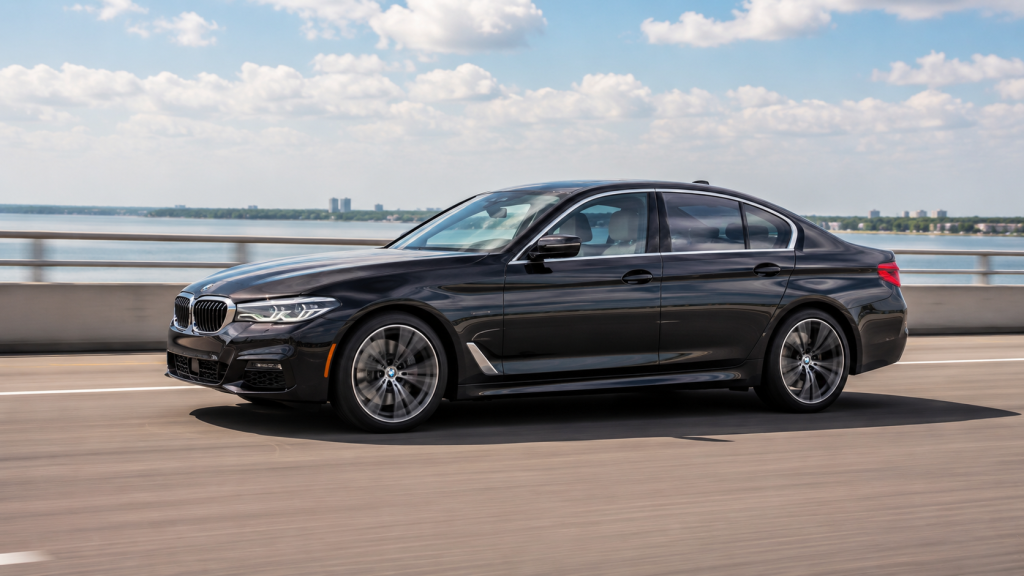
How BMW Adaptive Suspension Changes Ride Behavior in Real Time
BMW adaptive suspension relies on electronically controlled dampers that continuously adjust how quickly the suspension compresses and rebounds during driving. Inside each damper, electronically managed valves regulate hydraulic fluid movement. As the valve position changes, the suspension either firms up or softens almost instantly.
The system monitors multiple sensors throughout the vehicle. Steering angle, wheel speed, throttle input, braking load, suspension travel, and body movement all feed data into the suspension control module. That information allows the dampers to react to changing road conditions while the vehicle is already moving through them.
When the system detects rapid steering input or sudden braking force, the dampers can increase firmness to reduce excess body movement. During smoother highway cruising, damping pressure can soften to create a calmer ride over expansion joints and uneven pavement.
BMW adaptive suspension continuously adjusts around:
• Steering movement
• Braking pressure
• Vehicle speed
• Suspension travel
• Wheel movement
• Road surface variation
This real time adjustment changes the driving feel far more dynamically than a traditional suspension setup with fixed damping calibration.
Comfort Mode and Sport Mode Change More Than Steering Feel
BMW drive modes alter several vehicle calibrations simultaneously, including suspension damping logic. Comfort mode prioritizes smoother body motion and softer vertical suspension movement during highway travel. Sport mode tightens damping response to reduce body roll and sharpen directional movement during acceleration and cornering.
The difference becomes noticeable during uneven pavement transitions. In comfort mode, the dampers allow more controlled suspension travel so the vehicle absorbs road texture with less sharp cabin movement. In sport mode, the dampers resist compression more aggressively to stabilize the body during steering transitions and weight transfer.
A BMW 5 Series equipped with adaptive suspension can therefore feel dramatically different depending on the selected drive mode. During long highway travel, comfort mode settles the vehicle more gradually over expansion joints and rough pavement patches. Sport mode maintains tighter body control during lane changes and directional corrections at higher speeds.
BMW SUVs like the X5 and X7 also benefit from adaptive damping because larger vehicle mass naturally creates more body movement during acceleration and braking. Tightening the damping response during sport oriented driving helps control vertical motion without requiring permanently stiff suspension tuning during everyday travel.
Florida Highway Surfaces Constantly Challenge Suspension Systems
Florida highways expose suspension systems to constant pavement variation. Expansion joints, rain grooves, bridge transitions, heat expansion gaps, and uneven lane surfaces create nonstop changes in wheel movement during long distance driving. Fixed suspension setups react the same way regardless of surface variation. BMW adaptive suspension changes continuously as road texture shifts underneath the vehicle.
This becomes important during extended interstate travel where suspension movement directly influences driver fatigue and cabin stability. Abrupt vertical movement forces the driver and passengers to constantly absorb repeated body motion through the seats and steering wheel. Softer damping during steady highway cruising reduces how sharply those movements transfer into the cabin.
Highway suspension demands increase through:
• Heat expanded pavement
• Concrete expansion joints
• Uneven lane transitions
• Bridge elevation changes
• Rain groove vibration
• High speed crosswind correction
Adaptive suspension also helps stabilize the vehicle during Florida storm conditions where standing water, wind gusts, and changing pavement traction require more precise body control. The dampers react fast enough to maintain steadier weight distribution during sudden steering corrections and braking inputs.
This continuous calibration process helps explain why adaptive suspension feels calmer during long highway travel without removing the tighter body control drivers expect from BMW handling characteristics.
Adaptive Dampers Control Weight Transfer and Body Movement
Every vehicle shifts weight during acceleration, braking, and cornering. Suspension systems manage how quickly that weight transfers across the chassis. Softer suspension setups allow more body movement, while stiffer setups resist movement more aggressively.
BMW adaptive suspension changes damping force dynamically so the vehicle can balance comfort and stability at the same time. During braking, the front dampers firm up to reduce excessive forward pitch. During acceleration, rear damping adjusts to stabilize weight transfer toward the rear axle. During cornering, outside dampers tighten to reduce leaning movement across the chassis.
The system continuously manages:
• Front to rear weight transfer
• Side to side body roll
• Suspension rebound speed
• Compression resistance
• Lane transition stability
• Steering response balance
This matters because body movement changes how stable the vehicle feels during higher speed travel. Excessive suspension movement delays steering response and increases driver correction input. Adaptive damping reduces those delays by controlling how quickly the chassis settles after directional changes.
BMW adaptive suspension therefore operates as a stability management system just as much as a comfort system.
What Shoppers Should Evaluate Before Choosing BMW Adaptive Suspension
Adaptive suspension changes how the vehicle responds during daily driving, long highway travel, and aggressive directional movement. Shoppers considering the feature should evaluate how they use the vehicle most frequently and what driving characteristics matter most to them.
Drivers spending substantial time on highways may notice the largest difference because the system constantly smooths pavement transitions while maintaining high speed body control. Drivers prioritizing sharper handling may appreciate how sport mode tightens suspension response during steering transitions without permanently stiffening the ride during commuting.
Important evaluation points include:
• Highway travel frequency
• Pavement quality exposure
• Preference for softer or firmer ride feel
• Vehicle size and weight
• Long distance commuting habits
• Steering response expectations
• Passenger comfort priorities
BMW adaptive suspension is not simply a sport feature or comfort feature alone. The system continuously shifts between both objectives based on driving input and road conditions. Understanding how those adjustments work helps shoppers evaluate whether adaptive suspension matches the type of driving they encounter most throughout daily travel.
Connect with us


