


BMW wiper blades rank among the most overlooked maintenance items on the vehicle. They are directly tied to visibility and driver confidence in wet weather. Most drivers wait for a visible failure before scheduling a replacement. By that point, the blade has been leaving partial wipe paths and depositing a film across the glass on every pass. Knowing the signs of a blade past its service window, and understanding why fit and construction matter on a BMW, makes replacement timing a clear decision.
Signs BMW Wiper Blades Need Replacing
Wiper blade rubber does not fail all at once. The compound hardens gradually through UV contact, temperature cycling, and interaction with windshield washer fluid chemistry. That hardening is the mechanism behind the most common replacement signs. A blade that looks physically intact may already be too rigid to make consistent contact across the glass.
Streaking is the earliest and most reliable indicator. When rubber loses its pliability, it cannot conform to slight surface irregularities on the glass. The result is a series of streaks left behind after each wipe cycle, not a clean dry path. Skipping follows a similar pattern. A hardened blade bounces across the glass. The motion creates a chattering sound and leaves alternating wet and dry bands across the windshield.
Smearing is a later-stage sign. When the blade begins to break down at the edges, it pushes water across the glass. A smear pattern that persists through multiple passes indicates the wipe edge has deteriorated and replacement is overdue. The following signs indicate BMW wiper blades have reached the end of their service window:
- Streaking across the windshield after each wipe pass, even with fresh washer fluid.
- Skipping or chattering sound during the wipe cycle, indicating rubber stiffness.
- Smearing that does not clear after several passes, indicating edge deterioration.
- Visible cracking, splitting, or separation along the rubber wipe edge.
- Lifting at highway speed, where the blade loses contact with the glass above 60 mph.
How BMW Windshield Curvature Changes Blade Requirements
BMW windshields are not flat. The glass curves both laterally and vertically to match the vehicle’s aerodynamic profile. That curvature creates a fit challenge that conventional framed wiper blades cannot fully address. A framed blade uses a rigid metal or plastic superstructure with a series of fixed pressure points along its length. On a curved windshield, those fixed pressure points leave gaps between contact zones. Uneven wiping and the streaking drivers notice in heavy rain follow from that gap.
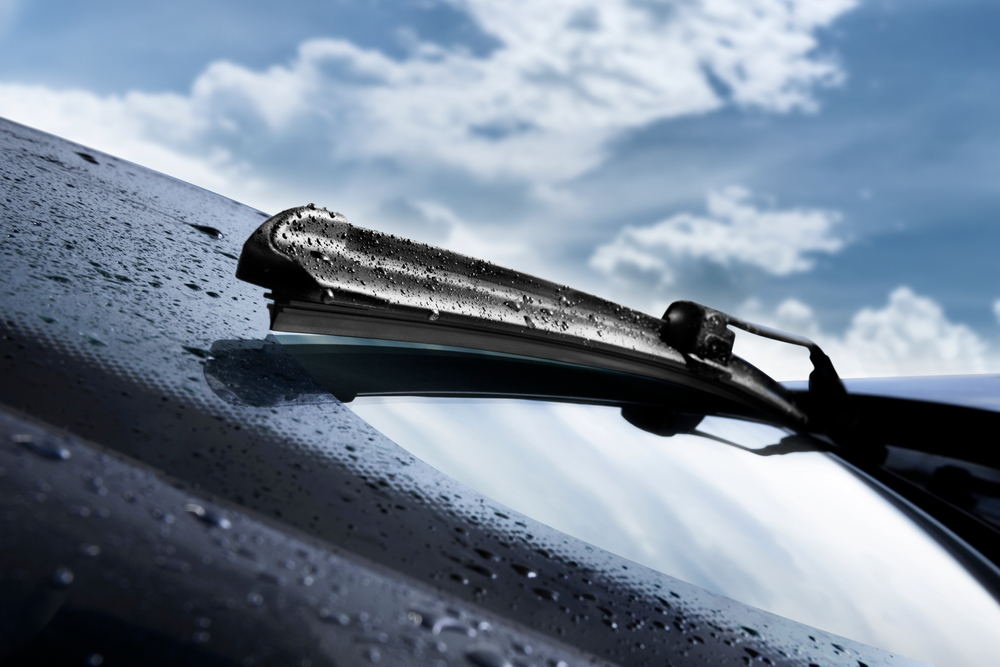
Beam blades address this through a spoiler-integrated spring steel frame with no external structure. The tension across the blade length allows it to flex and follow the windshield’s curve continuously. Pressure is distributed evenly from tip to tip. On a BMW windshield, that continuous contact produces a clean wipe path across the full arc of each blade’s travel.
The low-profile beam design also reduces lift at higher speeds. A conventional framed blade acts as a sail above 60 mph. It reduces contact pressure and allows wind to pull the blade away from the glass. The beam profile minimizes that effect, keeping the blade seated against the windshield during highway driving.
OEM vs Aftermarket BMW Wiper Blades
The question that comes up most is whether OEM wiper blades are worth it or whether an aftermarket option at a lower price will produce the same result on a BMW. The answer connects to two factors: rubber compound specification and blade curvature matching.
BMW OEM blades are manufactured to the curvature specification of each model’s windshield. The arc built into the blade at rest matches the glass it contacts. An aftermarket blade built to a universal profile may not match that arc, leaving pressure inconsistencies across the wipe path. Those inconsistencies produce the same streaking and skipping patterns that worn blades create, even when the aftermarket blade is new.
Rubber compound specification is the second factor. BMW OEM blades use a natural rubber compound treated to remain pliable across the temperature range the vehicle operates in. Some aftermarket blades use synthetic compounds that harden faster in cold climates or lose consistency in high heat. The following factors separate OEM BMW wiper blades from generic aftermarket options:
- Windshield arc matching: OEM blades are curved to the exact profile of the BMW model’s glass, not a universal approximation.
- Rubber compound grade: OEM formulations retain pliability across a wider temperature range, extending wipe quality throughout the blade’s service life.
- Attachment precision: OEM blades are built to BMW’s specific attachment hardware dimensions, eliminating the adapter incompatibility common with universal blades.
- Aerodynamic integration: OEM beam blades are profiled to the vehicle’s speed range, reducing lift without requiring aftermarket spoiler additions.
How BMW Wiper Blade Attachment Hardware Works
BMW uses attachment hardware that differs from the standard J-hook found on most non-European vehicles. Depending on the model and production year, the attachment may be a pinch-tab connection, a side-pin connection, or a top-lock connection. Each links the blade to the wiper arm differently. Each also requires a blade built to that specific interface.
A universal aftermarket blade packaged with adapters may appear to solve the compatibility issue. In practice, adapter connections add play between the blade and the arm. That play allows the blade to shift laterally during the wipe cycle, reducing contact consistency. On a BMW, the wiper arm applies load at a specific angle matched to the windshield curvature. An offset blade connection changes the pressure geometry of the whole setup.
OEM blades connect directly to BMW’s attachment hardware without adapters. The connection is rigid, the blade seats at the correct angle, and the load is applied as the arm was built to deliver it. When drivers replace blades at a dealership service center, the service team selects the correct blade for the model and attachment type. No compatibility chart is required.
When to Schedule BMW Wiper Blade Service
Most BMW wiper blades reach the end of their service window between 12 and 18 months, though that range shifts based on climate and use. Drivers in climates with extended summer heat or heavy winter road salt contact will see degradation closer to the 12-month mark. Drivers in moderate climates with lighter seasonal variation may reach 18 months before noticeable wipe quality decline.
The CBS system does not monitor wiper blade condition directly. Blade replacement is a calendar and condition-based decision, not a system-triggered alert. A sound approach is to inspect the blades at each oil service visit. Assessing wipe quality at the first sign of seasonal rain after a dry summer period is also useful. That window, where blades have gone through a full heat cycle and are asked to clear water again, is when early degradation becomes visible.
Tom Bush BMW’s service team includes a visual inspection of wiper blades as part of the multi-point check completed during oil service appointments. Drivers who are unsure of blade condition can request a wipe quality check during that visit. Installing blades at the service center ensures the correct OEM blade is matched to the specific model’s windshield profile and attachment hardware. No adapter concerns, no guesswork on sizing.
Connect with us


