


BMW X5 xDrive50e drivers in Jacksonville can use electric power for shorter trips while keeping gasoline available for longer travel. However, the value of that setup depends on charging frequency and driving distance. The vehicle combines a high voltage battery, an electric motor, and a turbocharged gasoline engine. Therefore, each trip can use electricity, gasoline, or both.
For local travel, the electric portion may cover errands, school runs, or a short commute. Longer routes can bring the gasoline engine into greater use. In addition, drive modes let you decide when you want to use or save battery energy. Home charging also changes how much gasoline you may need during a normal week.
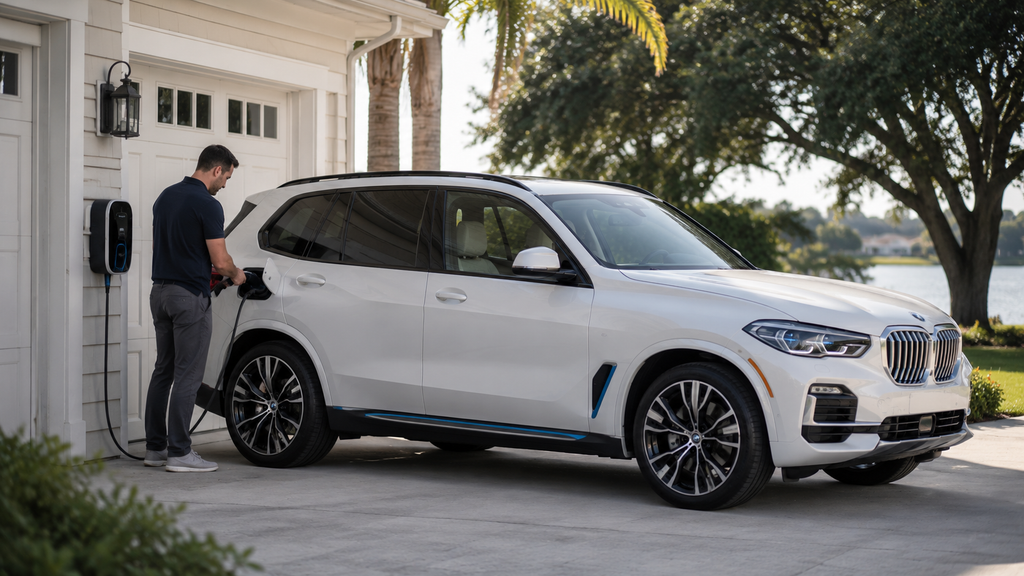
How the BMW X5 xDrive50e Uses Gasoline and Electricity
How does the BMW X5 xDrive50e move between electric and gasoline power? The drivetrain combines battery energy with a turbocharged inline six engine.
The battery sends electricity to an electric motor. Because electric torque arrives quickly, the motor can move the vehicle without waiting for engine speed to rise. However, the gasoline engine remains ready when you need more power or more driving distance.
In HYBRID mode, the vehicle can blend both power sources. Therefore, the engine may start when speed, acceleration demand, or battery level calls for it. ELECTRIC mode gives priority to battery power while enough charge remains.
By contrast, SPORT mode gives the gasoline engine a larger role. That can change throttle response and how quickly the vehicle reacts to stronger accelerator input. The transmission also works with the engine to manage road speed and power delivery.
Regenerative braking adds another layer. When the vehicle slows, the electric motor can recover part of that motion as electrical energy. As a result, some energy returns to the battery instead of leaving only as brake heat.
A test drive should include neighborhood roads, highway merging, and repeated stops. Those situations show how the two power sources share the work.
Electric Range in Jacksonville Heat
Can a Jacksonville commute fit inside the electric portion of the drive? The current X5 xDrive50e carries an estimated electric range near 40 miles.
However, that figure can move with temperature, traffic, wheel choice, and speed. Air conditioning also uses battery energy. Therefore, a hot afternoon trip may draw more electricity than a mild morning route.
Highway travel can also use energy faster than slower city travel. Aerodynamic drag rises as speed increases. For this reason, a longer interstate commute may use the battery faster than a shorter urban route.
A useful comparison starts with your usual round trip mileage. If your daily route stays well below the estimated range, electric travel may cover most of that distance. If your route sits closer to the limit, cooling demand and highway speed deserve more attention.
In addition, you should think about how much charge you want left at home. Some drivers prefer a reserve for an unexpected errand. Others return home and connect the vehicle soon after parking.
Jacksonville heat does not change the basic purpose of the plug in hybrid layout. Instead, it changes how carefully you should compare your route with the available electric distance.
Home Charging and Overnight Replenishment
Home charging can decide how much electric travel you get from the BMW X5 xDrive50e. A 120 volt outlet can add energy, while 240 volt charging works faster.
BMW also offers charging equipment for residential use. However, the electrical service at the house matters just as much as the charger. A qualified electrician should review the panel, circuit, parking location, and cable path.
Before relying on overnight charging, review these points:
- Confirm that the parking space can reach the planned outlet or Wallbox without stretching the cable across a walkway.
- Ask an electrician whether the panel can support the planned circuit and charging equipment under local electrical code.
- Compare the expected charging time with the hours the vehicle usually remains parked at home each night.
The X5 xDrive50e carries a smaller battery than a full electric vehicle. Therefore, overnight replenishment may fit easily into many routines. Still, the exact timing depends on the charging source and remaining battery level.
In addition, charging frequency changes gasoline use. A driver who plugs in most nights may complete more local miles on electricity. Someone who rarely charges will ask the gasoline engine to do more of the work.
Driving Modes Control When Electric Energy Gets Used
Why would a driver save battery charge instead of using it first? Battery Hold can preserve charge for a later portion of the trip.
A driver might begin on the highway and finish in slower city traffic. Battery Hold can keep electric energy available until that later segment. However, using the feature well requires some route planning.
HYBRID mode takes a more automatic approach. The vehicle decides when to use the engine, electric motor, or both. Therefore, it can react to speed, accelerator input, battery level, and route demands.
ELECTRIC mode gives battery power priority while charge remains. That can suit shorter Jacksonville errands or a commute that fits comfortably within electric distance. By contrast, SPORT mode keeps the gasoline engine more involved.
HYBRID ECO PRO aims to reduce energy use through more conservative power delivery. However, a shopper should try the available modes instead of judging them only from a menu description.
The goal is to learn which setting matches your routes. Furthermore, the useful mode may change between a weekday commute and a longer weekend drive.
Longer Trips Shift More Work to the Gasoline Engine
What happens after you use the electric portion? The gasoline engine keeps the X5 xDrive50e moving without requiring an immediate charging stop.
That distinction separates a plug in hybrid from a full electric vehicle. You can leave Jacksonville with a full battery and continue after the stored electric energy drops. Therefore, longer travel does not require a charging stop solely to keep the trip moving.
The gasoline engine takes a larger share of the work once battery energy falls. As a result, fuel use rises when more miles occur after the electric portion. Highway speed can increase that gasoline share further.
This makes charging frequency central to the ownership calculation. If you charge before most local trips, the battery can cover a larger share of short distance travel. If you skip charging, the vehicle still drives, but gasoline use rises.
In addition, a long trip can include both approaches. You might begin with battery power, use more gasoline on the highway, then preserve charge for later city streets.
That range of options suits drivers whose schedules change. However, the plug in hybrid setup makes the most sense when charging becomes a regular habit.
Monthly Energy Cost Depends on Electric Miles
How should a Jacksonville driver estimate monthly energy spending? Start by separating electric miles from gasoline miles.
A simple calculation works better than looking at one MPG figure. First, estimate your monthly mileage. Then estimate how much of that distance could occur before the gasoline engine takes over.
Review these inputs before comparing totals:
- Multiply expected home charging energy by your household electricity rate, then include any public charging you expect to use.
- Estimate gasoline miles separately, then use local fuel prices and expected fuel economy for the gasoline portion.
- Include any home electrical work needed for charging, since installation cost changes the first year total.
Because charging habits can differ from one household to another, two drivers can spend very different amounts on gasoline. A short commuter who charges nightly may use little fuel during the week. A longer highway commuter may lean on gasoline more heavily.
In addition, local electricity pricing gives the electric portion its own cost structure. Gasoline prices can move from week to week. Therefore, compare both energy sources using current local rates when you review a lease.
The BMW X5 xDrive50e makes the strongest case when its two energy sources fit your schedule. Your commute length, home charging access, and travel pattern should guide that decision. If electric miles cover much of your local travel, the battery can handle more routine trips. However, the gasoline engine remains ready when your plans extend farther.
Connect with us


