
Blog / Jacksonville BMW Dealer

BMW i4 Versus BMW 3 Series for Jacksonville Driving

BMW i4

BMW i4 shoppers in Jacksonville may find the 3 Series familiar at first. However, charging, fueling, and power delivery shape the daily routine. In addition, both models serve drivers who want a compact BMW with four doors and strong road manners. However, their drivetrains ask for different habits.

The i4 stores energy in a high voltage battery and sends it to an electric motor. The 330i uses gasoline, a turbocharged four cylinder engine, and an eight speed automatic transmission. Therefore, choosing between them means looking past size and styling. Your commute, parking setup, travel plans, and energy costs deserve equal attention.

BMW i4 and BMW 3 Series Start With Two Different Powertrains

What changes when you choose a BMW i4 instead of a BMW 3 Series? The largest change is how each car stores energy and delivers power.

Therefore, the i4 uses battery electricity to turn an electric motor. Because an electric motor can deliver torque without waiting for engine speed to rise, response starts quickly. There are no conventional gear changes during acceleration. Therefore, the sensation can feel direct and smooth from a stop.

By contrast, the 330i takes another route. Its turbocharged four cylinder engine burns gasoline and works through an eight speed automatic. As speed rises, the transmission changes ratios to keep the engine within a useful operating range. You feel those shifts as part of the car's acceleration pattern.

In addition, regenerative braking separates the two cars. When the i4 slows, its electric motor can recover some motion and return energy to the battery. The 330i relies on its braking hardware while the engine and transmission continue their normal roles. Therefore, pedal response and deceleration can feel different during the same Jacksonville commute.

A shopper should evaluate more than acceleration figures. Pay attention to throttle response, braking feel, noise, and the rhythm of stop and go traffic. Those details reveal which drivetrain feels more natural to you.

What Jacksonville Heat Means for BMW i4 Range

How should summer heat factor into BMW i4 range planning? Heat can raise the energy needed for cabin cooling, while speed and wheel choice also shape driving range.

Because both functions need energy, the i4 must power propulsion and climate control from the battery. Therefore, strong air conditioning demand can reduce the energy left for driving. Highway speeds can also raise energy use because aerodynamic drag increases as speed rises. Larger wheels and certain tire choices can change efficiency as well.

Therefore, BMW lists estimated range by i4 configuration, with no single number covering every version. The current i4 eDrive40 carries an estimated range above 300 miles in certain configurations. Other i4 variants carry different estimates. Therefore, shoppers should compare the exact model, wheel package, and drive layout they are considering.

In addition, Jacksonville commuting makes charging reserve worth planning. A normal weekday route may use only part of the battery. Still, an airport run, beach trip, or longer interstate drive can change the day's mileage quickly. Keeping a comfortable reserve can make those schedule changes easier to handle.

The useful question is not whether Florida heat makes an i4 unsuitable. Instead, ask how your normal mileage compares with the selected i4's estimated range. Then account for cooling, highway travel, and the charge level you prefer to keep available.

Home Charging Changes the Daily Routine

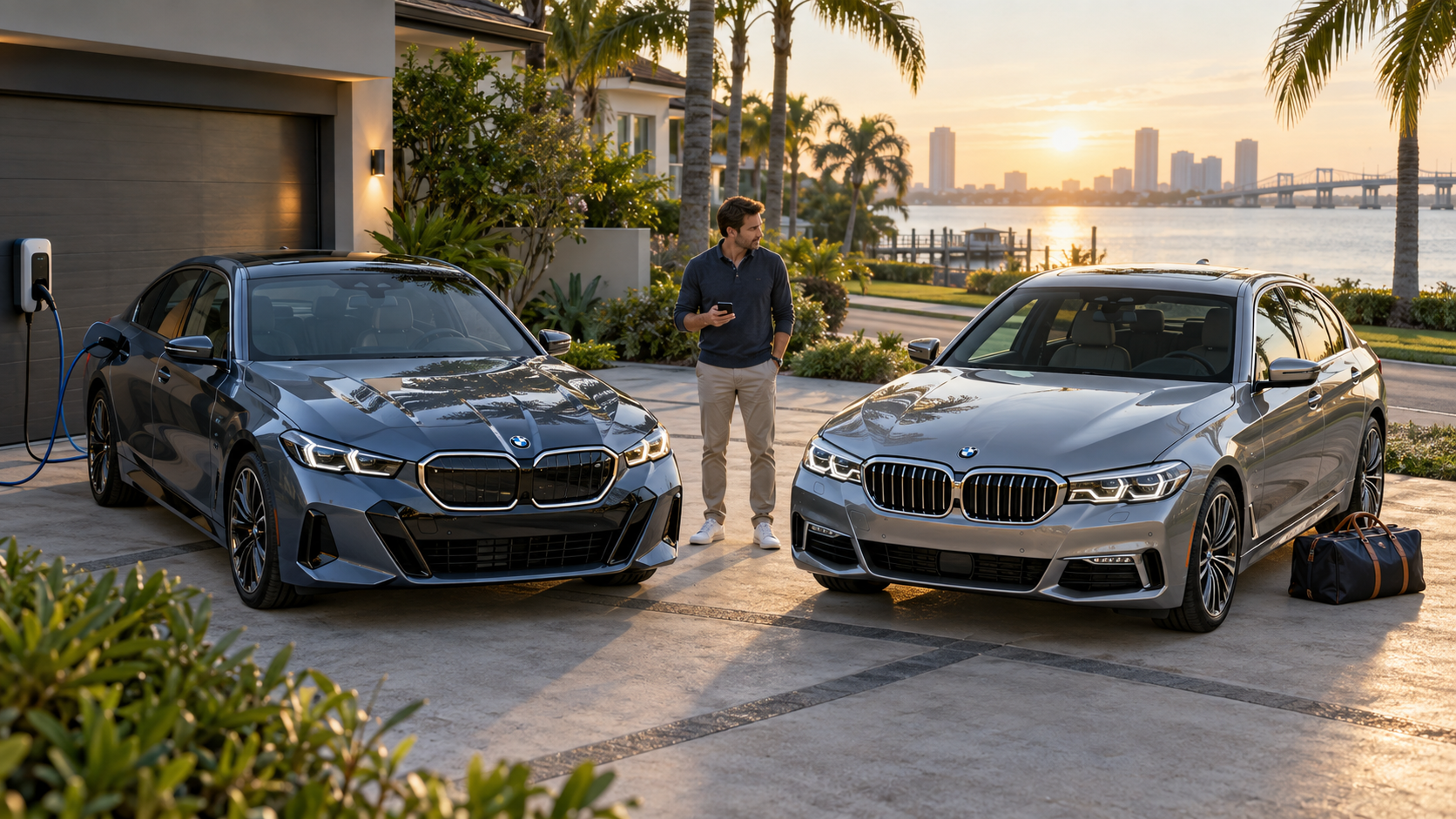
For a Jacksonville homeowner, home charging can shape the entire BMW i4 routine. Level 2 charging uses a 240 volt connection and replenishes the battery while the car is parked.

Furthermore, BMW supports home charging through options such as the Flexible Fast Charger and BMW Wallbox. A qualified electrician should review the electrical panel, circuit capacity, parking location, and cable path. Therefore, the home itself becomes part of the EV decision.

Before choosing the i4, review these items:

  • Confirm whether your parking space can reach a dedicated 240 volt charging connection. The cable should reach the charge port without crossing a risky walkway.
  • Ask an electrician to review panel capacity and the planned circuit. The electrical setup must match the charging equipment and local code requirements.
  • Estimate how much mileage you need to replace overnight. A driver covering modest daily mileage may replenish that energy well before morning.

Home charging changes the timing of refueling. Instead of making a separate stop, you can replenish the battery while the car remains parked overnight. That routine may suit drivers with predictable weekday mileage and dedicated parking.

Public Charging Matters More on Longer Trips

Public charging becomes more relevant when a trip extends beyond your normal home charging routine. DC fast charging sends power to the battery much faster than residential Level 2 equipment.

Therefore, longer drives require a different planning process. You need to consider charger location, battery level, charging speed, and the remaining distance. BMW guidance commonly focuses on charging from about 10 percent to 80 percent during a fast charging stop.

That range matters because charging speed changes as the battery fills. The car may accept higher power earlier in the session, then reduce charging speed later. Therefore, filling from a low state of charge to 80 percent can be more time efficient than waiting for a full battery.

In addition, Jacksonville drivers may use public charging differently from home charging. Local errands may rely almost entirely on overnight charging. However, trips toward Orlando, Savannah, or other distant destinations may place greater importance on DC charger access.

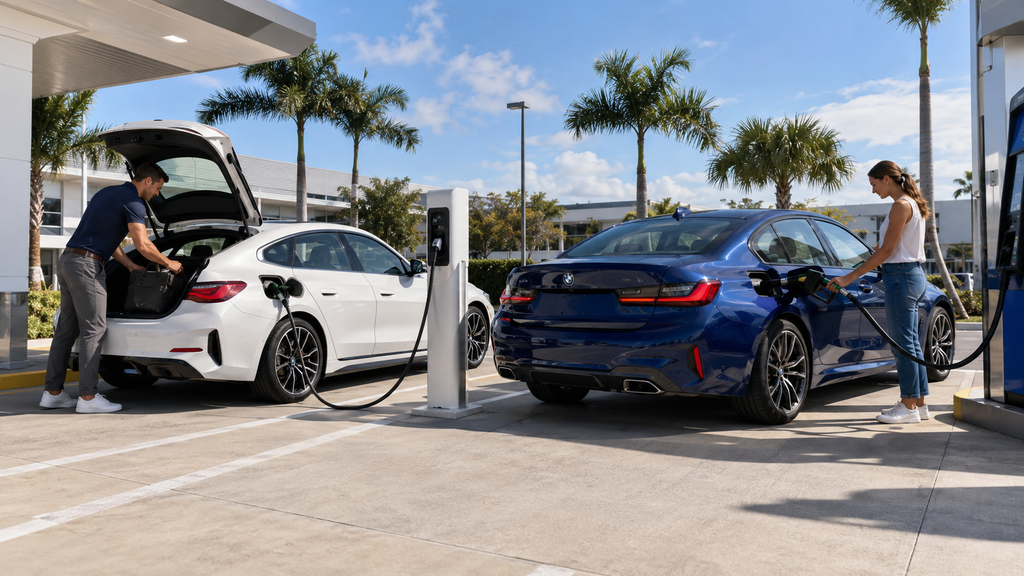
Drivers comparing the i4 and 3 Series should consider stop length as well as stop frequency. The 330i can refill quickly at a gas station. The i4 may require more planning, but home charging can reduce routine fuel stops during the week.

Driving Feel and Cabin Layout Separate the Two BMWs

The i4 and 3 Series share a familiar BMW size class, but their road manners are not identical. Electric propulsion changes acceleration, sound, and deceleration.

Because electric motors respond quickly, the i4 can feel immediate when leaving a traffic light. Regenerative braking also changes how the car slows after you lift the accelerator. By contrast, the 330i delivers power through engine speed, turbo response, and transmission shifts.

That difference becomes easier to judge during a test drive. Pay attention to how each car reacts in slow traffic, highway merging, and parking lot speeds. In addition, notice whether regenerative braking feels natural during repeated stops.

Cargo access also separates the two body styles. The i4 uses a rear hatch that opens with the rear glass. The 3 Series uses a conventional sedan trunk.

Therefore, the i4 can make larger objects easier to load through the wider opening. However, the sloping roofline can shape rear headroom and cargo height. The 3 Series offers a more traditional sedan layout with a separate trunk area.

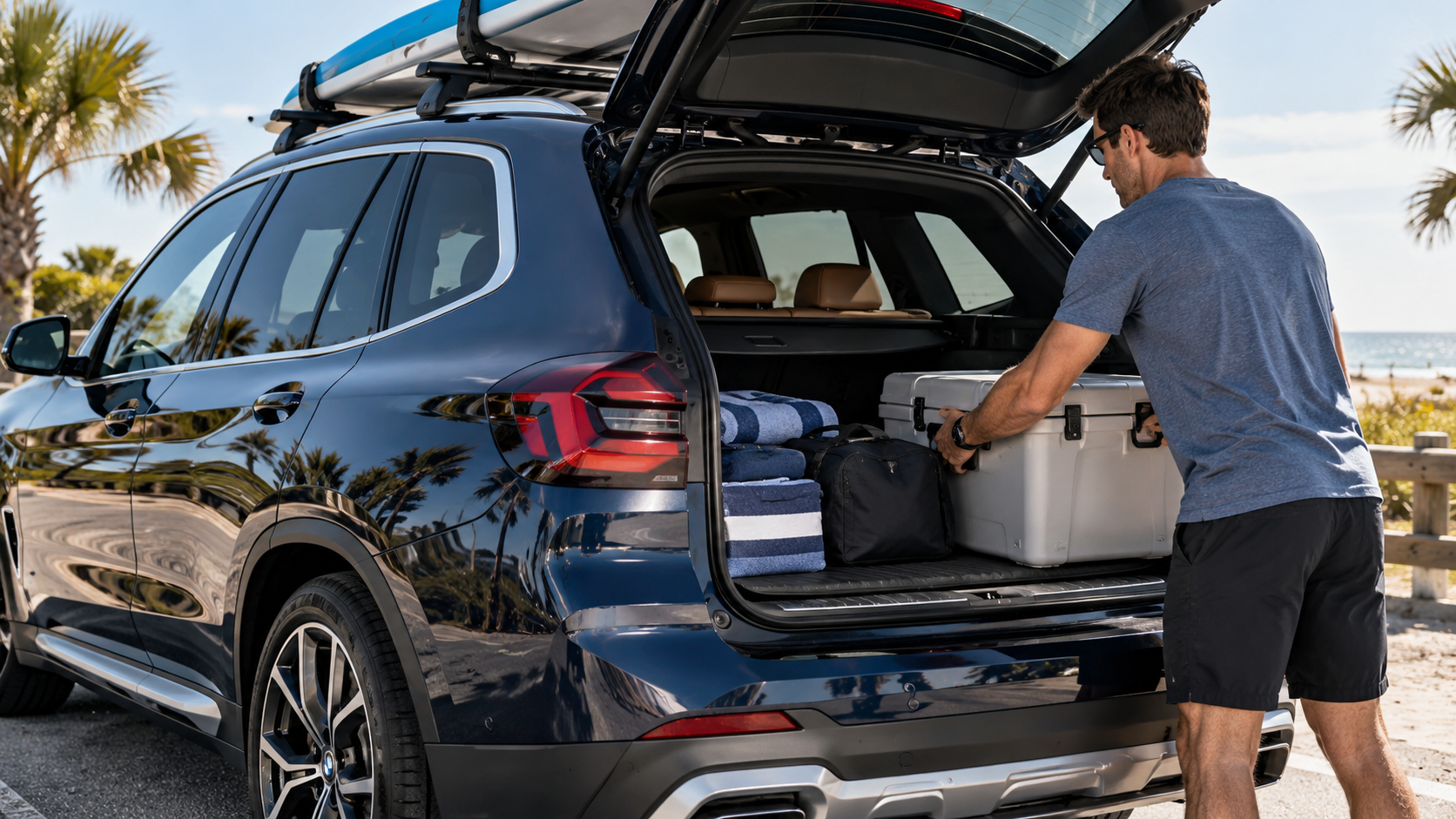
A shopper carrying luggage, sports gear, groceries, or child equipment should inspect both spaces in person. Cubic foot measurements cannot show every loading difference. Opening shape and interior height can matter just as much.

Lease Term Costs Put Charging and Fuel Into Context

Which costs should you compare across a normal lease term? Start with payment, energy, mileage, charging habits, and routine service.

The i4 may begin with a higher vehicle price than a comparable 3 Series configuration. However, the energy calculation follows a different path. Home electricity, public charging rates, and annual mileage shape the i4 side. Gas prices and fuel economy shape the 330i side.

Before comparing totals, review these categories:

  • Estimate your yearly mileage and expected home charging share. More home charging can change the electricity calculation compared with frequent public charging.
  • Compare expected gasoline spending for the 330i using your normal commute. Use a realistic local fuel price instead of a national average.
  • Review scheduled service and lease terms for each car. Tires, mileage limits, insurance, and lease structure can alter the total on either side.

Furthermore, your parking setup may carry an upfront electrical cost. A homeowner who needs a new circuit or Wallbox installation should include that expense. A home with suitable electrical service may require less work.

Neither drivetrain produces one universal cost answer. Therefore, the better comparison uses your mileage, parking, travel schedule, and local energy prices. Those inputs show which choice fits your Jacksonville routine more closely.

The BMW i4 and BMW 3 Series approach the same size class through two very different drivetrains. One centers the routine around charging. The other keeps gasoline fueling and a familiar engine layout. Your commute, home setup, travel plans, and preferred road feel should guide the decision.
Posted in:

Related Posts

BMW Ultimate Care complimentary maintenance coverage

BMW Ultimate Care Explained: What Owners Should Know

BMW Ultimate Care is BMW’s factory-recommended scheduled maintenance program, standard on new BMW vehicles for 3 years or 36,000 miles, whichever comes first. Designed to cover core manufacturer-recommended maintenance according to BMW's Condition Based Service (CBS) system, the program includes scheduled engine oil and filter changes, brake fluid replacements, spark plug renewals, cabin micro-filters, and engine air filter replacements. Crucially, BMW Ultimate Care covers routine preventative maintenance rather than mechanical repairs, wear-and-tear components, or damage from accidents and road hazards. For drivers in Jacksonville, FL confirming the exact start date, mileage thresholds, and terms attached to their specific vehicle with an authorized BMW center is essential before scheduling service or assuming an item qualifies for coverage. Maintenance Coverage vs. Repair Protection It is important to distinguish between routine maintenance coverage and mechanical repair protection, as each addresses entirely different vehicle needs. BMW Ultimate Care follows strictly defined manufacturer service intervals triggered by time, mileage, or onboard vehicle telemetry. In contrast, mechanical repairs address component failures, electrical faults, or structural damage, which fall under the separate 4-year/50,000-mile BMW New Vehicle Limited Warranty or an optional extended protection agreement. While drivers can upgrade to expanded plans like BMW Ultimate Care+ to cover wear-and-tear items like brake pads, rotors, and wiper blades, standard Ultimate Care should never be described as a comprehensive repair warranty. Why Eligibility Can Differ Across BMW Models Eligibility for BMW Ultimate Care and Ultimate Care+ varies based on several specific vehicle parameters, including the model year, original in-service date, current odometer mileage, and whether the vehicle was purchased or leased. Standard BMW Ultimate Care coverage applies to original owners for 3 years or 36,000 miles, but this benefit is non-transferable to subsequent private buyers on model year 2015 and newer vehicles unless the vehicle is purchased through an authorized BMW Certified Pre-Owned (CPO) program or an official BMW Ultimate Care transfer fee is paid. Furthermore, BMW has updated its program guidelines across different model generations, meaning coverage parameters for a 2021 model may differ significantly from a 2024 or 2026 model. Exclusions also apply to non-scheduled wear items, track use, and unauthorized modifications. Because advertised benefits vary by program, drivers should always verify coverage against official BMW documentation. How to Verify Your BMW's Exact Coverage Determining your BMW vehicle’s precise maintenance coverage begins with its 17-digit Vehicle Identification Number (VIN), current mileage reading, and original sale documentation. By entering the VIN into BMW’s central service database, an authorized BMW service center can instantly retrieve the vehicle's exact in-service date, active warranty status, and remaining Condition Based Service (CBS) maintenance intervals. This verification step is especially critical for pre-owned BMW owners or drivers who purchased through private sales, as it clarifies whether residual coverage remains, if an Ultimate Care+ extension was previously purchased, or if upcoming service visits will be customer-pay transactions. Scheduling BMW Maintenance in Jacksonville BMW’s condition-based service system can help identify upcoming maintenance needs, but it does not replace an eligibility check. Before your appointment, share any service notifications and ask what the visit will include. Tom Bush BMW Jacksonville can review your vehicle information, explain the applicable BMW Ultimate Care terms, and help schedule eligible maintenance.

BMW Accessories and Genuine Parts for Jacksonville Owners

BMW Accessories and Genuine Parts for Jacksonville Owners

BMW accessories can solve very different needs after you bring your vehicle home. Some protect surfaces, while others support storage, travel, or personalization. Jacksonville driving also brings sand, rain, luggage, groceries, and outdoor gear into the decision. Therefore, the first step is identifying what you want the accessory to do. After that, exact vehicle fit becomes the next priority. Which BMW Accessories Fit the Way You Use Your Car? Which BMW accessories fit the way you use your car? Start with the area you need to protect, organize, carry, or personalize. That approach keeps each purchase tied to a clear task. Floor protection makes sense when shoes carry sand, water, or dirt into the cabin. Cargo products serve a different purpose when groceries or luggage move through the rear compartment. Moreover, roof equipment can free cabin space when larger items need another location. Before ordering, group your needs by what happens most during a normal week. Choose cabin protection when footwells or interior surfaces see frequent moisture, dirt, or family traffic. Choose cargo products when groceries, travel bags, or sports gear need a secure place during the drive. Choose transport equipment when bikes, boards, or larger items need space outside the passenger cabin. Once you know the task, confirm the accessory matches your exact BMW. Model year, body style, trim, and installed equipment can change fit. Additionally, mounting points can differ between vehicles that look very similar from the outside. This step matters because an accessory should work with the vehicle as installed. A close visual match alone does not confirm compatibility. Interior Protection and Cargo Organization Interior products rely heavily on shape and placement. Floor mats are a simple example. A BMW specific mat follows the intended footwell dimensions and retention locations. Therefore, correct fit helps keep the mat positioned where BMW intends. Cargo products require the same attention. A liner must match the floor shape and surrounding trim. Organizers need enough room to sit securely without interfering with other cargo. In addition, seatback products may use specific headrest or mounting designs. Jacksonville routines can make these products easier to prioritize. Beach trips can bring sand and damp items into the cabin. Rainy days may leave more moisture on shoes and floor surfaces. Grocery runs create another concern because loose bags can shift during turns and stops. Weekend travel adds luggage, chargers, smaller bags, and personal items. For this reason, cargo organization can serve a very different role from floor protection. Think about where clutter or wear appears first. Then choose the product category that addresses that area. A driver who rarely carries large cargo may gain more from floor protection. Another owner may need rear storage organization every week. The accessory should follow the repeated task. BMW accessory selection works best when product type follows the owner’s routine. That keeps the purchase focused before model matching begins. Roof and Transport Accessories Roof equipment requires closer fit verification because the hardware attaches directly to the vehicle. The mounting method must correspond with the correct roof configuration. Different BMW models can use different attachment points and roof designs. Can every BMW use the same roof rack? No, the carrier and mounting hardware must match the specific vehicle. Therefore, exact model information matters before placing an order. Start with the item you plan to carry. Bikes, boards, luggage, and other equipment use different carrier designs. Furthermore, the accessory must connect to the approved base hardware for that BMW. Roof transport also requires a few checks before each trip. Confirm the carrier matches the exact BMW model, model year, and roof configuration. Verify the carrier type matches the item you plan to transport. Review the published load limit before adding luggage, bikes, boards, or other equipment. Once mounted, check that the load does not interfere with doors or hatch movement. Visibility should remain clear as well. In addition, straps or attachment hardware should stay secured throughout the trip. For Jacksonville owners carrying beach or outdoor gear, roof storage can free space inside the cabin. However, the mounting setup should come before the packing plan. A vehicle specific carrier gives you a clearer starting point. It also reduces guesswork when choosing compatible hardware. BMW M and Technology Accessories BMW M parts and technology accessories require another level of fit checking. These products may involve exterior panels, wheels, electrical connections, mounting points, or existing factory equipment. BMW matches M parts to particular vehicles. Can any M part fit any BMW? No, the correct component must match the vehicle application. Therefore, exact model information should guide the order. Technology products can add another compatibility step. Some items may rely on available power connections, ports, or factory hardware. In addition, certain accessories may work only with specific equipment already installed in the car. Installation needs also vary widely. Floor mats may require little more than correct placement. Other components can require more involved mounting or electrical work. For this reason, owners should verify installation requirements before ordering. A BMW Center can also confirm whether technician installation is appropriate for a specific product. Genuine BMW accessory warranty terms can vary based on installation timing. Therefore, review the applicable warranty information before finalizing the purchase. The important distinction is not simply the product category. It is how closely that product interacts with the vehicle. A cabin organizer and an exterior BMW M component do not require the same preparation. Treating them differently makes the ordering process more precise. How Do You Order the Right BMW Part? How do you order the right BMW part? Match the item to the exact vehicle before placing the order. BMW uses model information and VIN entry to narrow accessory compatibility. The VIN gives parts staff a precise vehicle identifier. It can clarify model year, configuration, and other vehicle details needed during part matching. Tom Bush BMW Jacksonville also requests vehicle information through its parts form. The form asks for year, make, model, trim, VIN, and the requested item. Before submitting a request, gather those details first. Then describe the item or task as clearly as possible. If you do not know the exact part name, explain what you want to protect, carry, replace, or personalize. That gives the parts team more context for the request. Original BMW Parts also carry BMW warranty coverage. Accessory warranty terms can vary based on when installation takes place. Therefore, review the terms for the exact item before purchase. BMW accessories work best when the selection begins with a clear ownership task. From there, confirm fit against the exact vehicle. Jacksonville owners can use that process for floor protection, cargo equipment, roof products, BMW M parts, and other items. Tom Bush BMW Jacksonville can also assist with parts requests. Bring the vehicle information and describe what you want the item to accomplish. That gives the parts team a clear starting point for matching the correct component.

BMW i5 Versus BMW 5 Series for Jacksonville Driving

BMW i5 Versus BMW 5 Series for Jacksonville Driving

Choosing between t he BMW i5 and BMW 5 Series changes more than the energy source under the floor. Both sedans share the same core 5 Series format, yet they handle energy in very different ways. For Jacksonville drivers, that difference can reshape commuting, highway travel, and weekly planning. The BMW i5 stores electricity in a high voltage battery beneath the cabin. By contrast, the gasoline 5 Series stores fuel in a tank and sends power through an automatic transmission. Therefore, the decision begins with how you drive, where you recharge or refuel, and how far you travel. What Changes When You Choose an i5 Instead of a 5 Series? What changes when you choose the BMW i5 instead of a gasoline 5 Series? The central change is how the car stores energy, sends power to the wheels, and restores that energy. BMW places the i5 battery low beneath the passenger compartment. As a result, the cabin keeps the familiar space expected from the current 5 Series family. The gasoline 530i takes a different mechanical path. Its turbocharged four cylinder engine sends power through an eight speed automatic transmission. Therefore, acceleration involves engine speed, gear selection, and combustion. The i5 uses electric drive motors, so power reaches the wheels through a much simpler drive path. That distinction changes the feel of common driving moments. Leaving a traffic light requires no gear buildup from the electric motor. However, the 530i delivers power through familiar engine and transmission responses. Additionally, a test drive should include city starts, highway merging, and steady cruising. Those situations reveal more than a single horsepower figure. Daily Jacksonville Commuting Changes the Charging Question Do you need public charging for a normal Jacksonville commute? Home charging can cover routine replenishment when suitable charging access is available. BMW supports Level 2 AC charging on the i5, which suits overnight charging at home. Therefore, a driver can plug in after returning home and begin the next day with restored battery energy. Public DC charging serves a different role. BMW supports DC fast charging at rates up to 205 kW on current i5 models. Under suitable charging circumstances, BMW cites about 30 minutes from 10 to 80 percent. However, charging speed changes as the battery fills. The car also manages battery temperature and charging power throughout the session. The gasoline 5 Series keeps a familiar weekly rhythm. You drive until fuel runs low, stop at a station, refill, and continue. By contrast, an i5 owner with home charging may handle most energy replenishment while parked overnight. Therefore, the key question is not how many public chargers exist near home. It is whether your normal parking location supports regular charging. Longer Florida Trips Require Different Planning Can the BMW i5 handle longer Florida trips? Yes, but electric travel asks you to plan energy stops differently from gasoline travel. BMW lists current i5 range estimates that vary by configuration. Therefore, shoppers should review the exact i5 version, wheel setup, and published range before planning a route. A long trip also depends on where fast chargers sit along the route. Starting with a high charge reduces the first charging need. Furthermore, route planning can place charging near meals, rest stops, or other planned breaks. This approach changes the travel schedule without turning every stop into a separate task. Gasoline travel requires less advance energy planning. Moreover, fuel stations remain common along major Florida highways, and a fuel stop usually takes only a few minutes. However, frequent long distance travel does not automatically rule out the i5. A driver who knows regular routes can check charging locations before leaving. For this reason, compare your actual trip frequency before choosing either power source. A monthly highway trip creates a different routine from several long journeys each week. Electric Response and Gasoline Power Feel Different Why does the i5 respond differently from the 530i? Electric motors deliver torque without waiting for combustion, engine speed, or a transmission downshift. That direct response can make the i5 feel immediate when leaving a stop. In addition, the low battery placement gives the electric sedan substantial mass close to the road. The gasoline 530i uses a turbocharged four cylinder engine with an eight speed automatic transmission. BMW lists 255 horsepower for the current 530i. By contrast, current i5 variants use electric motors with output that varies by configuration. Therefore, horsepower alone does not explain the driving difference. Regenerative braking adds another distinction. The i5 can recover electrical energy while slowing and return some of that energy to the battery. BMW also provides selectable recuperation settings through iDrive. As a result, lifting off the accelerator can produce a different slowing response based on the selected setting. A proper comparison should include low speed traffic, highway merging, braking, and steady cruising. Those moments show how each drivetrain communicates with the driver. Which BMW Fits Your Driving Routine? Which BMW fits your driving routine? The stronger match comes from charging access, travel frequency, annual mileage, and your preferred power delivery. Start with your parking location. If you can charge at home, the i5 can move much of your weekly energy routine to overnight parking. Without dependable home charging, public charging deserves closer review. Next, compare how far you travel during a normal week. A Jacksonville commute with local errands places different demands on energy planning than frequent interstate travel. Additionally, calculate what you pay for home electricity, public charging, and gasoline. Those numbers give you a personal cost comparison instead of a universal claim. Service categories differ as well. The i5 does not use engine oil, spark plugs, or gasoline engine filters. However, both cars still need tires, brakes, cabin filters, and other scheduled care. Tire wear also deserves attention because vehicle weight, driving style, and tire choice can change replacement timing. Finally, drive both cars on roads that resemble your normal routes. Compare acceleration, braking, cabin quietness, charging access, and trip planning. The BMW i5 and gasoline 5 Series share a familiar sedan foundation, but their energy routines are distinct. Your schedule will show which one fits more naturally.