


BMW Brake Wear Sensors Explained and Service Timing
A BMW brake wear sensor monitors brake pad thickness electronically and helps determine when brake service should be scheduled before braking performance begins to decline. Modern BMW brake systems do far more than rely on visual inspection intervals alone. Electronic monitoring, brake force distribution, rotor heat management, and predictive service calculations all work together to track braking wear across different driving patterns. That is why two BMW vehicles with similar mileage can reach brake service timing at completely different intervals. Understanding how BMW brake wear sensors operate helps owners interpret warning lights more accurately and evaluate brake service timing with greater confidence.
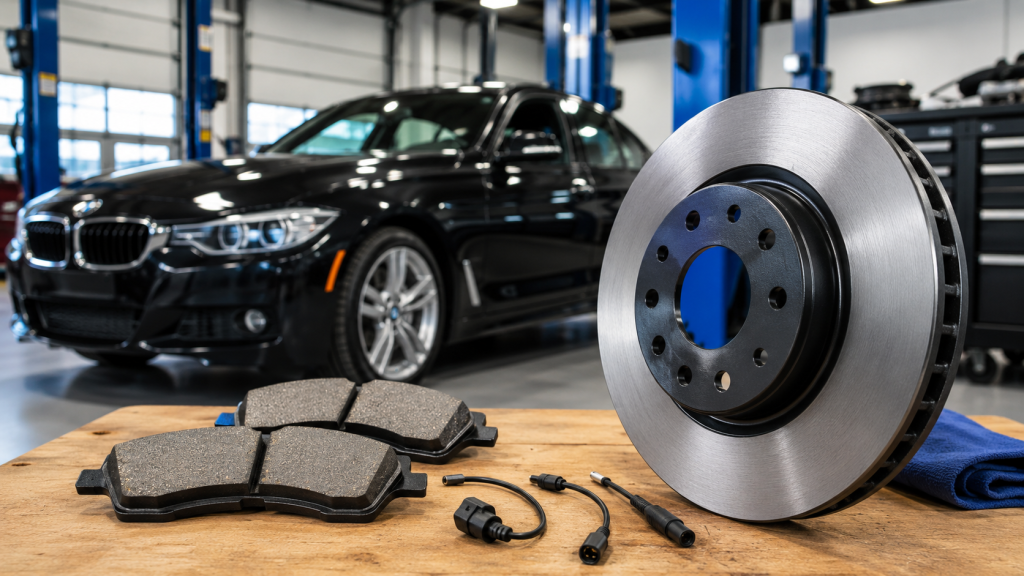
How BMW Brake Wear Sensors Trigger Service Warnings
A BMW brake wear sensor is a physical electronic sensor mounted directly into the brake pad material. As the brake pad gradually wears down, the sensor moves closer to the rotor surface. Once the pad reaches a calibrated wear threshold, the rotor contacts the sensor and breaks the electrical circuit inside it. That interruption signals the BMW monitoring system to activate a brake service warning through the dashboard and iDrive service system.
This process explains why BMW brake warnings can sometimes appear suddenly. The sensor does not slowly dim or gradually activate over weeks. Once the circuit breaks, the system recognizes that the brake pad has crossed the designed wear threshold.
BMW uses this setup because brake pads do not always wear evenly across all driving situations. Urban traffic, repeated stop and go driving, downhill braking, and aggressive braking force generate very different heat and friction levels than steady highway travel. Electronic monitoring allows the system to track wear more precisely than mileage alone.
Important brake sensor characteristics include:
Read the rest of this entry »The Complete Guide to BMW Certified Pre-Owned: What’s Covered, What to Expect, and Where to Buy in Jacksonville
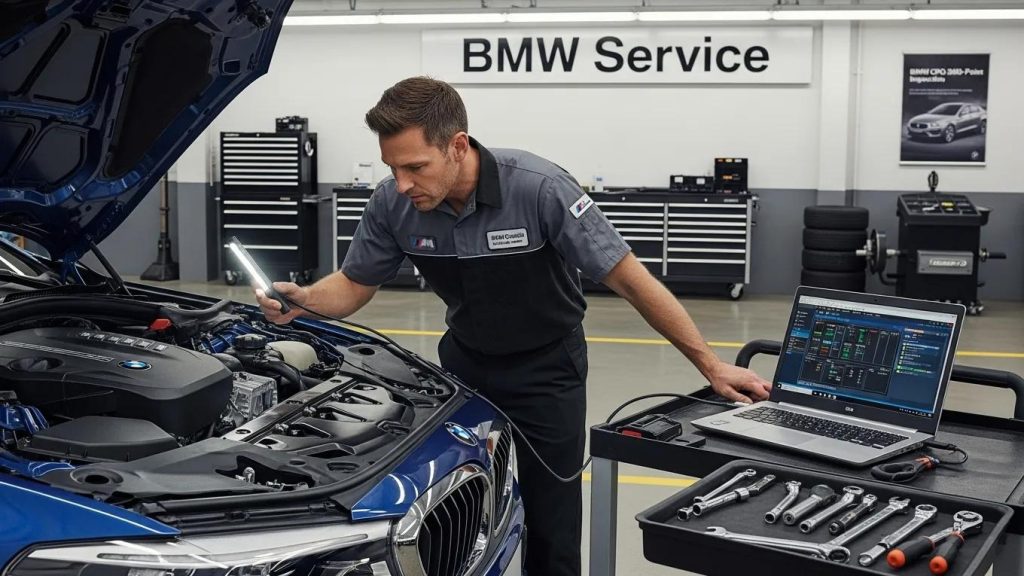
By Stephen Aten, Tom Bush BMW Jacksonville
Navigating the world of pre-owned vehicles can feel daunting. However, when you consider purchasing a luxury brand like BMW, the process becomes even more critical. Therefore, the BMW Certified Pre-Owned (CPO) program offers a unique blend of quality assurance and peace of mind. This combination makes it an attractive option for buyers in Jacksonville. This guide will, moreover, explain the specifics of the BMW CPO program. It covers warranty coverage, inspection processes, and the benefits of choosing a certified pre-owned vehicle. By understanding what to expect, potential buyers can make informed decisions that align with their needs and preferences. Additionally, we will explore where to buy these vehicles in Jacksonville. We highlight “Tom Bush BMW” as a trusted dealership in the area.
What Does the BMW Certified Pre-Owned Warranty Cover?
The BMW Certified Pre-Owned warranty provides comprehensive coverage that protects buyers against unexpected repairs. Specifically, BMW offers a 1-Year/Unlimited-Mileage warranty. This warranty extends the original 4-year/50,000-mile New Vehicle Limited Warranty. Consequently, the total coverage can extend to 5 years with unlimited miles. This extension offers significant peace of mind for new owners.
Which Components Are Included in the BMW CPO Warranty?
The BMW CPO warranty covers a wide range of components. This coverage ensures that buyers receive a vehicle that meets high standards of quality and reliability. First, the warranty includes key components such as:
- Engine: BMW covers all internal engine components.
- Transmission: The warranty protects both automatic and manual transmission systems.
- Electrical Systems: BMW covers essential electrical components, including the battery and starter.
- Roadside Assistance: BMW provides 2 years of complimentary roadside assistance after the warranty purchase. This service ensures help is available when needed.
Furthermore, this extensive coverage helps alleviate concerns about potential repair costs. It makes the BMW CPO program a smart choice for buyers.
How Long Is the BMW Certified Pre-Owned Warranty Valid?
The BMW Certified Pre-Owned warranty remains valid for a total of 5 years with unlimited miles from the original in-service date. This duration provides ample time for buyers to enjoy their vehicle without worrying about unexpected repair costs. In addition, BMW allows buyers to transfer this warranty within the authorized dealer network. This transferability adds extra value for buyers who may consider reselling their vehicle in the future.
What Is the BMW Certified Pre-Owned Inspection Process?

BMW technicians perform a rigorous and thorough inspection process for Certified Pre-Owned vehicles. This process ensures that only the best vehicles enter the program. Specifically, BMW requires vehicles to be late models with more than 300 miles but less than 60,000 miles to qualify. Moreover, BMW factory-trained technicians conduct a comprehensive 360-point inspection. This inspection covers various categories, from mechanical systems to safety features.
What Are the Key Steps in the BMW CPO Multi-Point Inspection?
The multi-point inspection consists of several key steps:
- Eligibility Screening: Technicians ensure the vehicle meets age and mileage limits.
- Mechanical Inspection: They thoroughly check the engine, transmission, and other critical systems.
- Safety Inspection: Technicians evaluate brakes, tires, and other safety components.
- Documentation: BMW provides a detailed report of the inspection process to ensure transparency for buyers.
Consequently, this meticulous process guarantees that each vehicle meets BMW’s high standards for quality and safety.
How Does the Inspection Ensure Vehicle Quality and Safety?
The inspection process ensures that each vehicle meets specific manufacturer-defined limits. In fact, BMW requires certified technicians to use only genuine BMW parts for reconditioning. Additionally, technicians conduct a comprehensive road test to verify performance expectations. Hence, this attention to detail ensures that buyers receive a vehicle that is not only reliable but also safe to drive.
Where Can You Buy BMW Certified Pre-Owned Vehicles in Jacksonville?
In Jacksonville, potential buyers can find BMW Certified Pre-Owned vehicles at several dealerships. However, “Tom Bush BMW” stands out as a prominent option. Located at 9875 Atlantic Blvd, Jacksonville, FL 32225, Tom Bush BMW specializes in new and certified pre-owned BMW vehicles. They provide a wide selection for buyers to choose from. For inquiries, you can reach them at (904) 371-4304.
What Makes Tom Bush BMW a Trusted BMW CPO Dealer in Jacksonville?
Tom Bush BMW stands out as a trusted BMW CPO dealer in Jacksonville due to its commitment to customer service excellence and local expertise. Additionally, the dealership offers a wide range of certified pre-owned vehicles. This variety ensures that buyers have access to high-quality options. Moreover, the knowledgeable staff guides customers through the CPO program. They help customers understand the benefits and features of each vehicle.
What Are the Benefits of Choosing BMW Certified Pre-Owned in Jacksonville?
Choosing a BMW Certified Pre-Owned vehicle comes with several advantages:
- Warranty Coverage: Comprehensive warranty protection provides peace of mind.
- Cost Savings: CPO vehicles typically cost less than new models. This pricing allows buyers to enjoy luxury at a lower price.
- Quality Assurance: The rigorous inspection process ensures that each vehicle meets high standards of quality and safety.
Therefore, these benefits make the BMW CPO program an appealing option for those looking to purchase a luxury vehicle in Jacksonville.
What Exclusive Benefits Does the BMW CPO Program Offer?
The BMW CPO program offers exclusive benefits that enhance the ownership experience:
- Extended Warranty: BMW provides additional coverage beyond the standard warranty period.
- Roadside Assistance: BMW offers 2 years of complimentary roadside assistance for added security after the warranty purchase.
- Financing Options: BMW Financial Services offers competitive financing rates for CPO vehicles.
Consequently, these exclusive benefits further solidify the value of choosing a BMW Certified Pre-Owned vehicle.
How Does BMW CPO Compare to Non-Certified Used BMW Vehicles?
When you compare BMW Certified Pre-Owned vehicles to non-certified used BMWs, several key differences emerge:
- Warranty Coverage: CPO vehicles come with a comprehensive warranty. Non-certified vehicles may not have any warranty protection.
- Inspection Standards: CPO vehicles undergo a rigorous inspection process. This process ensures quality and safety. Non-certified vehicles may not meet the same standards.
- Resale Value: CPO vehicles typically retain their value better. This advantage comes from the added assurance of certification and warranty coverage.
In summary, this comparison highlights the advantages of choosing a BMW Certified Pre-Owned vehicle over a non-certified option. It makes the CPO program a wise investment for buyers.
| Component | Coverage | Duration |
|---|---|---|
| Engine | All internal components | 5 years/unlimited miles |
| Transmission | Automatic and manual systems | 5 years/unlimited miles |
| Electrical Systems | Essential components | 5 years/unlimited miles |
This table summarizes the key components covered under the BMW Certified Pre-Owned warranty. It illustrates the extensive protection offered to buyers.
In conclusion, the BMW Certified Pre-Owned program provides an excellent opportunity for buyers in Jacksonville to acquire a luxury vehicle with the assurance of quality and reliability. With comprehensive warranty coverage, a thorough inspection process, and the support of trusted dealerships like Tom Bush BMW, potential buyers can confidently navigate their purchase of a certified pre-owned BMW.
BMW 5 Series Lease vs SUV Lease Programs
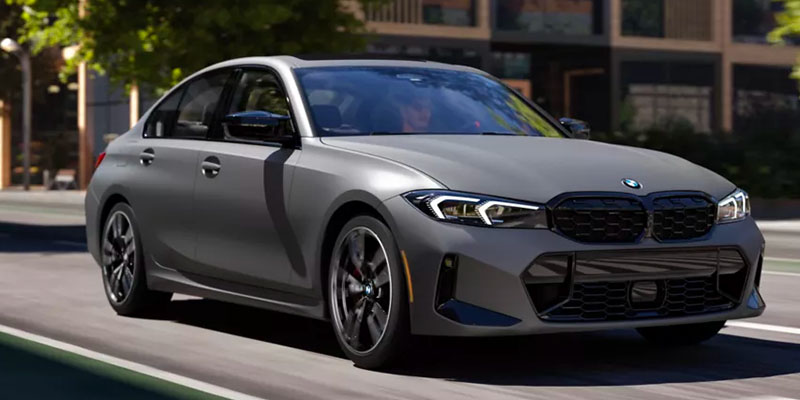
A BMW 5 Series lease can look very different from a BMW SUV lease agreement, even when the vehicles sit near each other in pricing. That difference comes from how BMW Financial Services forecasts resale value, allocates depreciation, structures mileage assumptions, and evaluates long term market demand across vehicle categories. Sedans and SUVs do not depreciate at the same pace, attract the same ownership patterns, or maintain the same resale stability. Those variables directly shape monthly payment structure, lease incentives, and overall agreement terms. Understanding how those calculations work gives shoppers a clearer picture of why a BMW 5 Series lease may produce a different financial structure than programs tied to models like the BMW X3 or BMW X5.
Residual Value Forecasting Shapes the Entire Lease Structure
Residual value is the projected value of a BMW at the end of the lease term. BMW Financial Services uses that projected future value to calculate how much depreciation the shopper is responsible for during the contract period. A higher residual percentage lowers the depreciation spread between the starting price and projected future value, which can reduce the monthly lease obligation.
The BMW 5 Series enters lease forecasting differently than BMW SUVs because sedan resale patterns and SUV resale patterns move differently across the used vehicle market. SUVs maintain stronger demand during certain market cycles due to cargo space, family usage, and broader buyer demand. Sedans, however, can sometimes maintain stronger payment efficiency because their lower MSRP creates a smaller depreciation balance overall.
A shopper comparing a BMW 530i lease against a BMW X5 lease may notice that the SUV retains a strong residual percentage while still carrying a higher payment. That happens because the total depreciation amount tied to the larger SUV still remains higher despite strong resale confidence. The vehicle starts from a larger pricing baseline, which changes how depreciation distributes across the lease term.
Key residual forecasting variables include:
Read the rest of this entry »BMW Condition Based Service is designed to replace fixed maintenance schedules with a system that adapts to how the vehicle is actually driven. Instead of relying on a set mileage interval, BMW uses real-time data from the vehicle to determine when service is required. This approach is built around monitoring system performance, component wear, and operating conditions to predict maintenance needs before issues develop.

For BMW owners, this means service timing is not static. It is calculated based on how the vehicle operates day to day, which creates a more precise and responsive maintenance strategy.
What is BMW Condition Based Service
BMW Condition Based Service is a predictive maintenance system that uses vehicle data to determine when specific services should be performed. Rather than following a fixed schedule, the system evaluates how components are performing and calculates remaining service life.
At a system level, BMW integrates multiple control modules and sensors to monitor key areas such as engine operation, braking performance, and fluid condition. These inputs are processed through onboard algorithms that estimate how quickly components are wearing under current driving conditions.
The system then communicates this information through the BMW iDrive interface, displaying service intervals for:
Read the rest of this entry »Choosing between the BMW 3 Series and Audi A4 often comes down to how each vehicle feels in real-world driving. On paper, both deliver similar horsepower, turbocharged engines, and premium features. In practice, they behave very differently once you factor in drivetrain design, suspension tuning, and how each system responds to daily conditions like traffic, heat, and wet roads.

Understanding these differences requires looking beyond specs and into how each system works, how it influences driving behavior, and what that means for Florida drivers navigating a mix of city streets, highways, and changing weather conditions.
Which performs better BMW 3 Series or Audi A4
Performance is defined by how power is delivered, not just how much is produced. The BMW 3 Series and Audi A4 both use turbocharged four-cylinder engines, but they are tuned and paired with different drivetrain layouts that change how that power feels on the road.
The BMW 3 Series, particularly the 330i, uses a rear-wheel drive platform designed to balance weight and maximize traction during acceleration. Power is sent to the rear wheels, allowing the front wheels to focus on steering. This separation creates a more direct and responsive driving feel.
The Audi A4, equipped with quattro all-wheel drive, distributes power between the front and rear wheels. This improves traction, especially in low-grip conditions, but also changes how the vehicle responds during acceleration and cornering.
From a system perspective:
Read the rest of this entry »A BMW key fob is more than a remote. It is part of a continuous communication system between you and your vehicle, managing access, authentication, and convenience features like Comfort Access. When the battery begins to weaken, that communication becomes inconsistent, which is why small symptoms like reduced range or delayed response often appear before complete failure.
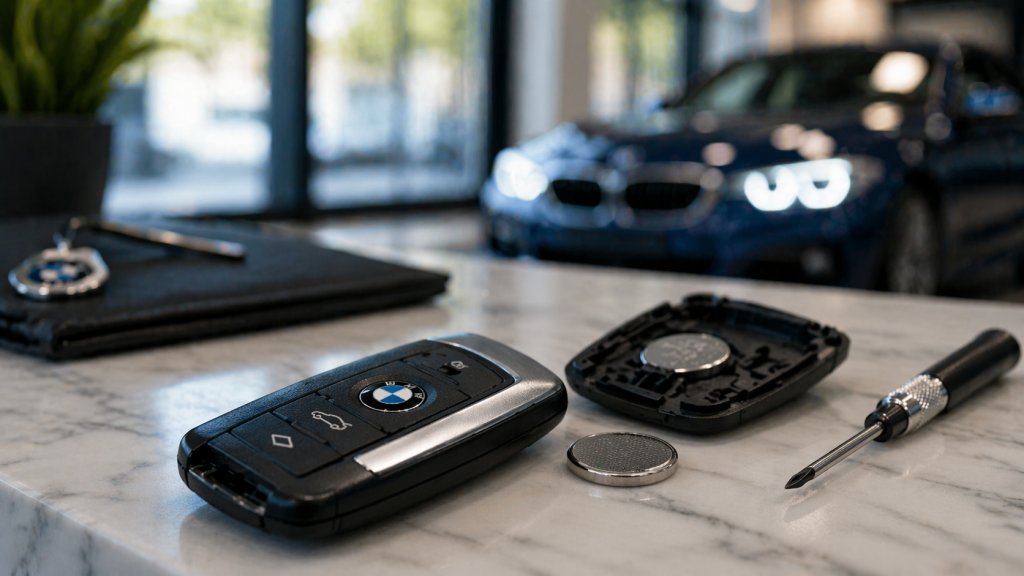
Understanding when to replace your BMW key fob battery and when a full replacement is necessary comes down to how the system works, how signals are transmitted, and how BMW designs its key technology to interact with the vehicle.
How does a BMW key fob actually work
A BMW key fob uses low frequency and radio frequency signals to communicate with the vehicle’s onboard systems. Low frequency signals allow the car to detect the presence of the key nearby, while radio frequency signals transmit commands such as locking, unlocking, or starting the engine.
In BMW vehicles equipped with Comfort Access, this communication is continuous. The vehicle is constantly checking for a valid key signal to allow entry and ignition. That means the key fob battery is not just used when you press a button. It is actively supporting authentication in the background.
Battery voltage plays a direct role in this process. As the battery weakens:
Read the rest of this entry »When a warning light appears on your BMW, most drivers immediately want a quick answer. What is wrong, how serious is it, and how much will it cost to fix. A BMW diagnostic test is the starting point for answering all three. It is not just a quick scan. It is a structured process that evaluates how multiple vehicle systems are communicating, where faults originate, and what actions are required to resolve them.
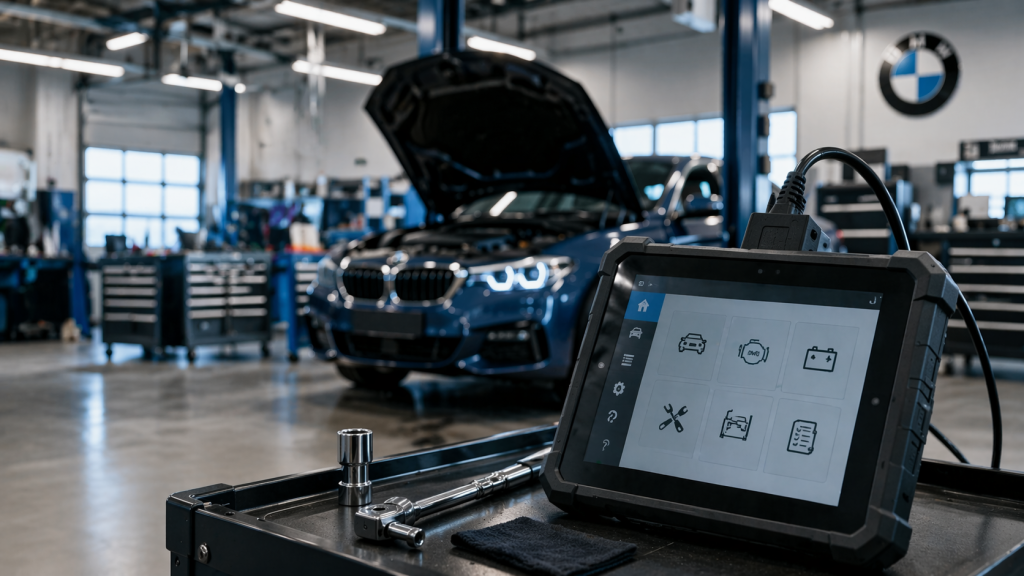
Understanding what you are paying for during a diagnostic test requires looking at how BMW systems work, how faults are identified, and why dealership-level diagnostics provide a different level of insight than basic scan tools.
What does a BMW diagnostic test actually check
A BMW diagnostic test evaluates how the vehicle’s control systems communicate, identify faults, and determine the root cause of a problem. Modern BMW vehicles rely on dozens of electronic control units, each responsible for a specific system such as the engine, transmission, braking, or driver assistance features.
These modules are constantly exchanging data across the vehicle network. When something operates outside of expected parameters, the system logs a fault code. However, that code is not the problem itself. It is a signal that something within the system is behaving incorrectly.
A BMW diagnostic process goes beyond retrieving that signal. It involves analyzing how different systems interact to identify why the fault occurred.
For example, a check engine light on a BMW could be triggered by multiple underlying issues:
Read the rest of this entry »How BMW ConnectedDrive Supports Daily Ownership
Modern vehicles rely on more than mechanical engineering to support everyday driving. BMW ConnectedDrive was developed as a digital ecosystem designed to connect the vehicle, the driver’s smartphone, and BMW’s cloud-based services. Many BMW shoppers researching connected technology want to understand what BMW ConnectedDrive actually does and whether it improves real ownership routines.

BMW ConnectedDrive is the platform that supports remote vehicle access, connected navigation features, smartphone integration, and digital upgrades that can evolve over time. Rather than functioning as a single feature, BMW ConnectedDrive acts as a network of services that help drivers interact with their vehicle before, during, and after each trip.
Understanding how BMW ConnectedDrive works helps drivers see how digital vehicle technology can simplify daily ownership tasks such as locating the vehicle, checking vehicle status, sharing vehicle access, and receiving software improvements over time.
How BMW ConnectedDrive Fits Into Daily Ownership
Many drivers ask what BMW ConnectedDrive actually is and how it differs from other in-vehicle technology systems. BMW ConnectedDrive is the digital platform that enables communication between the vehicle, BMW’s connected services, and supported driver devices such as smartphones.
The system integrates several ownership tools that extend vehicle access beyond the cabin. Instead of requiring the driver to be inside the vehicle to access certain functions, BMW ConnectedDrive allows many of these actions to be performed remotely through connected devices.
BMW ConnectedDrive services can support tasks such as:
Read the rest of this entry »BMW vehicles are engineered with advanced braking systems designed to deliver consistent stopping power and predictable pedal feel across a wide range of driving conditions. For many owners, one of the most common maintenance questions is when brake service will actually be required. Unlike older maintenance schedules that relied on fixed mileage intervals, BMW vehicles use a monitoring system that evaluates braking components and predicts service timing based on real driving conditions.
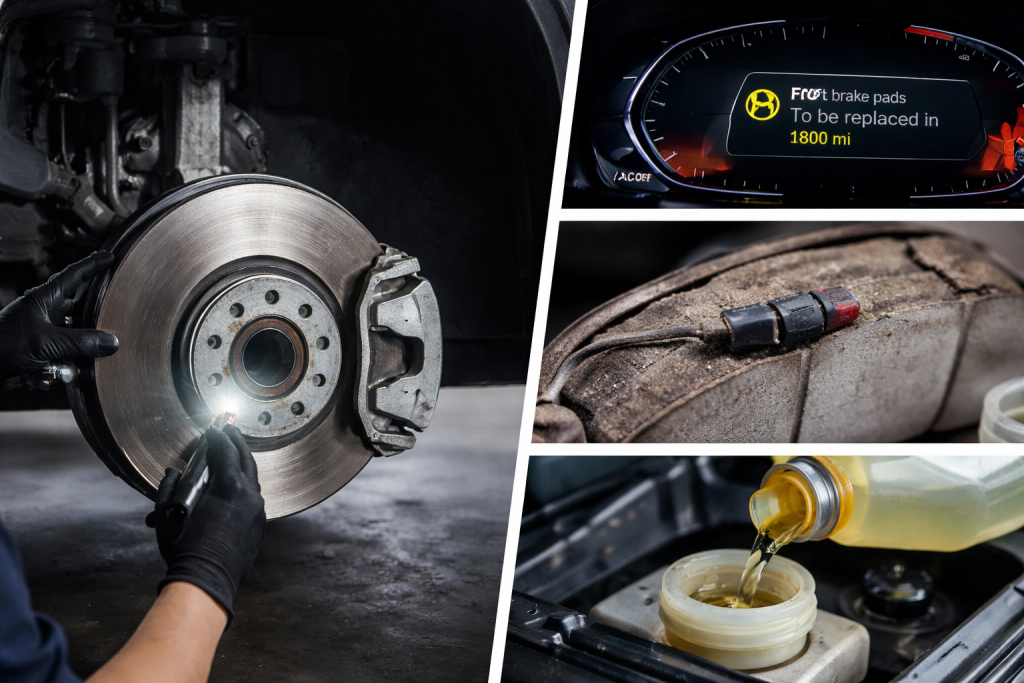
This approach allows BMW brake service intervals to adapt to how the vehicle is used rather than following a universal replacement schedule. Understanding how BMW determines brake service timing, how brake wear sensors work, and why different brake components are monitored separately can help owners interpret service reminders and plan maintenance more effectively.
How BMW Determines Brake Service Timing
Many BMW owners ask whether brake pads follow a fixed replacement schedule. BMW vehicles instead rely on a maintenance monitoring system called BMW Condition Based Service. BMW Condition Based Service is a vehicle maintenance system that uses sensors, elapsed time, mileage, and driving conditions to forecast when service items such as brake pads or brake fluid will need attention.
The system continuously analyzes vehicle operation to estimate remaining service life for several components. Rather than assigning one universal interval for brake service, the system evaluates how frequently and how aggressively the brakes are used.
Several factors can influence BMW brake service timing:
Read the rest of this entry »How BMW Adaptive Suspension Adjusts to Real Roads
Many drivers researching modern BMW vehicles want to understand how ride comfort and handling can change depending on road conditions. Performance oriented vehicles traditionally require a trade off between comfort and sharp handling. A softer suspension improves ride comfort but allows more body movement, while a firmer suspension improves control but can transmit more road harshness.

BMW adaptive suspension technology was developed to address this balance. Instead of relying on fixed suspension settings, BMW adaptive suspension continuously adjusts how the suspension reacts to the road. The system allows a BMW vehicle to absorb uneven pavement comfortably during daily driving while tightening body control when drivers accelerate, brake, or take corners more aggressively. For drivers evaluating BMW models, adaptive suspension represents a key technology that helps combine everyday comfort with responsive driving dynamics.
How BMW Adaptive Suspension Works
Many shoppers researching BMW vehicles ask what adaptive suspension actually is. BMW adaptive suspension is a suspension system that electronically adjusts the firmness of the vehicle’s dampers in real time in response to road conditions and driving behavior.
A vehicle’s dampers, often called shock absorbers, control how quickly the suspension compresses and rebounds when the wheels encounter bumps or changes in pavement. Traditional suspension systems use dampers with a fixed resistance level. That means the suspension always reacts the same way regardless of road conditions.
BMW adaptive suspension replaces fixed dampers with electronically controlled dampers that can change their resistance instantly. Sensors around the vehicle monitor driving inputs and road movement, allowing the system to adjust damper stiffness many times per second.
This allows BMW adaptive suspension to provide two key benefits at the same time:
Read the rest of this entry »Connect with us


