


BMW brake pads are engineered around specific braking characteristics, rotor materials, and heat management targets that directly shape braking feel and long term wear patterns. That calibration process is one reason BMW braking systems feel different from many other vehicles on the road. When drivers replace worn pads, the decision between OEM and aftermarket options changes more than replacement cost alone. Brake dust levels, rotor wear progression, braking consistency, pedal response, and heat management can all shift depending on the friction material installed. Understanding how those components interact helps Jacksonville drivers evaluate brake replacement choices with greater clarity before scheduling service.
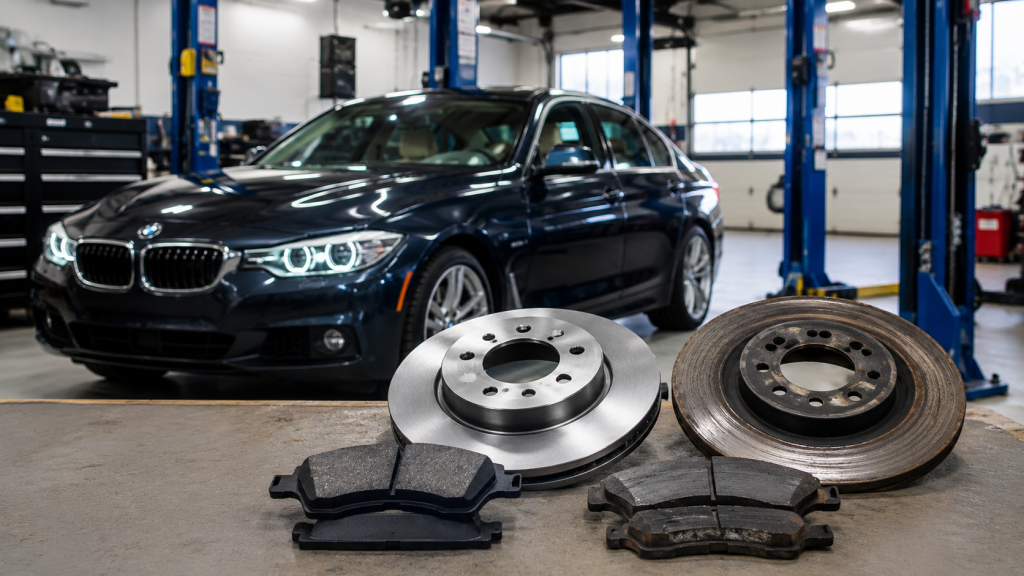
How OEM BMW Brake Pads Are Tuned Around Factory Braking Calibration
OEM BMW brake pads are developed alongside the braking system itself. BMW engineers calibrate pad compounds, rotor materials, brake booster response, ABS programming, and stability control behavior together as a matched system. The brake pad is not treated as an isolated replacement component. It functions as one layer inside a larger braking calibration strategy.
Brake pad compounds rely on friction material formulas that determine how aggressively the pads grip the rotor surface during braking. That friction coefficient changes pedal feel, stopping smoothness, braking modulation, and thermal stability. BMW tunes those characteristics around expected driving dynamics for each vehicle platform.
A BMW 330i sedan and BMW X5 SUV do not use braking systems with identical operating demands. Vehicle weight, wheel size, brake rotor diameter, suspension geometry, and weight transfer all alter braking load distribution during deceleration. OEM brake compounds are selected to match those platform specific requirements.
OEM BMW brake pads are engineered around:
• Rotor metallurgy
• Brake heat distribution
• ABS calibration
• Stability control response
• Vehicle curb weight
• Expected braking temperature range
This integration helps explain why some drivers notice immediate differences after installing aftermarket pads. The replacement material may operate with a different friction profile than the factory calibration originally designed around.
Why Aftermarket Brake Pads Produce Different Dust, Noise, and Pedal Feel
Aftermarket brake pads vary dramatically in friction material composition. Some prioritize lower brake dust. Others target aggressive stopping response or higher temperature tolerance. Those differences directly alter how the braking system behaves during daily driving.
BMW factory brake pads are known for producing noticeable brake dust. That dust forms because softer friction compounds generate strong cold braking response and smooth braking modulation. The tradeoff is increased material transfer between the brake pad and rotor surface.
Many aftermarket ceramic brake pads reduce visible dust substantially. Ceramic compounds operate differently than softer semi metallic formulations and usually create cleaner wheel surfaces during normal driving. The reduction in dust, however, can alter braking feel during colder temperature operation or early brake application.
Drivers sometimes notice:
• Firmer pedal response
• Reduced initial bite
• Different stopping smoothness
• Increased brake noise
• Sharper rotor contact feel
• Longer cold braking engagement
That does not automatically mean the aftermarket brake pad is defective. It means the braking characteristics have shifted away from the original BMW calibration profile.
Brake noise differences also stem from compound variation. Pad hardness, vibration dampening layers, rotor condition, and thermal cycling all shape how sound transfers through the braking system. A quieter brake pad compound in one BMW platform may produce more vibration or squeal in another depending on rotor wear and operating temperature.
Florida Heat Changes Brake Pad Operating Demands
Jacksonville traffic patterns and Florida heat exposure create additional thermal stress across BMW braking systems. Brake pads operate by converting vehicle motion into heat through friction. As temperatures rise during repeated braking cycles, the friction compound must remain stable enough to maintain consistent braking response.
SUV platforms like the BMW X5 and BMW X7 place even greater thermal demand on brake materials because larger vehicle mass generates higher braking load during deceleration. Stop and go traffic further compounds heat buildup because airflow across the braking system decreases during slower movement.
Brake compounds respond differently as temperature rises. Softer compounds may maintain smooth braking feel but wear more rapidly under prolonged heat exposure. Some aftermarket ceramic compounds tolerate elevated temperatures well but can produce harder cold braking characteristics during initial application.
Florida driving exposure increases attention toward:
• Heat resistance stability
• Rotor cooling efficiency
• Traffic braking frequency
• Brake fade resistance
• Thermal expansion management
• Pad material consistency
This becomes important because brake pads that perform well during cooler climates may behave differently during extended high heat driving cycles common across Florida roadways.
Rotor Compatibility Matters During Brake Pad Replacement
Brake rotors and brake pads wear together as matched friction surfaces. When brake compounds change substantially, rotor wear patterns can change as well. That interaction is one reason BMW brake service recommendations frequently include rotor inspection during pad replacement.
OEM BMW brake pads are engineered around specific rotor hardness and thermal expansion characteristics. Some aftermarket compounds generate more aggressive rotor contact, while others operate with smoother friction transfer. Improper compound pairing can accelerate scoring, vibration, or uneven rotor wear over time.
Rotor surface condition also shapes braking consistency. Uneven heat transfer across worn rotors can create steering wheel vibration, pulsation during braking, or inconsistent pedal feel. Installing fresh brake pads against heavily worn rotors may leave the new pads unable to seat evenly across the rotor face.
Several rotor related concerns should be evaluated during BMW brake service:
• Rotor thickness variation
• Surface scoring
• Heat spotting
• Pad transfer buildup
• Rotor cooling vane condition
• Uneven wear patterns
Brake pad replacement decisions work best when the entire braking system is evaluated together rather than focusing only on friction material cost alone.
What Jacksonville BMW Drivers Should Evaluate Before Choosing Brake Pads
The strongest brake pad choice depends on how the vehicle is driven, how much braking heat it experiences, and what braking characteristics the driver prioritizes most. Some Jacksonville drivers prioritize low dust operation for easier wheel maintenance. Others prioritize preserving original BMW braking feel and factory calibrated pedal response.
Drivers comparing OEM and aftermarket BMW brake pads should evaluate:
• Braking consistency during traffic driving
• Dust production expectations
• Rotor wear compatibility
• Brake noise sensitivity
• Heat exposure patterns
• Vehicle weight and braking load
• Cold braking response
• Long term maintenance planning
OEM BMW brake pads remain closely tied to the original braking calibration engineered for the vehicle platform. Aftermarket compounds can alter braking feel, wear progression, and thermal response depending on the material selected. Understanding how those variables interact helps drivers evaluate brake replacement choices with greater confidence before scheduling BMW brake service.
Connect with us


